The Bwenge gorilla family is a small mountain gorilla group in Rwanda’s Volcanoes National Park, formed in 2007 and named after its founding silverback, whose name means “wisdom” in Kinyarwanda. It ranges on the Karisoke slopes between Mount Bisoke and Mount Karisimbi, the same ground tied to Dian Fossey’s research, and is trekked on a $1,500 permit in 2026. Volcanoes National Park lies in northern Rwanda near Musanze along the Virunga Mountains, holding part of the world’s only wild mountain gorilla population.
This guide covers how the Bwenge family formed, the hard early years it came through, its link to the park‘s research history, where it ranges, and what the trek involves in 2026. The member figures here are recent estimates, since births and deaths change the count over time.
How the Bwenge Gorilla Family Formed
The Bwenge family was established in 2007 when a silverback named Bwenge left his birth group and was joined by females from other families. Forming a new group this way is how a maturing male starts his own line, and the family took his name. Bwenge means “wisdom” in Kinyarwanda.
The group settled on the Karisoke slopes and has stayed in that area since. As a family built around a single founding silverback rather than a large split, it has remained small, which shapes both its character and the kind of visit it offers. A group this compact also depends heavily on the health of its one dominant male, since there is no second silverback waiting to take over if something happens to him.
The Hard Early Years of the Bwenge Family
The family’s beginnings were difficult. In its early years the group lost six infants, a heavy toll for a small new family and a reminder that survival is far from assured even in a protected park. Infant mortality among mountain gorillas can come from illness, the cold and wet of the high slopes, or conflict between groups.
The family came through that period and has recorded new births since, slowly rebuilding. Its recovery is part of why it carries a quiet significance for visitors who know the wider story of how hard mountain gorilla numbers have been to grow.
The Bwenge Family and the Park’s Research History
The Bwenge family ranges in the area linked to the Karisoke Research Center, the station Dian Fossey founded between Mount Bisoke and Mount Karisimbi, and members of the group are associated with the country filmed for the story of her work. For visitors drawn to the history of mountain gorilla research, that connection adds weight to the trek.
The link is geographic and historical rather than a guarantee of any particular sighting. What it means in practice is that reaching Bwenge takes you into the heart of the landscape where modern mountain gorilla conservation began.
Group Size and Members of the Bwenge Family
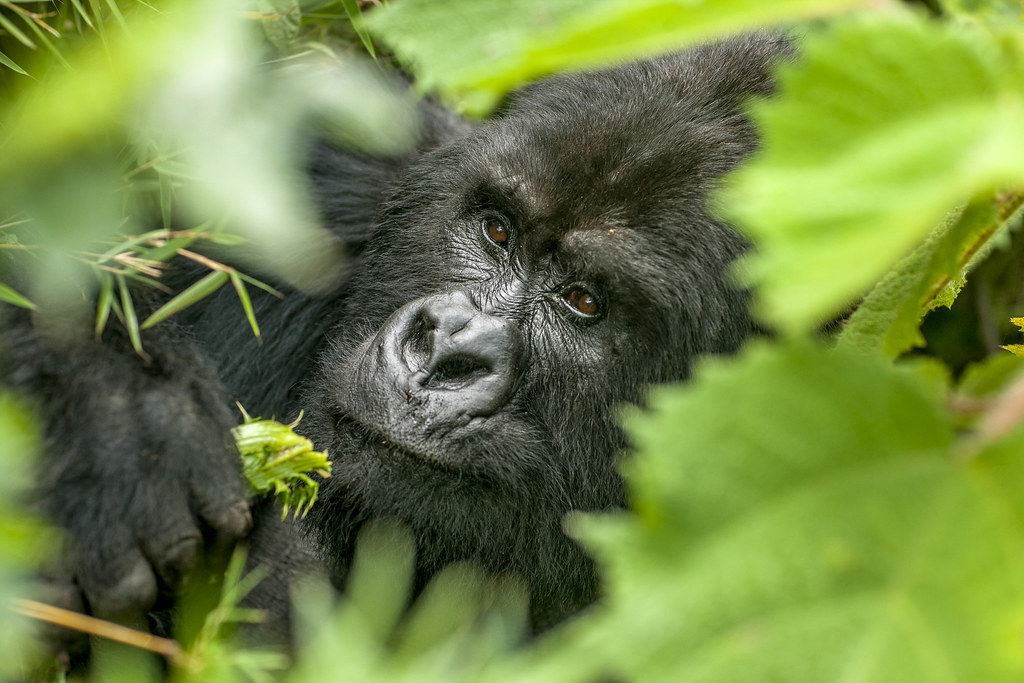
The Bwenge family holds around 11 members under a single dominant silverback, placing it among the smaller groups open to visitors. The make-up centres on the founding line, with adult females, juveniles, and infants around the silverback. After the early losses, every new birth has carried extra significance for a group this size.
For visitors, the small size makes for a contained, readable group during the hour. With fewer animals to track, it is easier to watch how the family interacts and to follow individual gorillas rather than losing them in a crowd. A small group also tends to stay closer together while feeding, so the chance of seeing most of its members within a single sitting is higher than with the larger, more scattered families. That said, the dominant silverback still sets the pace, and if he moves the family the whole group follows.
What the Bwenge Gorilla Trek Is Like
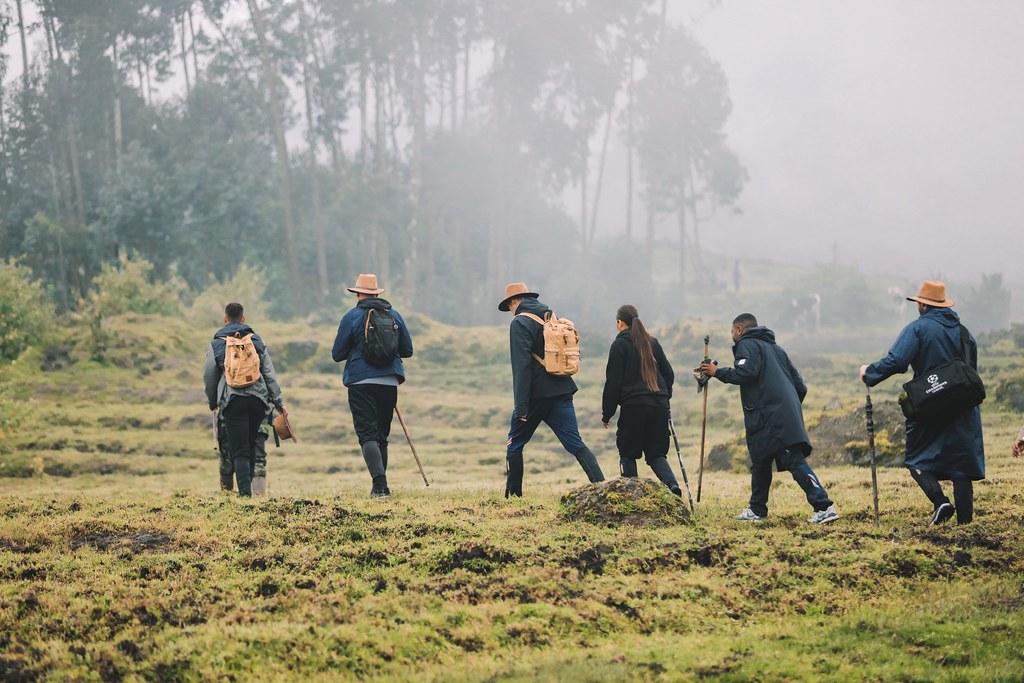
The Bwenge trek is often described as one of the easier options, since the group ranges on accessible ground near the Karisoke area rather than high on the steep peaks. That said, the Karisoke slopes can be muddy and the approach has its steep stretches, so easier here is relative rather than effortless.
Boots with good grip make a real difference on the wet ground, and a porter helps on the climbs and supports local income. A walking pole is useful for the descent. Most visitors with a reasonable level of fitness manage this family comfortably, which is why it is sometimes suggested to those who want a shorter day with a meaningful link to the park’s history. As with every family, though, the gorillas move overnight, so a group that was close yesterday may sit further up the slope today, and the briefing team works from the latest tracker reports rather than a fixed location.
Best Time to Trek the Bwenge Gorilla Family
The Bwenge family is trekked all year. Because it ranges on the Karisoke slopes, where the ground holds water, the drier months of June to September and December to February give the firmest footing and the most comfortable approach. These are also the busiest months for permits.
The wetter stretches of March to May and November bring heavier mud on the Karisoke ground and the low-season discount. The trek stays doable in the rains, but the slick slopes make boots and a pole more important, traded against the lower price and thinner crowds.
Permit Cost to Trek the Bwenge Gorilla Family
The Bwenge family is reached on the standard gorilla permit, priced at $1,500 per person in 2026 for international visitors, the same fee as every family in the park. It covers entry, guides, trackers, and the one-hour visit, and excludes lodging, transport, and tips.
$1,500 per person for one trek, set by the Rwanda Development Board and identical for all families.
$1,050 per person from November to May, with a qualifying two-night stay in Akagera or Nyungwe National Park.
About $500 for foreign residents and rest-of-Africa visitors, and roughly $200 for East African citizens, on proof of status.
Around $15 to $20 for a porter, useful on the muddy Karisoke slopes, plus tips for guides and trackers on the day.
The fixed price means Bwenge costs the same as any other family. Its appeal is a small group, a generally easier trek, and a setting tied to the park’s research history, all for the standard fee.
How to Book and Reach the Bwenge Family
Permits are sold by the Rwanda Development Board, online or through a licensed operator. You reserve a trekking day rather than a named family, and Bwenge is assigned at the Kinigi briefing, sometimes to visitors who want a shorter day or a link to the Karisoke story. Make any preference known in advance and on the morning.
The park is about a two to three hour drive from Kigali to Musanze and the Kinigi headquarters. With the briefing starting around 7 in the morning, staying near the park the night before is the standard approach, and Bwenge’s generally shorter trek often leaves part of the day free afterwards.
What does the name Bwenge mean?
Bwenge means “wisdom” in Kinyarwanda. The family is named after the founding silverback Bwenge, who left his birth group in 2007 and was joined by females from other families to form the group.
Is the Bwenge family connected to Dian Fossey?
The family ranges on the Karisoke slopes between Mount Bisoke and Mount Karisimbi, the area where Dian Fossey founded the Karisoke Research Center, and is associated with the country tied to the story of her work. The link is geographic and historical rather than a guarantee of any particular sighting.
How many gorillas are in the Bwenge family?
The family holds around 11 members under a single dominant silverback, placing it among the smaller groups open to visitors. Numbers change with births and deaths, and the group is still rebuilding after losing six infants in its early years.
How hard is the Bwenge trek?
It is generally one of the easier treks because the group ranges on accessible ground rather than high peaks. The Karisoke slopes can be muddy and have steep stretches, so it is easier rather than effortless, and good boots help.
How much does the Bwenge trek cost?
The permit is $1,500 per person in 2026, the same as for every family in the park. A low-season rate of $1,050 applies from November to May with a qualifying stay in Akagera or Nyungwe, and reduced rates exist for residents and East African citizens.

See all of our Rwanda gorilla safaris and start planning today.