The Karisimbi gorilla family, also known as Susa B, is one of the hardest mountain gorilla groups to trek in Rwanda’s Volcanoes National Park, ranging high on the slopes of Mount Karisimbi, the tallest Virunga volcano at 4,507 metres. It broke away from the famous Susa family in 2009 under the silverback Nyagakangaga and is trekked on a $1,500 permit in 2026. Volcanoes National Park lies in northern Rwanda near Musanze along the Virunga Mountains, holding part of the world’s only wild mountain gorilla population.
This guide covers how Karisimbi split from Susa, the silverback who led the break, the name it took, where it ranges, and what the demanding high-altitude trek involves in 2026. The member figures are recent estimates, since births, deaths, and further splits keep changing the count.
How the Karisimbi Family Broke Away from Susa
The Karisimbi family began as part of the Susa family, the large, well known group also called Susa A. Life in a group of more than 40 gorillas brought tension between the dominant males, and from around 2008 a split began to form. The break did not happen at once.
For close to two months, individuals moved back and forth between the original group and the breakaway faction, a sign of how unsettled the change was. The split became permanent on 20 August 2009, after the silverback Nyagakangaga had formally broken away earlier that summer with 13 members. From then the new group stood on its own.
Nyagakangaga, the Silverback Who Led the Split
The split was driven by Nyagakangaga, a powerful male who had risen to second in dominance within Susa after the death of a senior silverback in 2007. That position gave him influence but not full control, and his decision to leave with 13 individuals was a bold move in gorilla society, where leadership decides access to mates, feeding grounds, and protection.
He led the new group into higher and more remote country on Karisimbi, ground that offered distance from rival groups at the cost of harder terrain and scarcer food. He has led the family since, though as with every group the line-up of silverbacks shifts over time as younger males mature.
The Name Change from Susa B to Karisimbi
When the group first formed, trackers labelled it Susa B to mark it as the breakaway from Susa A and to follow its development. The name helped researchers monitor the transition. It was a working label rather than a permanent name.
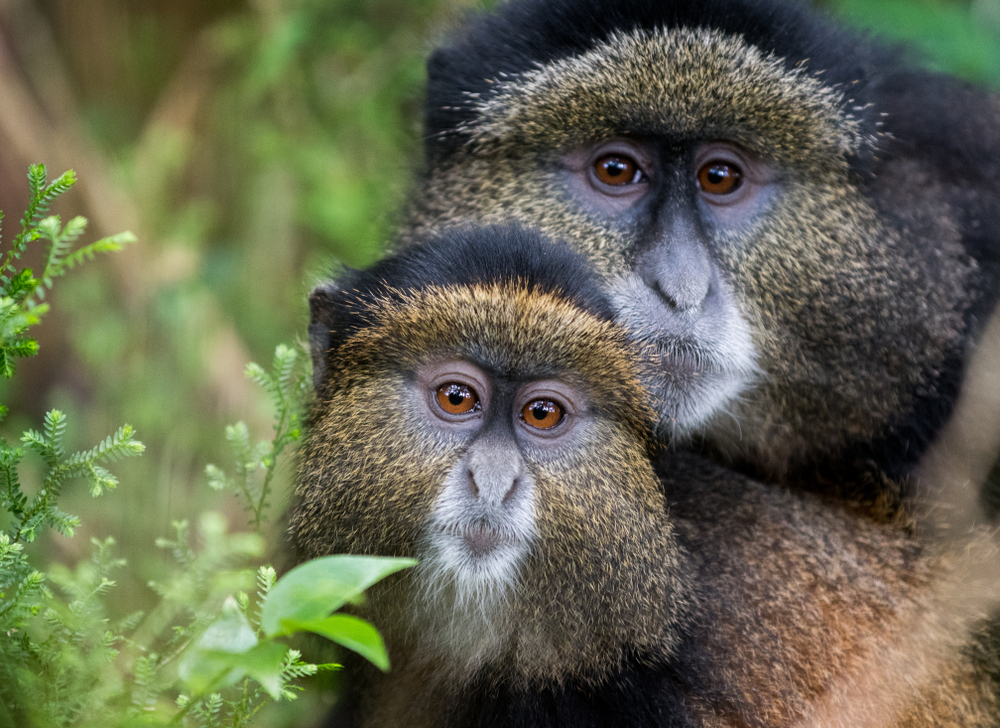
In 2010 the group was given the name Karisimbi at Kwita Izina, Rwanda’s annual gorilla naming ceremony, after the mountain it ranges across. A further faction later broke away from Karisimbi on 10 April 2012 to form the Isimbi group, so the family has been a parent group in its own right since the original Susa split.
Where the Karisimbi Gorilla Family Ranges
The Karisimbi family ranges around the slopes of Mount Karisimbi, the highest peak in the Virunga chain at 4,507 metres. The group tends toward the higher, more remote ground that Nyagakangaga led it to, sometimes near the upper reaches of the mountain. This is the most demanding country in the park to reach.
The high altitude and the group’s habit of ranging up the mountain are the two factors that make the trek so hard. Where the family is found can swing widely from one day to the next, and a high day can mean tracking the group for the better part of a full day.
Group Size and Members of the Karisimbi Family
Recent counts place the Karisimbi family at roughly 11 to 15 members, including several silverbacks alongside the adult females and young. It is a smaller group than the original Susa family it came from, having both started with a fraction of that group and later lost members to the Isimbi split. The presence of more than one silverback in a group this size is part of its character.
For visitors who reach it, the family offers the satisfaction of a hard-won sighting on the park’s tallest mountain. The climb filters out all but the fitter trekkers, so the group is often seen by smaller numbers of determined visitors.
What the Karisimbi Gorilla Trek Is Like
The Karisimbi trek is among the hardest in the park, on a par with the trek to its parent group, Susa. The family ranges high on the tallest Virunga volcano, the climb is long and steep, and a high day can take the better part of a full day on the mountain. Guides reserve this family for fit, well-prepared visitors who have asked for a real challenge.
Thorough preparation matters here. Strong boots with good grip, rain gear, layers for the cold at altitude, and a solid level of fitness are all worth having, and a porter for your pack eases the climb considerably. A walking pole helps on the long descent, which on wet ground can be as draining as the ascent.
Best Time to Trek the Karisimbi Gorilla Family
The season matters as much for Karisimbi as for any family, because the long, high climb is far harder on wet, slick ground. The drier months of June to September and December to February give the firmest footing and the safest conditions for a demanding ascent, and they are the busiest for permits.
The wetter months of March to May and November bring heavy mud on the high slopes and the low-season discount. For a trek this strenuous, the rains add genuine difficulty and risk on the steep ground, so only fit, well-equipped visitors should attempt Karisimbi off-peak in exchange for the lower price.

Permit Cost to Trek the Karisimbi Gorilla Family
The Karisimbi family is reached on the standard gorilla permit, priced at $1,500 per person in 2026 for international visitors, the same fee as every family in the park. It covers entry, guides, trackers, and the one-hour visit, and excludes lodging, transport, and tips.
$1,500 per person for one trek, set by the Rwanda Development Board and identical for all families.
$1,050 per person from November to May, with a qualifying two-night stay in Akagera or Nyungwe National Park.
About $500 for foreign residents and rest-of-Africa visitors, and roughly $200 for East African citizens, on proof of status.
Around $15 to $20 at the trailhead, well worth it on the long Karisimbi climb, plus tips for guides and trackers.
The fixed price means the hardest climb in the park costs the same as the easiest walk. With Karisimbi, the higher cost is paid in altitude, effort, and time rather than money.
How to Book and Reach the Karisimbi Family
Permits are sold by the Rwanda Development Board, online or through a licensed operator. You book a trekking day rather than a named family, and Karisimbi is assigned at the Kinigi briefing, generally to fit visitors who have asked for the hardest option. Be honest about your fitness, since a high day on Karisimbi is not a trek to underestimate.
The park is about a two to three hour drive from Kigali to Musanze and the Kinigi headquarters. Because a Karisimbi trek can fill the whole day and the briefing starts around 7 in the morning, staying near the park the night before is the only sensible option rather than driving up at dawn.
Why is the Karisimbi family also called Susa B?
The name Susa B was the working label trackers gave the group when it broke away from the Susa family, also called Susa A, in 2009. It was renamed Karisimbi in 2010 at the Kwita Izina gorilla naming ceremony, after the mountain it ranges across.
Who leads the Karisimbi family?
The family is led by the dominant silverback Nyagakangaga, who broke away from Susa with 13 members to form the group. The line-up of silverbacks shifts over time, but he has led the family since its formation.
Is the Karisimbi trek hard?
Yes, it is among the hardest in the park. The family ranges high on Mount Karisimbi, the tallest Virunga volcano at 4,507 metres, so the climb is long and steep and a high day can take most of a full day. It is reserved for fit, well-prepared visitors.
How many gorillas are in the Karisimbi family?
Recent counts place it at roughly 11 to 15 members, including several silverbacks. The group is smaller than the original Susa family it came from, having started with a fraction of that group and later lost members to the Isimbi split.
How much does the Karisimbi trek cost?
The permit is $1,500 per person in 2026, the same as for every family in the park. A low-season rate of $1,050 applies from November to May with a qualifying stay in Akagera or Nyungwe, and reduced rates exist for residents and East African citizens.
Ready to go? Start planning your trip with our Rwanda gorilla tours.