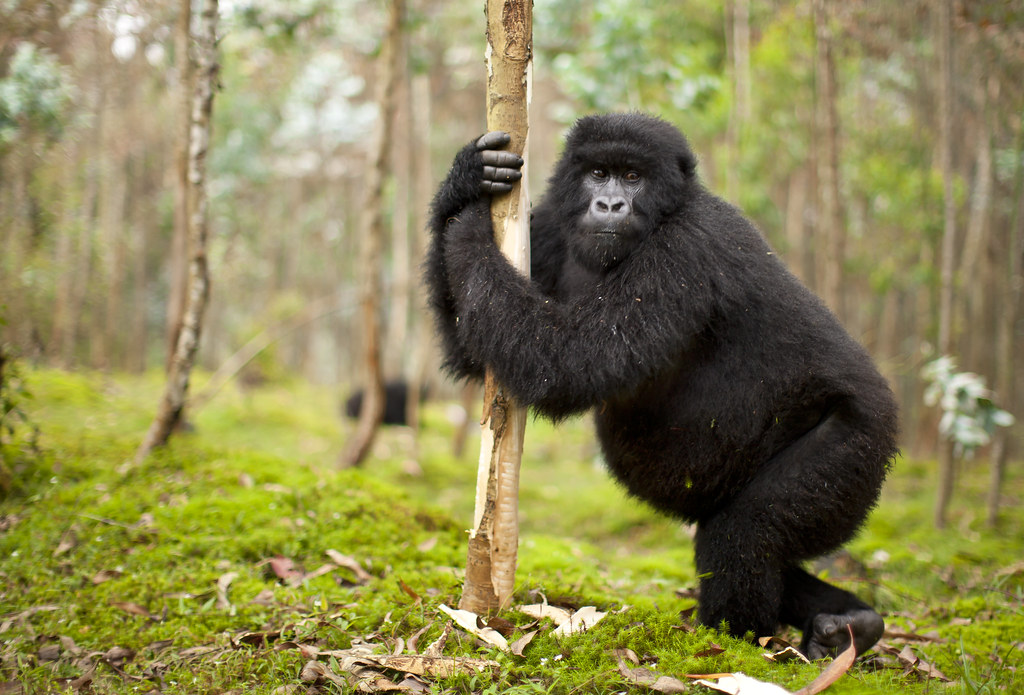
The Agashya gorilla family, also known as Group 13, is one of the larger habituated mountain gorilla groups in Rwanda’s Volcanoes National Park, holding around 25 members across the slopes of Mount Sabyinyo. It is reached on a $1,500 permit in 2026 and rated easy to moderate, though the dominant silverback often leads the group to higher ground when he senses disturbance. Volcanoes National Park sits in northern Rwanda along the Virunga Mountains near Musanze, holding part of the world’s only wild mountain gorilla population.
This guide covers how the family formed, who leads it, where it ranges, what its members are like, and what the trek to reach it involves in 2026. Member numbers are approximate, because births, deaths, and the movement of females between groups change the count from one season to the next.
The Story Behind the Agashya Gorilla Family
The family earned its first name, Group 13, from the thirteen gorillas it held when researchers began habituating it. The number stuck as an informal label even after the group grew. The name remains in common use today alongside Agashya, so booking notes and guide briefings may use either.
The group took the name Agashya, the Kinyarwanda word for “news,” after a silverback of that name won leadership from the previous dominant male, Nyakarima. Accounts from the park describe Agashya watching and measuring the older silverback before challenging him and taking the group. He then moved the family higher on the volcano to keep it out of Nyakarima’s reach, a habit the group still shows.
Who Leads the Agashya Gorilla Family Today
For years the family was led by the silverback Agashya himself, a male known for caution and for expanding the group by drawing in lone females and members of other families. Some recent reports from the park indicate that leadership has since passed to a successor silverback from within the family, while the group keeps the Agashya name. Sources differ on the current dominant male, which is normal as a generation of silverbacks ages out and younger males rise.
What stays consistent is the leadership style: a protective male who scouts ahead, keeps a close watch when other families or trekkers come near, and is quick to move the group uphill at any sign of a rival. That behaviour shapes the trek more than the identity of the silverback on any given day.
Where the Agashya Gorilla Family Ranges
The Agashya family ranges across the forested slopes of Mount Sabyinyo and Mount Gahinga, often along the valley that runs toward Mount Bisoke. This zone holds dense bamboo at lower levels and opens into meadows higher up, which gives the silverback room to climb when he chooses. The group shares broad territory with the Sabyinyo family, though the two keep their distance.
Because the family does not hold to a fixed patch, the starting point and length of the trek shift with where trackers locate it at dawn. On settled days the group feeds on the lower bamboo and is reached within a couple of hours. On other days, especially when the silverback has taken the family up, the climb is far longer.
Group Size and Members of the Agashya Family
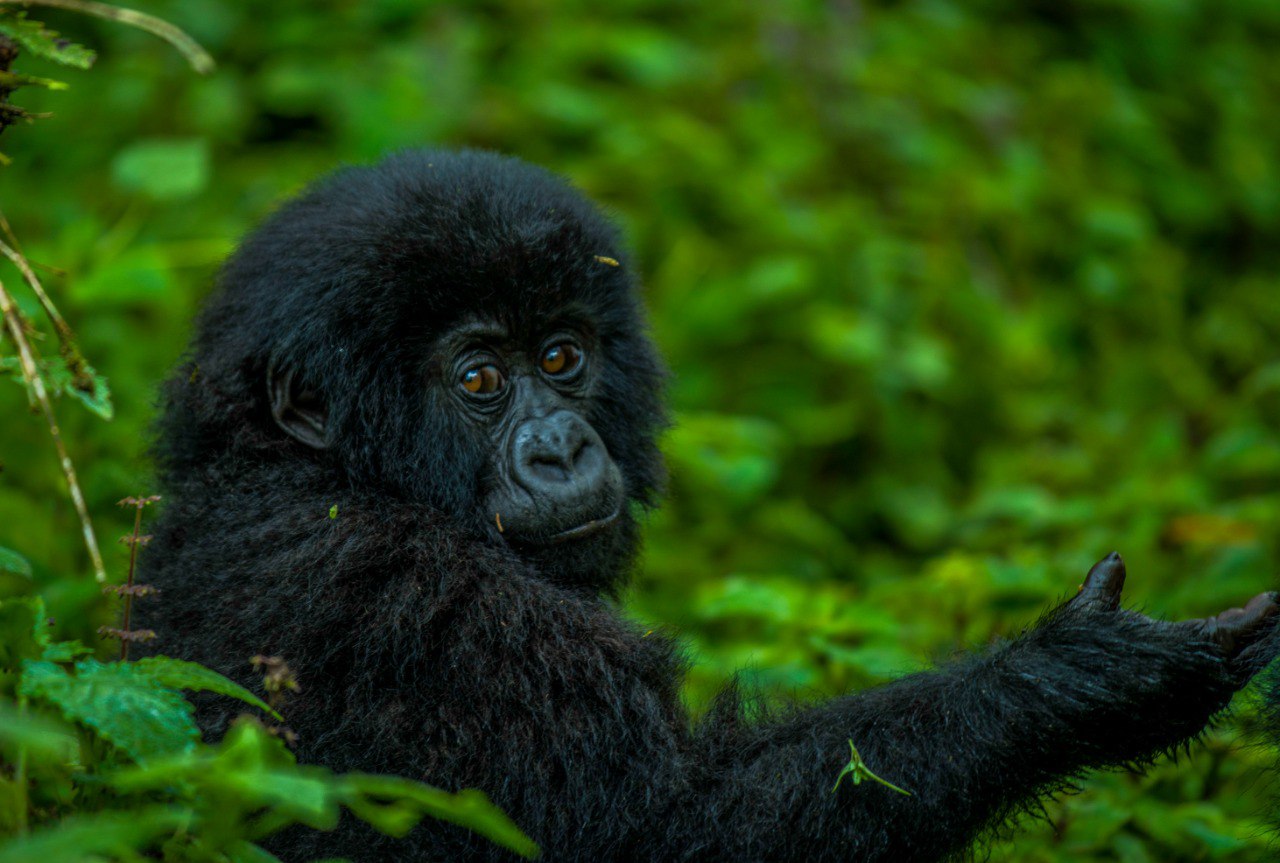
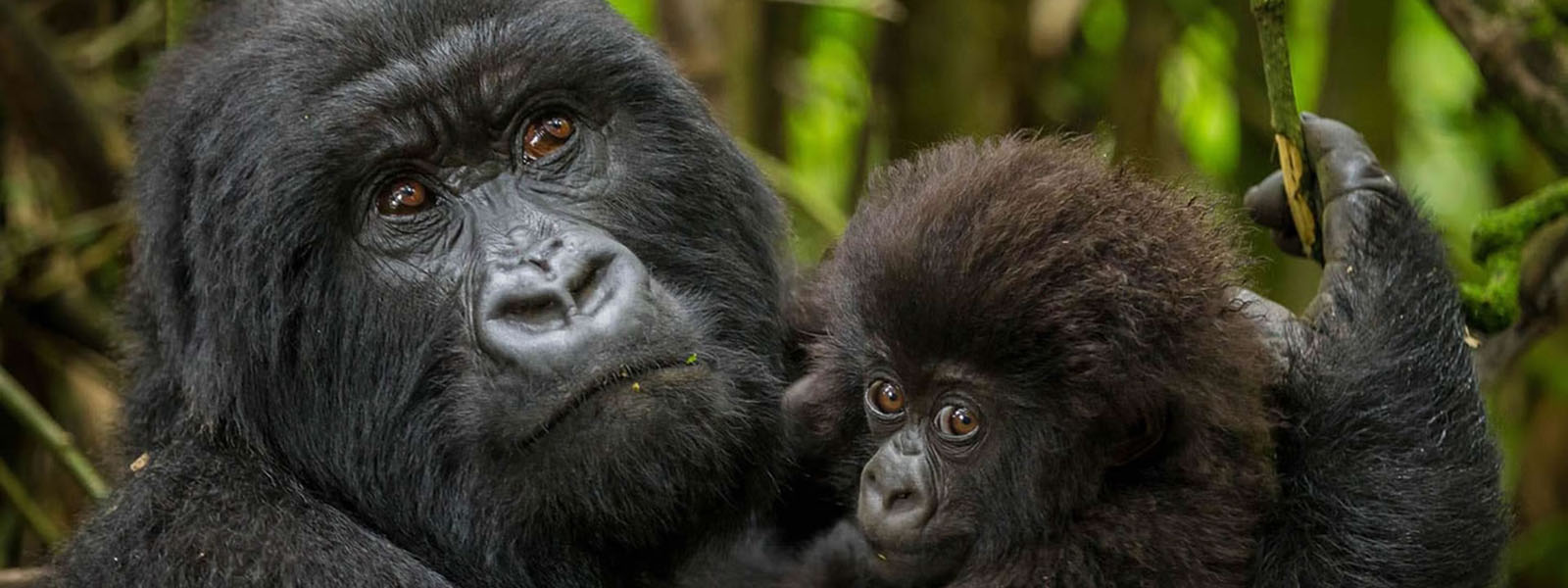
The Agashya family usually counts somewhere between 20 and 30 gorillas, with figures around 25 reported most often in recent years. A typical breakdown includes the dominant silverback, a dozen or so adult females, several juveniles, and a handful of infants. The high share of females and young is a direct result of the silverback’s history of pulling members in from elsewhere.
For visitors, the size means plenty of activity to watch within the single hour allowed. Juveniles wrestle and climb, mothers carry infants, and the silverback keeps to the edge of the group, alert. Photographers tend to favour this family for that movement, since a large group at rest gives fewer chances than one with active young.
What the Agashya Gorilla Trek Is Like
On most days the Agashya trek is rated easy to moderate, putting it among the more approachable groups in the park. The catch is the silverback’s tendency to climb. If he has moved the family up the volcano, the hike can stretch to a long, steep day, and there are accounts of treks running many hours to reach the group near the top before the descent back down.
Plan for the moderate version but be ready for the long one. Sturdy boots with ankle support, rain layers, and a reasonable level of fitness cover most conditions. Hiring a porter at the trailhead eases the climb and supports local income, and it is worth doing whatever family you are assigned.
Best Time to Trek the Agashya Gorilla Family
The Agashya family can be trekked all year, since the gorillas stay in the park through every season. The drier months of June to September and December to February give firmer trails and lower the chance of a slippery climb, which matters more here than with families that stay low. These are also the busiest months, so permits sell out earliest.
The wetter months from March to May and again in November bring heavier mud and leeches but thinner crowds, and they unlock the low-season permit discount. Vegetation is denser in the rains, which can mean closer sightings once you reach the group, traded against a tougher walk in.
Permit Cost to Trek the Agashya Gorilla Family
Reaching the Agashya family uses the standard Rwanda gorilla permit, which costs $1,500 per person in 2026 for international visitors and is the same for every family in the park. The price covers entry, guides, trackers, and one hour with the group. It does not cover lodging, transport, or tips.
$1,500 per person for one trek, set by the Rwanda Development Board and identical across all families.
$1,050 per person from November to May, on condition you also book two nights in Akagera or Nyungwe National Park.
About $500 for foreign residents and rest-of-Africa visitors, and roughly $200 for East African citizens, on proof of status.
Around $15 to $20 for a porter at the trailhead, plus tips for guides and trackers, paid separately on the day.
Because the cost is fixed, choosing the Agashya family does not raise or lower your permit price. The family you visit affects only the length of the walk and the size of the group you sit with.
How to Book and Reach the Agashya Family
Permits are sold through the Rwanda Development Board, either directly on its booking platform or through a licensed tour operator who handles the paperwork as part of a package. Booking three to six months ahead is sensible for dry-season dates, and you cannot reserve a specific family in advance, only a trekking day. The family is assigned at the morning briefing.
Volcanoes National Park is about a two to three hour drive from Kigali, roughly 116 kilometres on paved roads to the town of Musanze and then to the Kinigi headquarters. Most visitors stay near the park the night before, since the briefing begins around 7 in the morning and a long Agashya day leaves little room for a late start.
Why is the Agashya family also called Group 13?
The name Group 13 comes from the thirteen members the family held when it was first habituated for tourism. The label stayed in use even after the group grew, so it is now known by both Group 13 and Agashya, the latter taken from the silverback who later led it.
How many gorillas are in the Agashya family?
The family usually holds between 20 and 30 gorillas, with around 25 reported most often. The exact number changes with births, deaths, and the movement of females, so treat any single figure as a snapshot rather than a fixed total.
Is the Agashya trek difficult?
It is usually rated easy to moderate, but the dominant silverback is known for leading the group high up the volcano when disturbed. On those days the trek becomes long and steep, so prepare for a moderate hike while being ready for a harder one.
Where does the Agashya family live?
The family ranges on the slopes of Mount Sabyinyo and Mount Gahinga, often along the valley toward Mount Bisoke. It shares broad territory with the Sabyinyo family, though the two groups keep apart.
How much does it cost to trek the Agashya family?
The permit is $1,500 per person in 2026, the same as for every family in Volcanoes National Park. A low-season rate of $1,050 applies from November to May with a qualifying stay in Akagera or Nyungwe, and reduced rates exist for residents and East African citizens.
Ready to go? Start planning your trip with our Rwanda gorilla tours.