The Kwitonda gorilla family is a mountain gorilla group in Rwanda’s Volcanoes National Park that originally crossed from the Democratic Republic of Congo and now ranges on the slopes of Mount Muhabura. Its name means “the humble one,” after its founding silverback, and the trek to reach it is rated moderate to strenuous because the group sits near the border and moves often. Visitors trek it on a $1,500 permit in 2026. Volcanoes National Park lies in northern Rwanda near Musanze along the Virunga Mountains.
This guide covers the family’s cross-border origins, the leadership change after the founding silverback died, the peaceful split that reshaped it, where it ranges, and what the trek involves in 2026. The member figures here are recent estimates, since births, deaths, and group splits keep changing the count.
The Cross-Border Origins of the Kwitonda Family
The Kwitonda family is one of the few groups in the park that did not form within Rwanda. It crossed from Virunga National Park in the Democratic Republic of Congo and settled on the Rwandan side in the early 2000s, around 2003 to 2004. Park staff at first thought the group was only passing through, but it stayed and became a permanent part of the Volcanoes National Park families.
The move is widely linked to the silverback Kwitonda, whose name means “the humble one,” leading his family away from the conflict-affected areas on the Congo side. The group keeps his name to this day in memory of the founder, even though he is long gone.
Leadership After the Founding Silverback
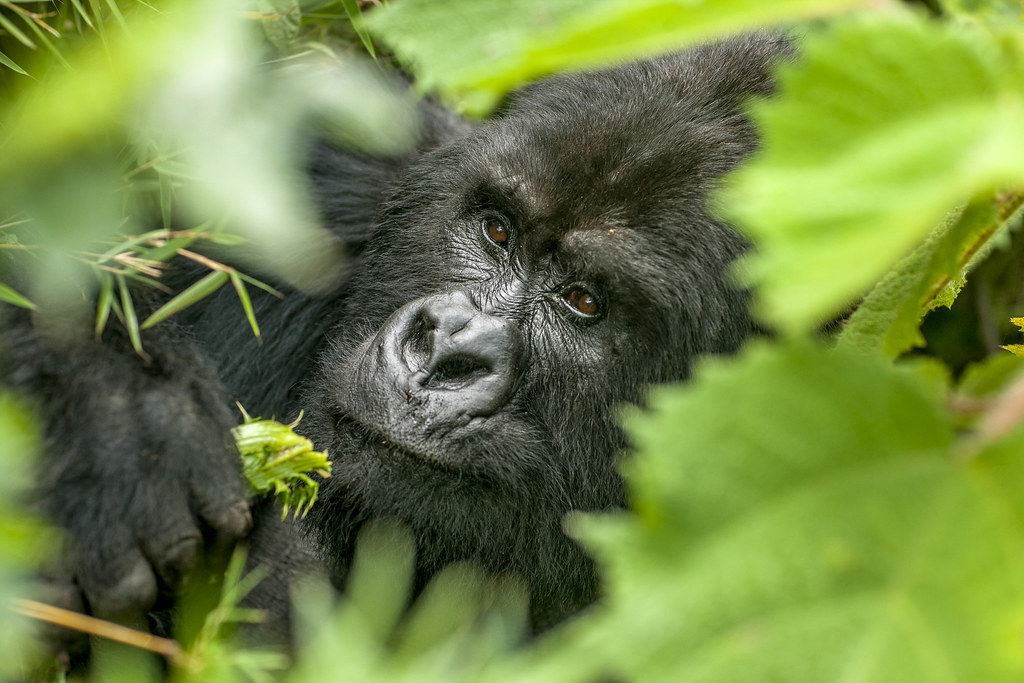
The silverback Kwitonda died of old age in 2012, shortly after passing the age of 40. His death left two subordinate silverbacks, Akarevuro and Kigoma, contending for the group. Akarevuro gradually won the respect of the other members and took full leadership, with the remaining silverbacks accepting the outcome.
That settled the family under Akarevuro, and he has led it through the years since. As with every group in the park, the line-up of silverbacks shifts over time as younger males mature, but the family has kept the Kwitonda name through each change at the top.
The 2021 Split and Today’s Group Size
In 2021 the Kwitonda family went through an unusually calm split. Rather than a violent break, the group divided in two, with Kigoma leaving to lead a separate family while Akarevuro kept the core Kwitonda group. Splits like this are a normal part of gorilla life and are one reason the number of families in the park keeps shifting.
Before the split the family had grown large, with some counts well above 30. Since then the core Kwitonda group has settled at roughly 19 to 24 members, including the dominant silverback, additional silverbacks, adult females, and a steady stream of infants. The family has long been known for a high birth rate, which keeps young gorillas a visible part of any visit.
Where the Kwitonda Gorilla Family Ranges
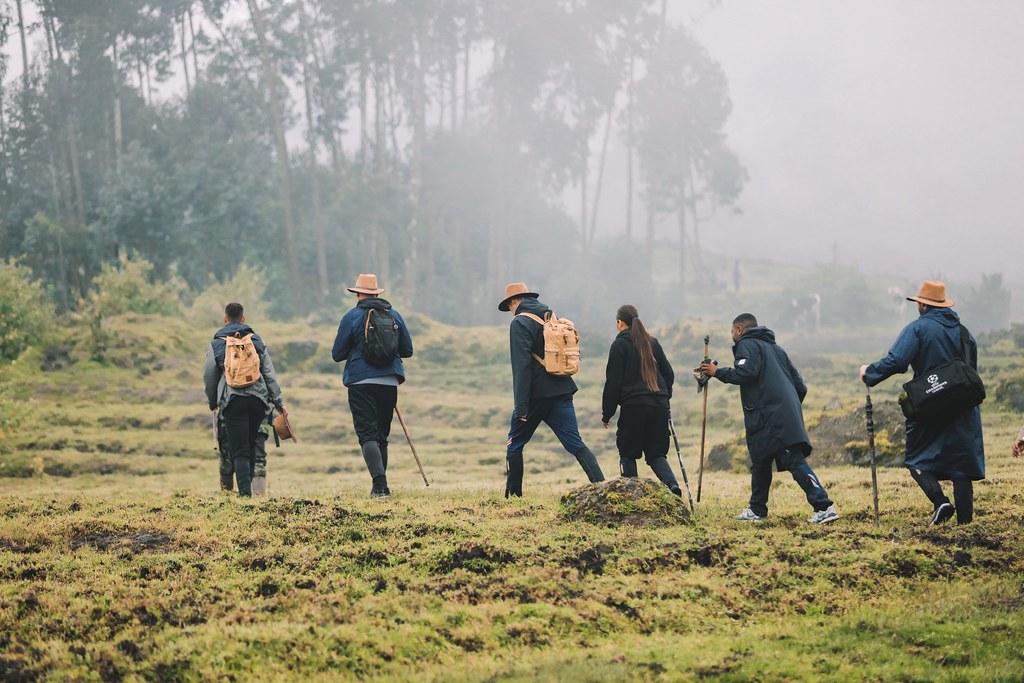
The Kwitonda family ranges on the slopes of Mount Muhabura, in the part of the park closest to the borders it once crossed. The approach walk passes through community farmland before entering the forest, and children often wave to trekkers heading in, a small reminder of how close the park sits to the villages around it.
Because the group keeps near the border and moves frequently, where it is found can vary widely from one day to the next. That movement is the main reason its trek difficulty is harder to predict than that of the settled, low-ranging families.
What the Kwitonda Gorilla Trek Is Like
The Kwitonda trek is usually rated moderate to strenuous. On accessible days the group is reached on manageable ground, but its habit of moving near the high border country means the search can run long and steep. The Muhabura slopes add altitude to the effort, so this is not a family to request if you want a guaranteed short walk.
Visitors who reach the group often describe the trek as feeling closer to the wild edge of the park, given the family’s history of crossing between two countries. The farmland approach also gives a clearer sense than most treks of how the park and its villages share a boundary, since you walk past fields and homes before the forest begins. Good boots, rain layers, and a porter for the climb cover most conditions, and a reasonable level of fitness helps on the longer days. A walking pole is worth carrying for the descent, which on the Muhabura slopes can be slick enough to slow even strong hikers.
Best Time to Trek the Kwitonda Gorilla Family
The Kwitonda family is trekked year-round, but because it ranges high near Muhabura and moves often, the season has a real effect on the climb. The drier months of June to September and December to February give firmer footing and make the longer searches more comfortable.
The wetter months of March to May and November bring heavier mud and the low-season discount, traded against a harder walk on a family that can already demand a long day. Trekkers comfortable with effort and uncertain timing can still do well off-peak, especially with the price reduction.
Permit Cost to Trek the Kwitonda Gorilla Family
The Kwitonda family is reached on the standard gorilla permit, priced at $1,500 per person in 2026 for international visitors, the same as every family in the park. It covers entry, guides, trackers, and the one-hour visit, and excludes lodging, transport, and tips.
$1,500 per person for one trek, set by the Rwanda Development Board and identical across all families.
$1,050 per person from November to May, with a qualifying two-night stay in Akagera or Nyungwe National Park.
About $500 for foreign residents and rest-of-Africa visitors, and roughly $200 for East African citizens, on proof of status.
Around $15 to $20 for a porter, useful on the Muhabura climb, plus tips for guides and trackers on the day.
The fixed price means the longer, less predictable Kwitonda trek costs no more than the easiest family. The difference is in the effort and the timing, not the fee.

How to Book and Reach the Kwitonda Family
Permits are sold by the Rwanda Development Board, directly online or through a licensed operator. You book a trekking day rather than a named family, and Kwitonda is assigned at the Kinigi briefing, more often to visitors who are comfortable with a longer, steeper search. Make your fitness and any preference clear in advance and on the day.
The park is about a two to three hour drive from Kigali to Musanze and the Kinigi headquarters. Because Kwitonda can mean a long day on the Muhabura side and the briefing starts around 7 in the morning, staying near the park the night before is the practical choice.
Where did the Kwitonda family come from?
The family crossed from Virunga National Park in the Democratic Republic of Congo and settled on the Rwandan side around 2003 to 2004. It is one of the few groups in Volcanoes National Park that did not form within Rwanda.
What does the name Kwitonda mean?
Kwitonda means “the humble one” in Kinyarwanda. It was the name of the founding silverback, who is credited with leading the family away from the conflict-affected Congo side, and the group keeps the name in his memory.
Who leads the Kwitonda family now?
After the founding silverback Kwitonda died of old age in 2012, leadership passed to Akarevuro following a contest with another silverback, Kigoma. The line-up of silverbacks shifts over time, but the group has kept the Kwitonda name.
How many gorillas are in the Kwitonda family?
The core group holds roughly 19 to 24 members in recent years, down from a larger size before a peaceful split in 2021 sent some members off into a separate family. Numbers change with births, deaths, and movement.
How difficult is the Kwitonda trek?
It is rated moderate to strenuous. The family ranges high on Mount Muhabura near the border and moves often, so the trek can run long and steep, though some days are more accessible. It is not a reliable choice for a guaranteed short walk.
See all of our gorilla trekking and start planning today.