Volcanoes National Park in Rwanda offers more than a dozen things to do, led by mountain gorilla trekking and golden monkey tracking, with volcano hikes up Bisoke and Karisimbi, the walk to Dian Fossey’s tomb, the Musanze Caves, the Twin Lakes of Burera and Ruhondo, and a cultural visit to the Gorilla Guardians Village. Activities are booked through the Rwanda Development Board, with 2026 permits ranging from about $50 to $1,500 per person. The park covers 160 square kilometres in northwestern Rwanda within the Virunga Massif and protects close to a third of the world’s surviving mountain gorillas.
Most visitors base themselves in Kinigi or the nearby town of Musanze, a two to three hour drive from Kigali, and combine two or three activities across a stay of two to four nights. Gorilla and primate permits sell out during peak months, so booking several weeks ahead is the single most useful planning step. The sections below cover each activity in turn, with current costs, walking times, and the conditions you should expect on the ground.
Mountain Gorilla Trekking in Volcanoes National Park
Mountain gorilla trekking is the reason most people travel to Volcanoes National Park, and it is the only place in Rwanda where the activity is possible. A gorilla permit costs $1,500 per person for international visitors in 2026, $500 for East African residents, and a reduced rate for Rwandan and East African Community citizens. The price is set by the Rwanda Development Board and includes park rangers, trackers, and the one hour you are allowed to spend with a gorilla family. It does not cover transport, accommodation, meals, or an optional porter.
The park has eighteen habituated gorilla families. Twelve are open to trekking and the rest are reserved for research. Each family receives a single group of no more than eight visitors per day, which keeps daily numbers low and reduces stress on the animals. Treks begin with a briefing at the Kinigi park headquarters at around 7:00 to 8:00 in the morning, where visitors are sorted into groups based on fitness and the location of each family. From there you drive to a trailhead and walk into the bamboo and Afromontane forest.
Walking time varies widely, from under an hour to four hours or more in each direction, depending on where the gorillas moved overnight. The terrain is steep, often muddy, and sits at altitudes between roughly 2,500 and 3,000 metres, so a reasonable level of fitness helps. Hiring a porter for about $10 to $20 is worth considering, both for the help on slippery slopes and because the fee supports local employment. The minimum age for gorilla trekking is 15. Sightings are reliable because the families are tracked daily, though the length and difficulty of the walk are never guaranteed.
Golden Monkey Tracking Above the Bamboo Line
Golden monkey tracking is the second primate activity in the park and a strong choice for travellers who want a shorter, less demanding walk than the gorilla trek. A golden monkey permit costs $100 per person for international visitors in 2026, with lower rates for residents and East African citizens. Golden monkeys are a localised subspecies found only in the Virunga and Gishwati forests, and they live in large, active troops of up to several dozen animals in the bamboo zone.
The walk usually starts at 7:00 in the morning from the park headquarters and lasts two to five hours in total, including the hour spent watching the troop. Because the monkeys feed on bamboo shoots at lower elevations, the ground tends to be flatter and the trek shorter than a gorilla search. The animals are fast, playful, and constantly moving, which makes photography harder but the viewing lively. The minimum age is 12. A habituation option, where you spend longer with researchers following a troop, is sometimes available at a higher fee.
Hiking to the Dian Fossey Tomb and Karisoke Research Site
The hike to Dian Fossey’s tomb climbs to the old Karisoke Research Center site, set between Mount Bisoke and Mount Karisimbi, where the American primatologist studied and was buried beside her favourite gorilla, Digit. The permit costs $75 per person for international visitors in 2026, with reduced rates for residents and East African citizens. The round trip takes about three hours of walking, with a steady uphill section through farmland and then forest.
This is a quieter, history focused walk rather than a wildlife trek. Guides explain Fossey’s research, the early anti poaching work that began in the 1960s and 1970s, and how it shaped the conservation model the park uses today. The site includes the graves of gorillas killed by poachers during that period. It pairs well with a gorilla trek on a separate day and suits travellers interested in the story behind the park’s recovery.
Climbing Mount Bisoke and Its Crater Lake
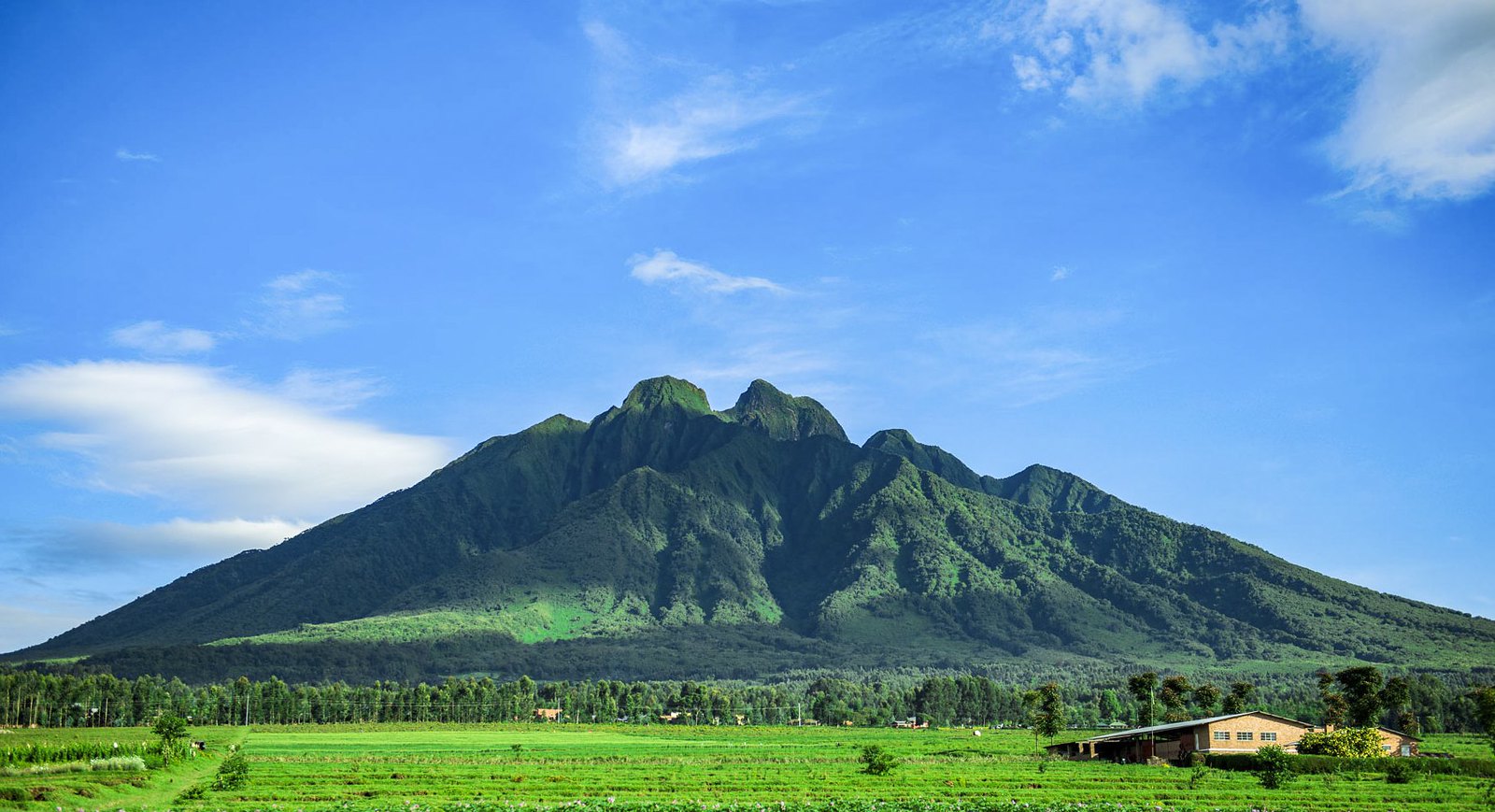
Mount Bisoke is the most popular single day volcano climb in the park, reaching 3,711 metres at a summit that holds a circular crater lake. The hike costs $75 per person for international visitors in 2026. The full ascent and descent takes roughly six hours, with a sharp, often muddy climb through forest where you may see signs of buffalo, elephant, and primates along the way.
The reward at the top is the crater lake, weather permitting, since cloud often rolls in by late morning. An early start gives the best chance of a clear view. The trail is physically demanding rather than technical, with no climbing equipment needed, but the altitude and the mud make sturdy boots and gaiters useful. Bisoke straddles the border with the Democratic Republic of Congo, so the summit doubles as a vantage point over the wider Virunga chain.
Summiting Mount Karisimbi on a Two Day Trek
Mount Karisimbi is the tallest of the Virunga volcanoes at 4,507 metres and the most serious hike in the park. The climb costs $400 per person for international visitors in 2026 and is done over two days. The first day takes you to a camp at around 3,700 metres, where you spend a cold night before pushing for the summit early on the second morning.
This is a strenuous high altitude trek suited to fit, experienced hikers who are prepared for sub zero temperatures and thin air. The route passes through several vegetation zones, from forest to alpine meadow, and the summit gives wide views over the neighbouring volcanoes Nyiragongo and Nyamuragira in Congo when skies are clear. You need warm layers, a sleeping bag, and camping gear, much of which a tour operator can arrange. Hiring porters is standard for this climb.
Hiking Mount Muhabura, Mount Gahinga, and Mount Sabyinyo
Beyond Bisoke and Karisimbi, the park offers three more volcano hikes that see far fewer visitors. Mount Muhabura at 4,127 metres is a steep, long single day climb to a small summit crater lake, with permits at $75 for international visitors. Mount Gahinga at 3,474 metres is a shorter option, also $75, passing through a swamp filled crater at the top. Mount Sabyinyo, whose jagged peaks sit at the meeting point of Rwanda, Uganda, and Congo, involves ladders and ridge walking and is the most technical of the group.
These hikes appeal to walkers who want solitude and a physical challenge rather than primate viewing. All three are full day efforts that demand good fitness and an early start, and all are weather dependent. Because they are less trafficked, the trails can be rougher, so a guide and porter are recommended. Combining one of these climbs with a gorilla or golden monkey permit on another day makes for a varied multi day stay.
Exploring the Musanze Caves
The Musanze Caves are a roughly two kilometre underground network formed by ancient lava flows near the town of Musanze, about a 20 minute drive from the park headquarters. A guided cave visit costs $50 per person for international visitors in 2026. The walk takes one to two hours along reinforced paths, with helmets and headlamps usually provided.
Guides explain the geology of the lava tubes, the bats that roost inside, and the role the caves played as shelter during periods of conflict in Rwanda’s history. The activity is undemanding and works well as a half day filler between treks or on an arrival or departure day. It is open year round and is one of the few park activities that does not depend on weather or fitness.
Nature Walks in the Sacred Buhanga Eco Park
Buhanga Eco Park is a small patch of ancient natural forest near Musanze, long held as a sacred site where Rwandan kings were traditionally crowned. A guided nature walk costs $55 per person for international visitors in 2026. Marked trails wind among old trees, lava rock, and quiet pools, and guides describe the medicinal plants, birdlife, and the legends tied to the grove.
The walk is flat, short, and suitable for almost any fitness level, making it a good rest day option for travellers who want time in the forest without a hard climb. It also offers a cultural angle that the volcano hikes do not, linking the landscape to Rwanda’s pre colonial monarchy. Birders often add Buhanga to a wider day around Musanze.
Boating and Hiking the Twin Lakes of Burera and Ruhondo
The Twin Lakes of Burera and Ruhondo sit just east of the park, separated by a narrow strip of land and ringed by steep hills with the Virunga volcanoes behind them. There is no formal permit for visiting the lakes, so this is one of the lower cost things to do in the area. Activities include guided shoreline walks, village visits, and dugout canoe or motorboat rides arranged locally or through a lodge.
The setting is scenic and calm, with terraced farmland running down to the water and small island communities dotting the surface. Hiking trails along the ridges link local villages and give wide views across both lakes. This is a relaxed counterpoint to the demanding treks, well suited to an afternoon after gorilla trekking or as part of a slower itinerary. Some travellers camp or stay overnight near the shore.
Cultural Visits to the Gorilla Guardians Village
The Gorilla Guardians Village, formerly known as the Iby’Iwacu Cultural Village, sits near the park entrance and is run partly by former poachers who now work in conservation and community tourism. A visit typically costs around $30 to $40 per person and lasts one to two hours, depending on the activities chosen.
The programme includes traditional dance and drumming, demonstrations of farming and food preparation, basket weaving, and a re enactment of a king’s court. The model gives local communities a direct income from tourism, which reduces the pressure to hunt inside the park. It is a hands on cultural activity rather than a wildlife one, and it pairs naturally with a gorilla trek since both start near Kinigi.
Birding in Volcanoes National Park
Volcanoes National Park records close to 200 bird species, including several Albertine Rift endemics that birders travel specifically to find. Birding is usually done on a guided nature walk, priced at $55 per person for international visitors in 2026, or alongside other treks. Target species include the Rwenzori turaco, handsome francolin, dusky crimsonwing, and the strange weaver, among others found in the bamboo and forest zones.
Because many of the sought after birds live at higher altitudes, some birding overlaps with the volcano hikes and the golden monkey zone. A specialist guide makes a real difference, since the dense forest and the calls of the rarer species are hard to pick out alone. Morning walks give the most activity. Birding can be combined with Buhanga Eco Park and the Twin Lakes for a fuller day away from the steep climbs.
Visiting the Ellen DeGeneres Campus of the Dian Fossey Gorilla Fund
The Ellen DeGeneres Campus opened in 2022 in Kinigi, a few minutes from the park headquarters, and is the permanent home of the Dian Fossey Gorilla Fund. It is open to the public seven days a week from 9:00 in the morning to 5:00 in the evening, with the last entry at 4:00. The exhibits cover nearly six decades of gorilla research and conservation, and the site includes a replica of Dian Fossey’s forest cabin, a 360 degree theatre, a virtual reality trekking experience, nature trails, a gift shop of local crafts, and the Gorilla Café.
Self guided visits take one to two hours, and guided tours that include research labs run longer and require advance booking. The campus works well before or after a gorilla trek and gives context that a single hour with a family cannot. It is one of the newer additions to the area’s list of things to do and a useful option on a day when no permit is held.
Attending the Kwita Izina Gorilla Naming Ceremony
Kwita Izina is Rwanda’s annual baby gorilla naming ceremony, usually held in September on grounds near Kinigi. Modelled on the Rwandan tradition of naming newborn children, the event names the gorilla infants born in the park over the past year and draws conservationists, officials, and visitors. There is no trek involved, and attendance is generally free, though accommodation in the area books out quickly around the date.
The ceremony is paired with a week of conservation talks and community events, so travellers timing a visit for September can fold it into a wider itinerary. Because lodging fills early, anyone planning to attend should reserve a room well in advance. Outside the ceremony, the same celebration of conservation success runs quietly through the park all year in the form of its growing gorilla population.
Cost of Activities in Volcanoes National Park in 2026
Permit prices in Volcanoes National Park are set per activity by the Rwanda Development Board, and the figures below are 2026 international visitor rates. Residents and East African citizens pay less for most activities. None of these fees include transport, accommodation, meals, or porters. A 30 percent gorilla permit discount, bringing the price to about $1,050, is sometimes offered to visitors who also visit Nyungwe or Akagera national parks, so it is worth asking when you book.
Use the estimator below to add up a personal plan. It applies 2026 starting prices and lets you combine permits, hikes, and lodge nights to see a rough per person total before international flights.
How to Reach Volcanoes National Park and When to Go
Volcanoes National Park is reached from Kigali in two to three hours by road, on a tarmac route that ends in Musanze and Kinigi. Public buses run to Musanze, but there is no public transport on to the Kinigi headquarters, so most visitors arrange a private vehicle or a taxi for the final stretch, which can run $30 to $50. Helicopter charters from Kigali are available for travellers who want to save the drive. The park borders Uganda and the Democratic Republic of Congo, which makes it easy to combine with the wider Virunga region.

The drier months of June through September and December through February give the most reliable trekking conditions, with firmer trails and clearer views, and these are the busiest and priciest months for lodging. The wetter periods of March to May and October to November bring greener forest, fewer visitors, and lower low season rates, though trails are muddier and rain is common on any given day. Gorillas, golden monkeys, and the volcano summits are accessible year round, so the choice of season is mostly about trail conditions, crowds, and budget. Whichever month you pick, secure the gorilla permit first and build the rest of the itinerary around it.
How much does a gorilla permit cost in Volcanoes National Park in 2026?
A gorilla permit costs $1,500 per person for international visitors in 2026, $500 for East African residents, and a lower rate for Rwandan and East African Community citizens. The fee covers park entry, rangers, trackers, and one hour with a gorilla family. A 30 percent discount may apply if you also visit Nyungwe or Akagera.
Do I need a permit for activities other than gorilla trekking?
Yes. Golden monkey tracking costs $100, the Dian Fossey tomb hike and most single day volcano climbs cost $75, Mount Karisimbi costs $400, the Musanze Caves cost $50, and nature walks or birding cost $55, all at 2026 international rates. Permits are booked through the Rwanda Development Board or a tour operator.
How fit do I need to be for the gorilla trek?
A moderate level of fitness is enough for most treks, but the walk can last from under an hour to four hours each way over steep, muddy ground at altitude. Hiring a porter for $10 to $20 helps on the climbs. The volcano summit hikes, especially Karisimbi, demand much higher fitness.
What is the minimum age for trekking?
The minimum age is 15 for gorilla trekking and 12 for golden monkey tracking. There is no specific age limit for the Musanze Caves, cultural visits, or the Ellen DeGeneres Campus, though the volcano hikes are physically demanding and not suited to young children.
How many days should I spend in the park?
Two to four nights lets you combine a gorilla trek with one or two other activities such as golden monkey tracking, a volcano hike, the Musanze Caves, or the Twin Lakes. A single night is enough for a gorilla trek alone if you arrive the day before, given the early morning briefing.