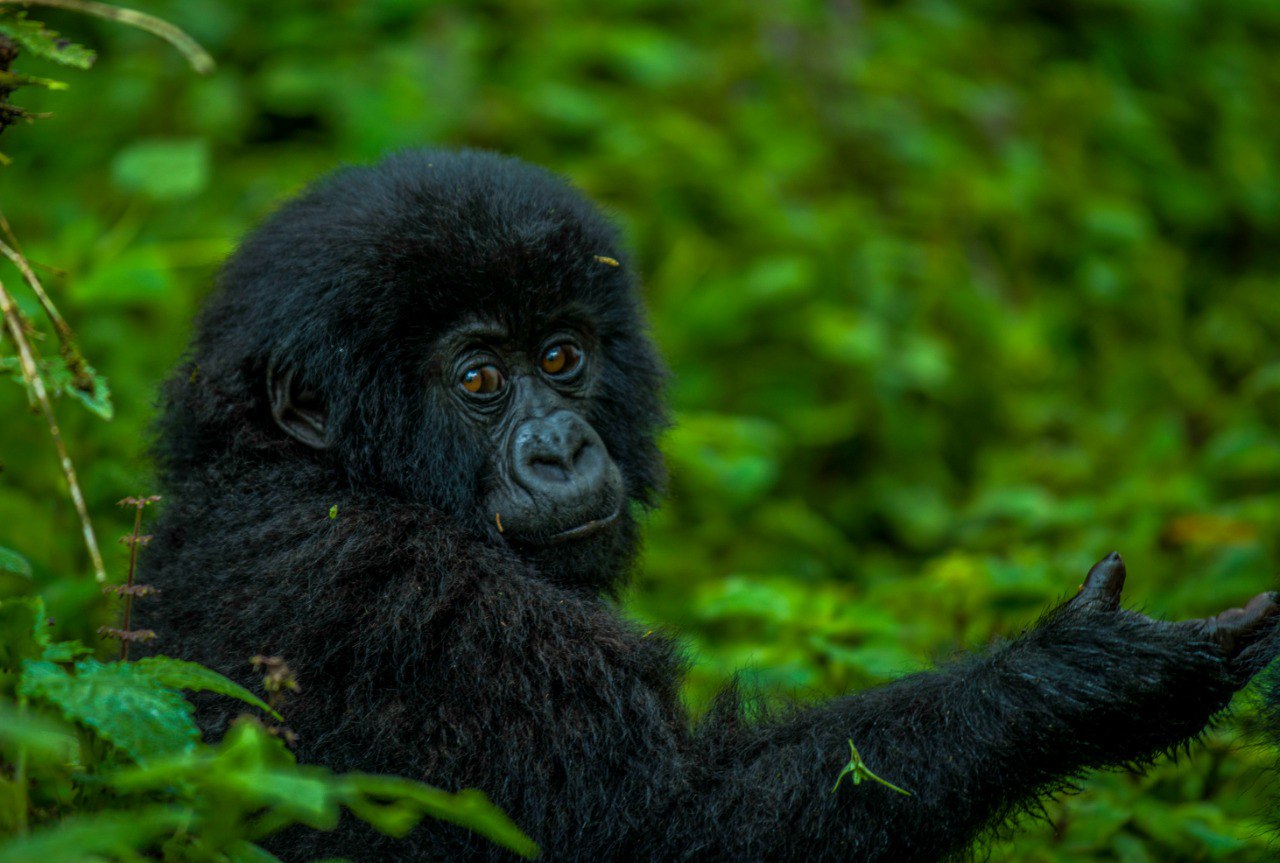
The Amahoro gorilla family is a calm, settled mountain gorilla group in Rwanda’s Volcanoes National Park, ranging on the slopes of Mount Bisoke and led by the silverback Ubumwe. Its name means “peace” in Kinyarwanda, and the trek to reach it is rated moderate to strenuous because of the climb up Bisoke. Visitors trek it on a $1,500 permit in 2026. Volcanoes National Park lies in northern Rwanda near Musanze along the Virunga Mountains, holding part of the world’s only wild mountain gorilla population.
This guide covers the family’s peaceful reputation, its leadership, where it ranges, how many gorillas it holds, and what the steeper trek to Bisoke involves in 2026. The figures here are recent estimates, since the size of any family changes with births, deaths, and the movement of females between groups.
Why the Amahoro Gorilla Family Is Known for Peace
Amahoro means “peace,” and the family lives up to the name with a notably low-tension social life. The group is calm and cohesive, which makes it a favourite among visitors who want a relaxed hour rather than the noise of a large, competitive family. That gentleness has a cost, though.
Because the dominant male does not fight hard to hold his females, the family has repeatedly lost members to more assertive silverbacks who break away to start their own groups. The neighbouring Umubano family formed exactly this way, when a silverback left Amahoro with a number of females after a long rivalry. The peaceful character that draws visitors is also what keeps the group from growing very large.
Who Leads the Amahoro Gorilla Family
The family is led by the silverback Ubumwe, a name that carries the sense of oneness or togetherness. His settled, unaggressive style is the source of the group’s peaceful reputation and, at the same time, the reason rival males have managed to draw females away over the years.
The group usually holds more than one silverback alongside Ubumwe, and the leadership balance shifts over time as younger males mature and as members move between neighbouring families on the Bisoke slopes. As with every group in the park, the count and the line-up of silverbacks should be read as current rather than permanent.
Where the Amahoro Gorilla Family Ranges
The Amahoro family ranges on the slopes of Mount Bisoke, also written Visoke, one of the steeper volcanoes in the chain. It shares this ground with the Umubano family, the group that split from it, and the two keep close to one another on the same slopes.
The higher, steeper terrain is the single biggest factor in the trek. Unlike the low-ranging families near the park boundary, Amahoro sits where reaching it means a sustained climb, and the ground is often wet and slick under the forest canopy.
Group Size and Members of the Amahoro Family
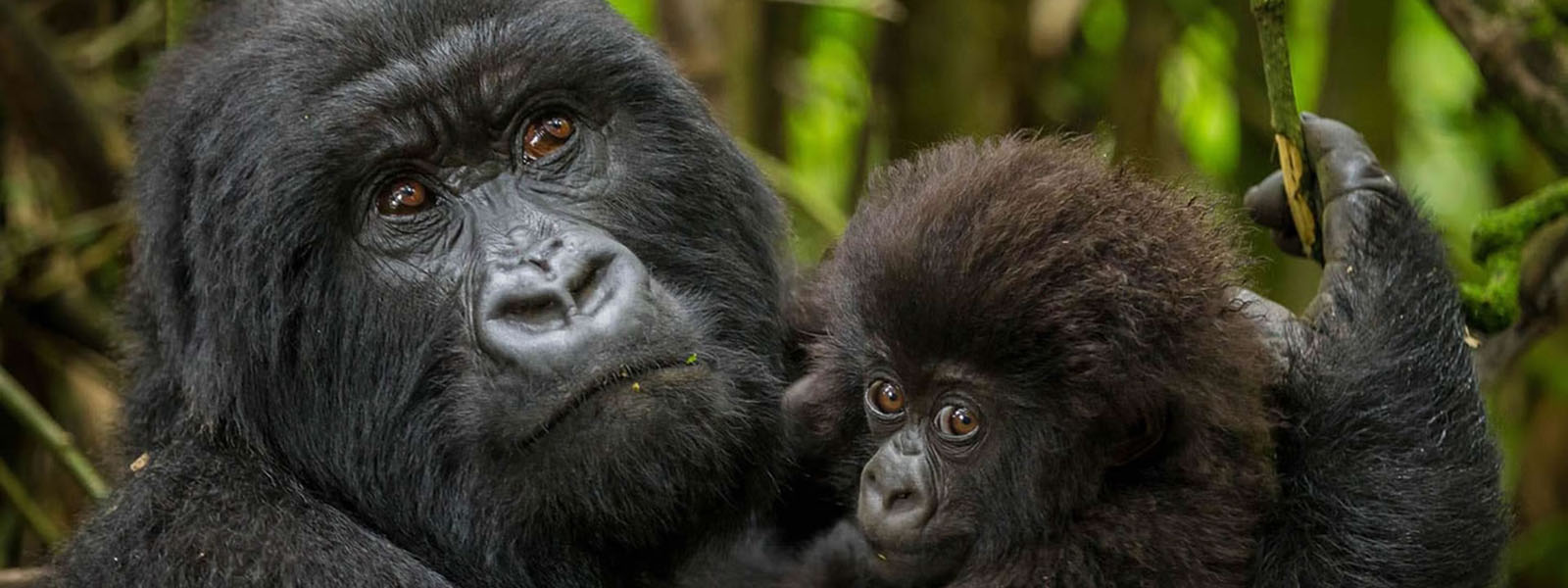
Recent counts put the Amahoro family at roughly 18 to 23 gorillas, with some reports higher in years when the group has held its members well. It includes the dominant silverback Ubumwe, additional silverbacks, a core of adult females, and a steady mix of juveniles and infants. The presence of several silverbacks in one peaceful group is itself part of what makes the family interesting to watch.
The settled mood shows in the behaviour. With less of the tension that drives larger, contested groups, visitors often see extended grooming, infants playing close to adults, and a silverback that holds the centre calmly rather than posturing. Researchers who track the family note that this stability also makes births easier to follow over time, since the group does not scatter and reform the way more volatile families do. For visitors, that translates into a good chance of seeing infants of different ages within a single group.
What the Amahoro Gorilla Trek Is Like
The Amahoro trek is rated moderate to strenuous, driven almost entirely by the climb up Bisoke. The distance is not always long, but the slope is steady and the footing is often wet, so the effort is real even on a day when the group is found at mid-elevation. Guides generally do not assign this family to visitors who have asked for the easiest possible walk.
The reward for the climb is twofold: a peaceful group and the higher viewpoints that come with Bisoke’s slopes. Good boots with ankle support, rain gear, and a porter for your pack make the ascent far more manageable. A walking pole helps on the descent, which on wet ground can be harder than the climb up.
Best Time to Trek the Amahoro Gorilla Family
The Amahoro family is trekked all year, but the season matters more here than for the low-ranging groups, because the Bisoke slopes get slick in the rains. The drier months of June to September and December to February give the safest footing on the climb and are the most comfortable time to reach this family.
The wetter stretches of March to May and November bring heavier mud and the low-season discount. The rains make the climb harder rather than impossible, and the denser vegetation can mean closer sightings once you reach the group, so off-peak trekkers willing to work for it can still do well.
Permit Cost to Trek the Amahoro Gorilla Family
The Amahoro family is reached on the standard gorilla permit, priced at $1,500 per person in 2026 for international visitors, the same fee as every other family. It covers entry, guides, trackers, and the one-hour visit, and excludes lodging, transport, and tips.
$1,500 per person for one trek, set by the Rwanda Development Board and identical for all families.
$1,050 per person from November to May, with a qualifying two-night stay in Akagera or Nyungwe National Park.
Roughly $500 for foreign residents and rest-of-Africa visitors, and about $200 for East African citizens, on proof of status.
About $15 to $20 at the trailhead for the Bisoke climb, plus tips for guides and trackers on the day.
The fixed price means the harder Amahoro climb costs the same as the easiest trek in the park. What you trade for the same fee is effort rather than money, in exchange for a peaceful group and higher ground.
How to Book and Reach the Amahoro Family
Permits are sold by the Rwanda Development Board, online or through a licensed operator. You reserve a trekking day, not a named family, and Amahoro is assigned at the Kinigi briefing, usually to visitors who can manage a moderate climb. Flag your fitness and your preference for a calm group both in advance and on the morning.
The park is about a two to three hour drive from Kigali to Musanze and the Kinigi headquarters. Because the Bisoke climb takes time and the briefing starts around 7 in the morning, staying near the park the night before is the sensible choice rather than driving up the same day.
What does the name Amahoro mean?
Amahoro means “peace” in Kinyarwanda. The family earned the name through its calm, cohesive social life, which is the main reason visitors who want a relaxed group request it.
Who leads the Amahoro family?
The dominant silverback is Ubumwe, whose name carries the sense of oneness. His settled style gives the group its peaceful reputation and also explains why rival males have drawn females away over the years.
How hard is the Amahoro trek?
It is rated moderate to strenuous, mostly because the family ranges on the slopes of Mount Bisoke, which means a steady climb on often wet ground. It is not usually assigned to visitors who have asked for the easiest possible walk.
How is Amahoro connected to the Umubano family?
The Umubano family broke away from Amahoro when a silverback named Charles left with a number of females after a long rivalry with Ubumwe. The two groups still share the Bisoke slopes and range close to each other.
How much does the Amahoro trek cost?
The permit is $1,500 per person in 2026, the same as for every family in Volcanoes National Park. A low-season rate of $1,050 applies from November to May with a qualifying stay in Akagera or Nyungwe, and reduced rates exist for residents and East African citizens.
Browse our gorilla tours to begin planning your journey.