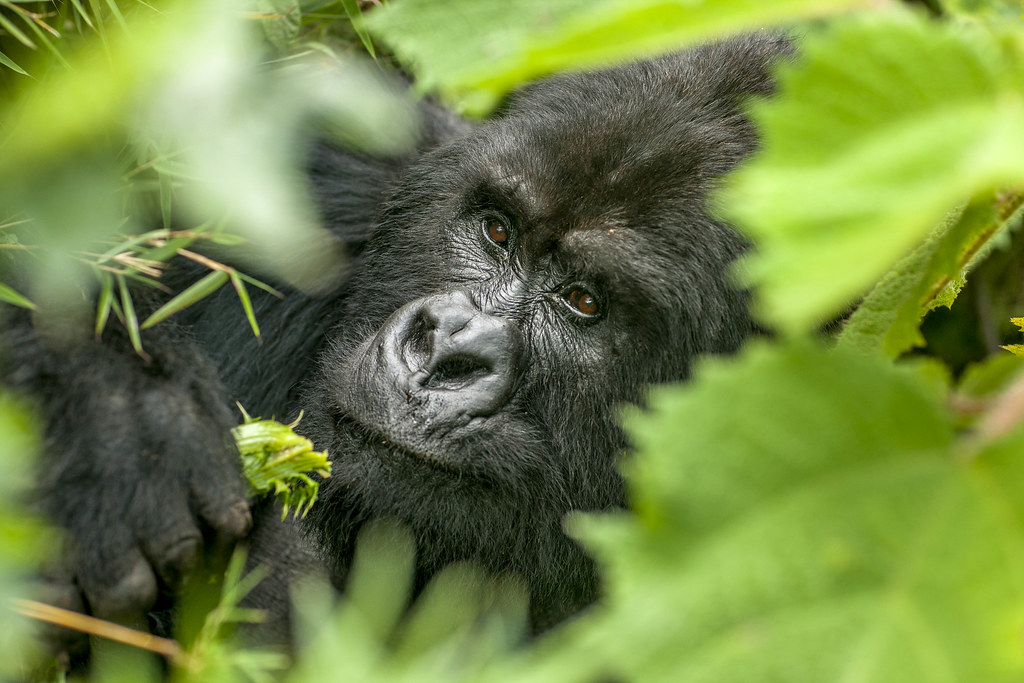
You can spend only one hour with the gorillas in Rwanda because the limit protects them from human disease and stress, preserves their natural behaviour, and shares access fairly among visitors. The rule applies once your group finds the family in Volcanoes National Park, and it is one of the core conservation measures that has helped mountain gorilla numbers recover. The trek itself is separate, and the permit is $1,500 in 2026. Volcanoes National Park lies in northern Rwanda near Musanze along the Virunga Mountains.
This guide explains the reasons behind the one-hour rule, what counts within the hour, and why a limit that can feel short is one of the most important protections for an endangered species. The short version is that the hour is set for the gorillas‘ benefit, not the visitors’.
The Hour Limits Disease Transmission
The strongest reason is disease. Mountain gorillas share much of our biology and are highly vulnerable to human illnesses, especially respiratory infections, that can be mild for us but severe or fatal for them. The longer humans stay near a family, the greater the chance of passing on pathogens through the air or contact.
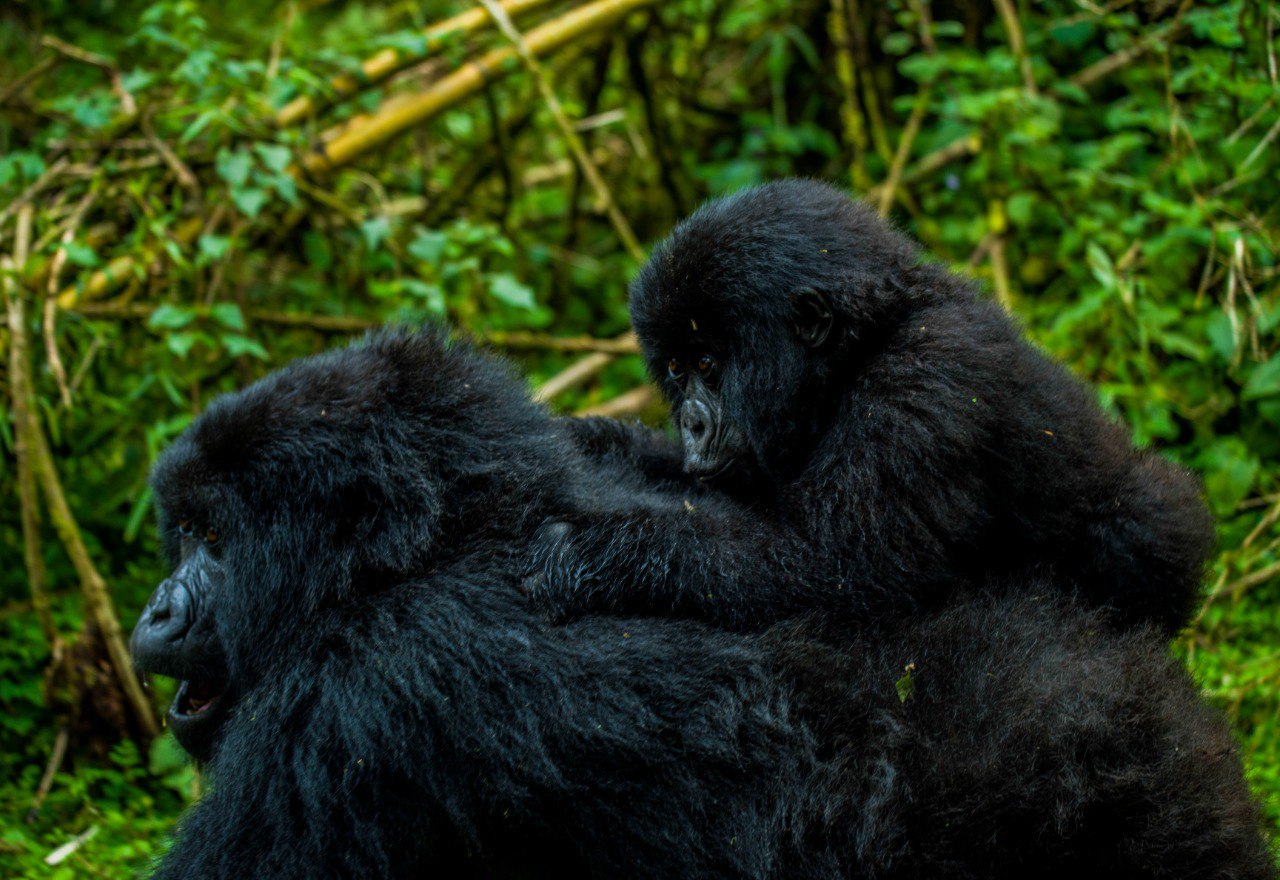
Capping each visit at one hour sharply reduces that exposure. Combined with the eight-visitor limit, the distance rule, and masks, the time limit is part of a layered defence designed to keep human germs away from a population of only around 1,000 to 1,100 animals.
The Hour Reduces Stress on the Gorillas
Even without illness, a prolonged human presence stresses wild animals. Although these families are habituated to people, they are not tame, and hours of close observation would disturb their feeding, resting, and social routines. The one-hour limit keeps the interruption brief.
By keeping each visit short, the rule lets the gorillas return quickly to behaving as they would without an audience. That matters both for their welfare and for the quality of the experience, since visitors see natural behaviour rather than animals altered by constant attention. Researchers who study the families over many years rely on the gorillas keeping their normal routines, so the same short-visit principle that protects welfare also protects the long-term monitoring that underpins their conservation.
The Hour Shares Access Fairly
The limit also spreads access. With each family taking only eight visitors for one hour once a day, the rule, together with the group-size cap, lets the park serve a steady stream of visitors without ever overwhelming a single group. A longer visit would mean either fewer permits or more pressure on each family.
This balance keeps gorilla tourism both sustainable and economically valuable, since the permits fund protection. The one-hour rule is part of what lets the park welcome visitors year after year while keeping the gorillas’ wellbeing first. Without it, the choice would be stark: either far fewer people could ever see the gorillas, or each family would face far more human contact than is safe, and neither outcome serves the long-term goal of keeping the population growing.
What Counts Within the Hour
The hour starts when your group reaches the gorillas, not when you leave the trailhead. The often long, steep trek to find the family is separate and unlimited in the sense that it takes as long as it takes. Once the trackers bring you to the group, the guide begins the hour.
Within that time you watch, photograph, and listen to the guide, keeping your distance and following the rules. The hour passes quickly, and guides hold to it firmly, so the time with the gorillas is concentrated and deliberate rather than open-ended. On the rare day when a family is found unusually fast and close to the trailhead, the hour still applies once you arrive, so a short trek does not earn extra time with the group, just an easier walk to reach them.
Is One Hour Enough?
Many visitors find the hour passes in what feels like minutes, and wish for longer. In practice the time is enough to watch a family feed, groom, play, and rest, and to take photographs, while staying within what is safe for the animals. The intensity of being close to wild gorillas makes even a short visit deeply memorable.
For those who want more, the answer is not a longer single visit but a second trek on another day with a different family, each on its own permit. That spreads the extra time across families rather than burdening one, in keeping with the logic of the rule. Visitors who do two treks often say the second hour feels richer, since they already know what to expect and spend less of it fumbling with cameras and more of it simply watching the family.
The Gorilla Habituation Alternative
Rwanda’s standard treks are capped at one hour, but the region offers a longer option elsewhere. In Uganda, a gorilla habituation experience allows up to four visitors to spend several hours with a family still being habituated, at a higher permit price and with stricter limits on numbers.
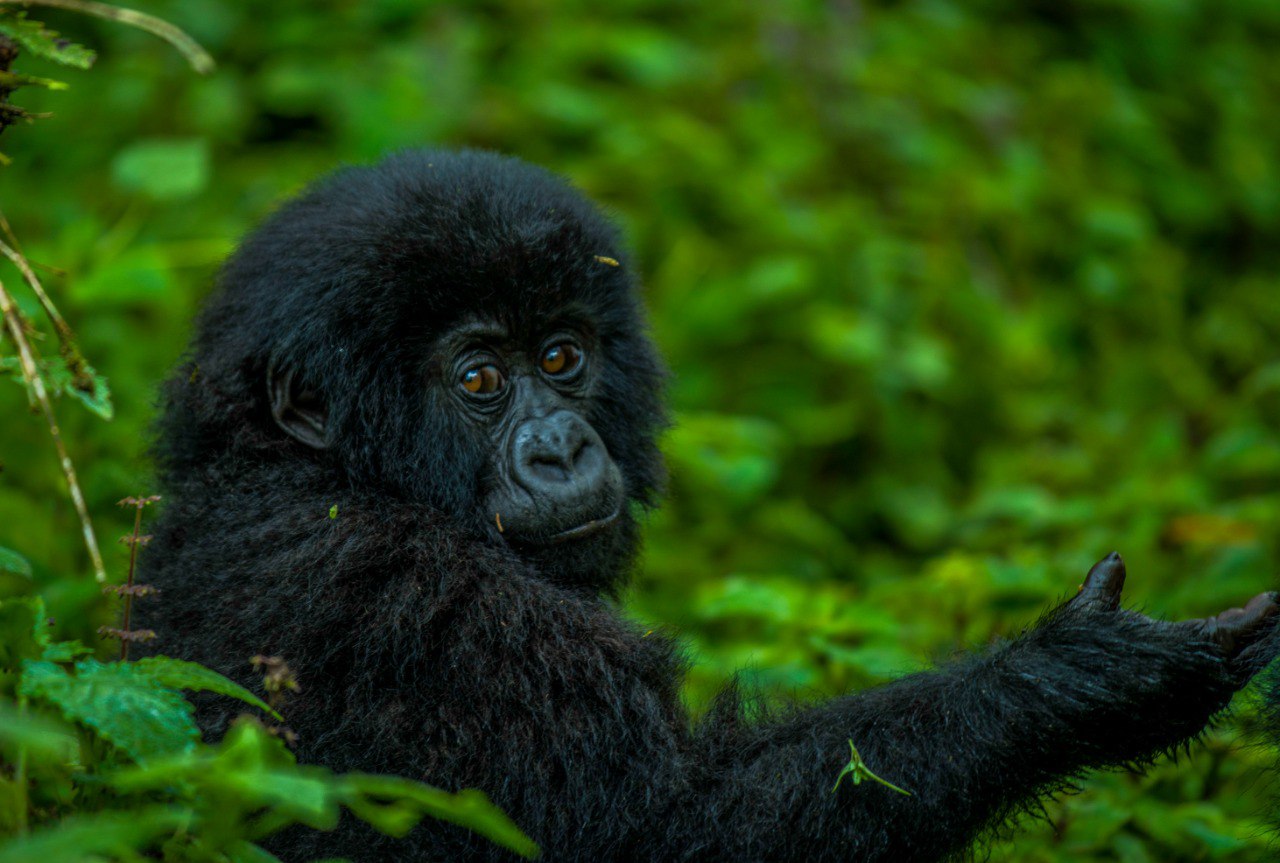
This is the exception that proves the rule: the longer experience involves fewer people and a group being prepared for tourism, under close research supervision. For the fully habituated families on a standard Rwanda trek, the one-hour limit remains the standard that keeps the system sustainable.
The Permit and the Value of the Hour
At $1,500 per person in 2026 for one hour, the permit can seem expensive per minute, but the fee funds the protection that keeps the gorillas alive and limits the number of people who can visit. The hour is short by design, and the cost reflects conservation as much as access.
$1,500 per person in 2026 for one hour, funding protection and capping daily visitor numbers.
The trek to find the family is separate, so the limit applies only to time with the group.
Book a second trek on another day with a different family, each on its own permit.
Uganda’s habituation experience allows several hours for up to four visitors at a higher price.
Understood as a conservation measure rather than a limit on value, the hour makes sense. It protects the gorillas, shares access, and funds the work that has helped the population recover.
Why is gorilla viewing limited to one hour?
The one-hour limit protects gorillas from human disease and stress, preserves their natural behaviour, and shares access fairly among visitors. It is one of the core conservation rules that has helped mountain gorilla numbers recover.
Does the hour include the trek?
No. The hour begins when your group reaches the gorillas, not when you leave the trailhead. The trek to find the family is separate and takes as long as it takes, often several hours each way.
Can I pay to stay longer with the gorillas?
Not on a standard Rwanda trek, where the one-hour limit is fixed. If you want more time, book a second trek on another day with a different family, each on its own permit. Uganda offers a separate habituation experience of several hours for up to four visitors.
Is one hour enough time with the gorillas?
Most visitors find it enough to watch a family feed, groom, play, and rest, and to take photographs, even if it passes quickly. The intensity of being close to wild gorillas makes even a short visit memorable, and a second trek adds more time if you want it.
What is the gorilla habituation experience?
It is a longer option available in Uganda, allowing up to four visitors to spend several hours with a family still being habituated, under research supervision, at a higher permit price. It involves fewer people than a standard trek, which is why the longer time is permitted.
Explore our Rwanda gorilla tours for a private, tailor-made trip.