Face masks are used during gorilla treks in Rwanda to stop human respiratory illnesses from spreading to the gorillas, which share around 98 percent of their DNA with humans and have little immunity to our diseases. A surgical mask worn near the family reduces the droplets you breathe out, lowering the risk that a cold or flu could pass to an endangered animal. The practice is part of the rules tied to the $1,500 permit in 2026. Volcanoes National Park lies in northern Rwanda near Musanze along the Virunga Mountains.
This guide explains why masks matter so much for gorillas specifically, how the practice began and why it stayed, what kind of mask to use, and how it fits alongside the other health rules. The short answer is that a mask is one of the cheapest and most effective ways a visitor can protect the species.
Why Disease Is the Central Threat
Mountain gorillas are genetically very close to humans, sharing roughly 98 percent of their DNA. That closeness means many illnesses that affect people can also infect gorillas, and respiratory infections are among the most dangerous. A virus that gives a human a mild cold can cause severe, sometimes fatal, illness in a gorilla.
Importantly, gorillas have no immunity to these human-derived illnesses, because they have not evolved alongside them. With only around 1,000 to 1,100 mountain gorillas left, an outbreak spread through a family could be a serious blow to the whole population. Disease, not poaching alone, is one of the gravest modern threats they face. History bears this out, as documented respiratory outbreaks in habituated groups have caused deaths in the past, which is precisely why the rules around human contact have tightened over the years rather than relaxed.
How the Mask Practice Began and Why It Stayed
Mask wearing near gorillas became widespread during the COVID-19 pandemic, when the risk of passing a novel virus to great apes was taken extremely seriously. Parks across the region introduced or tightened mask rules as an added layer of protection during that period.
What began as a pandemic measure has largely stayed in place, because the underlying logic was always broader than COVID. Masks reduce the spread of all respiratory droplets, including common colds and flu, so keeping the practice protects gorillas from the everyday illnesses visitors carry, not just one virus. It is now embedded in Rwanda’s Gorilla Friendly approach.
How a Mask Actually Helps
A mask works by catching the droplets you exhale, cough, or sneeze, which are the main way respiratory illnesses spread. Worn during the hour with the gorillas, when you are closest, it reduces the number of potentially infectious particles that reach the air around the family.
It is not a complete barrier on its own, which is why it works alongside the distance rule, the no-sick rule, and hygiene. Together these measures form a layered defence, and the mask is the part that protects against the droplets that distance alone cannot fully stop, especially if a gorilla approaches closer than the required buffer. Habituated gorillas are often relaxed enough to wander near visitors, and a curious youngster can close the gap in seconds, which is exactly the moment a mask earns its place.
What Kind of Mask to Bring
A simple surgical mask is the standard, and bringing several for your trek is wise, since one may get damp or dirty on a long, humid hike. Fresh masks for the time near the gorillas are better than a single one worn all day. Some visitors prefer a higher-grade mask, which offers more filtration.
Whatever type you bring, the key is to have it ready and to wear it properly over the nose and mouth during the hour. Carrying spares means you are never caught without one if guidance on the day asks for masks and you have only a soiled one left. A mask worn under the chin or pulled below the nose does little, so the simple act of wearing it correctly for the full hour is what turns it from a token into a real protection.
Is Mask Wearing Mandatory?
In practice, mask wearing near the gorillas is often required and always encouraged, though the strictness can vary between guides and over time. Some guides insist on masks when close to a family, others are more relaxed, and official guidance is reviewed periodically.
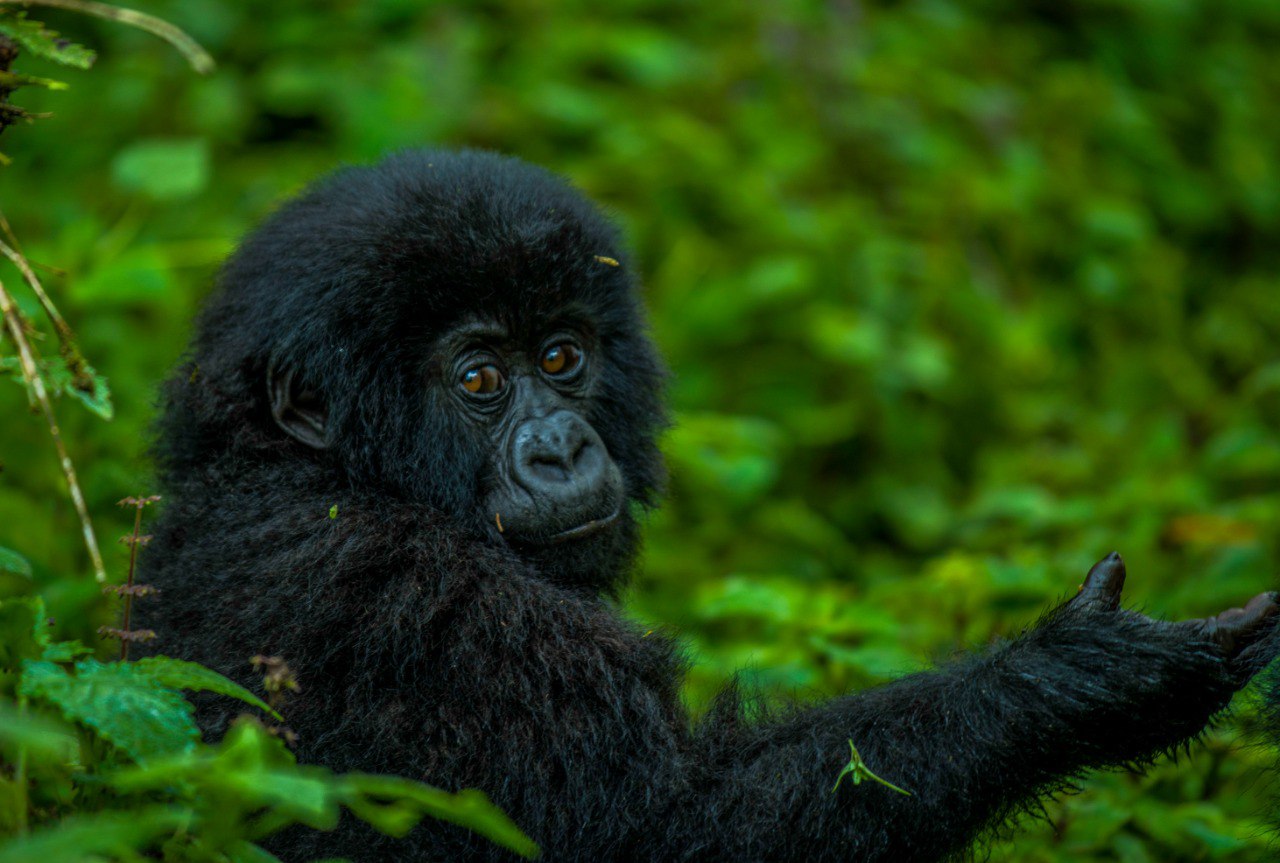
Given that variation, the sensible position is simple: bring masks and wear one during your viewing hour regardless of the day’s specific instruction. It costs you nothing, it cannot do harm, and it protects an endangered species, so there is no good reason not to. A guide who does not explicitly ask for a mask is not a reason to leave it off, since the gorillas benefit either way and wearing one quietly models good practice for the rest of your group.
Masks as Part of the Bigger Picture
The mask is one piece of a wider set of health rules that all serve the same goal. The no-sick rule keeps obviously ill visitors out of the forest, the distance rule reduces close contact, the one-hour limit shortens exposure, and hygiene habits like sanitiser and coughing away from the animals reduce transmission further.
Seen together, these measures are why disease has been contained as well as it has, and why gorilla numbers have been able to recover. The mask is the small, personal contribution each visitor makes to that larger system of protection. Unlike the rules enforced by rangers, the mask depends largely on the visitor choosing to wear it properly, which makes it as much a matter of personal responsibility as of regulation.
The Permit and the Cost of Protection
The health rules, including masks, cost the visitor almost nothing beyond the permit at $1,500 per person in 2026, which funds the wider protection of the gorillas. A pack of masks is a negligible expense against the value of the species they help safeguard.
$1,500 per person in 2026, funding the protection and monitoring that the health rules support.
A negligible cost; bring several surgical masks and wear one during your hour with the gorillas.
Gorillas share about 98 percent of human DNA and have no immunity to our respiratory illnesses.
Masks work alongside the no-sick rule, the distance rule, the one-hour limit, and hygiene.
For the price of a few masks, a visitor adds a real layer of protection for one of the world’s most endangered great apes. It is among the easiest and most worthwhile rules to follow.
Why do you have to wear a mask during gorilla trekking?
Masks stop human respiratory droplets from spreading to the gorillas, which share around 98 percent of their DNA with humans and have no immunity to our illnesses. A cold that is mild for a person can be fatal for a gorilla, so the mask reduces that risk.
Are masks mandatory for gorilla trekking in Rwanda?
Mask wearing near the gorillas is often required and always encouraged, though strictness varies between guides and over time. The sensible approach is to bring masks and wear one during your viewing hour regardless of the day’s specific instruction.
When did mask rules start for gorilla treks?
Mask wearing became widespread during the COVID-19 pandemic and has largely stayed in place because the logic was always broader than COVID. Masks reduce the spread of all respiratory droplets, including common colds and flu.

What kind of mask should I bring?
A simple surgical mask is the standard, and bringing several is wise since one may get damp or dirty on a humid hike. A higher-grade mask offers more filtration. Have a fresh one ready for the hour near the gorillas.
Does a mask really make a difference?
Yes, as part of a layered defence. The mask catches exhaled droplets that the distance rule alone cannot fully stop, especially if a gorilla approaches. Together with the no-sick rule, distance, and hygiene, it helps keep human illness out of the population.