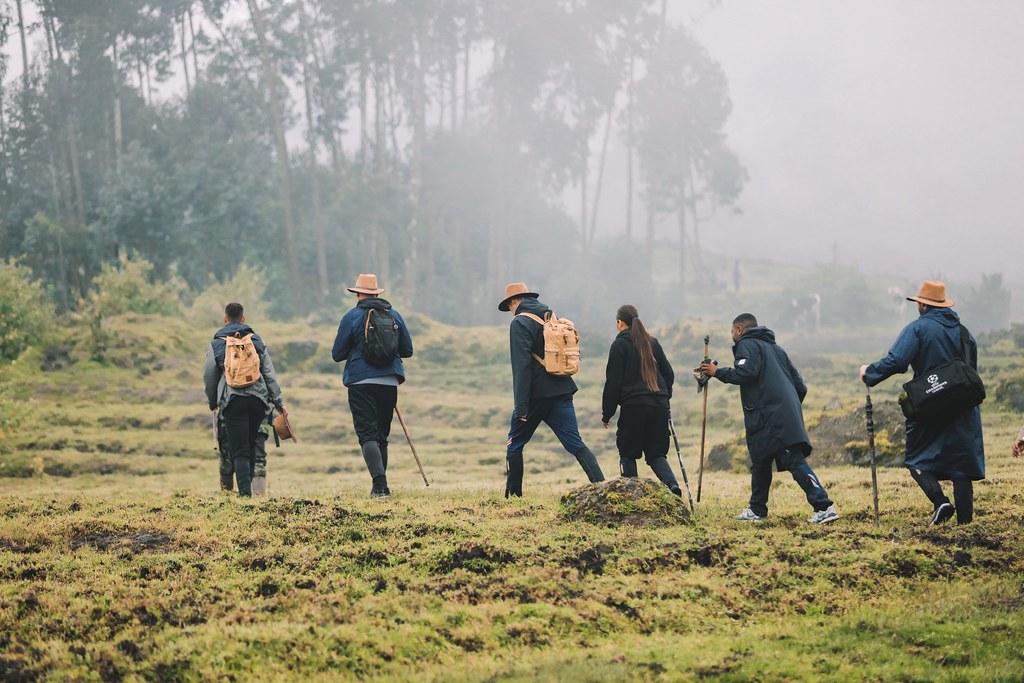
The main photography rules during gorilla trekking in Rwanda are no flash, no selfie sticks or tripods near the animals, keep the required distance, move slowly and quietly, and never let getting a photo override the guide’s instructions. Flash is banned because it startles the gorillas, and the rules protect both the animals and the quality of everyone’s hour. The permit is $1,500 in 2026. Volcanoes National Park lies in northern Rwanda near Musanze along the Virunga Mountains.
This guide covers the photography rules, the camera settings that work in low forest light, and how to come away with good images while respecting the animals. The aim is to help you photograph the gorillas well without breaking the rules that keep them calm and safe.
No Flash, the Most Important Rule
The single firmest photography rule is no flash. A sudden burst of light startles the gorillas, can provoke a defensive reaction from a silverback, and disturbs the whole family. Before you trek, set your camera and phone to switch the flash off, and check it again at the start of the hour so there is no accidental burst.
This matters more than most visitors expect, because cameras often default to flash in the dim forest light. Confirming the setting in advance, rather than fumbling with it in front of the animals, is the simplest way to be sure you do not break the rule at the worst moment.
No Selfie Sticks or Tripods Near the Gorillas
Equipment that extends toward the animals or takes time to set up is not allowed close to the gorillas. Selfie sticks are banned because pushing a device toward a gorilla is intrusive and can be read as a threat, and tripods are impractical and slow in the dense forest where the group may move at any moment.
The guidance favours simple, handheld photography that keeps you ready to move and lets you follow the guide’s signals instantly. Leave the bulky rig behind and travel light, since the conditions reward a camera you can raise and lower quickly far more than an elaborate setup.
Keep Your Distance While Shooting
The distance rule applies just as much when you are photographing. It is tempting to edge closer for a better frame, but the required buffer, officially seven metres in Rwanda and often closer to ten in practice, exists to protect the animals and must hold even when the shot would be better from nearer.
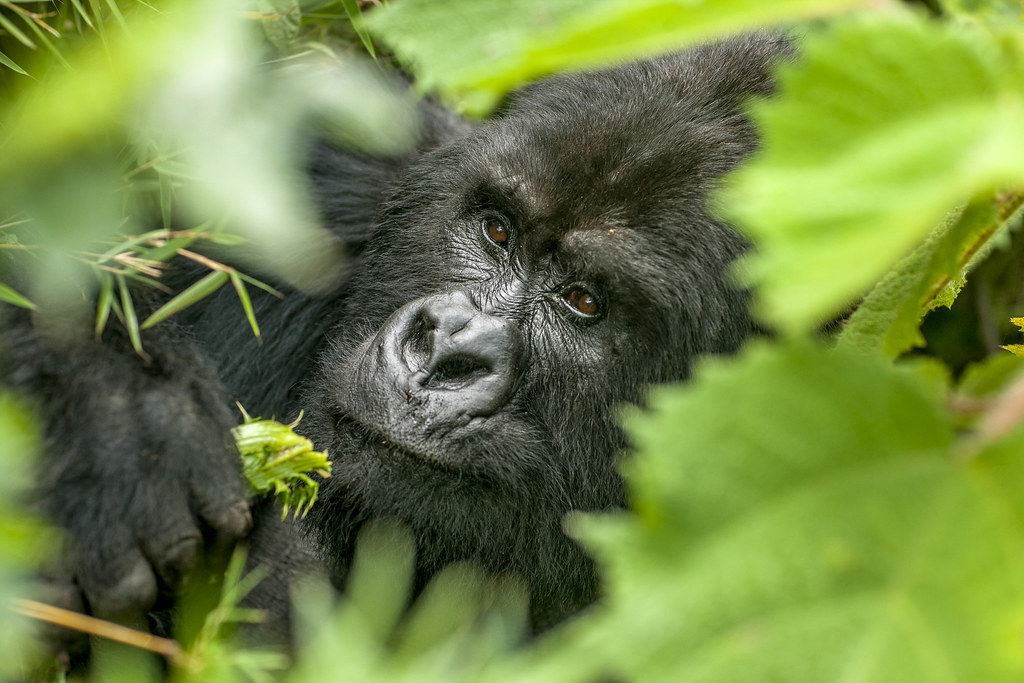
Use your zoom rather than your feet to fill the frame. A modest telephoto lens or a phone’s zoom lets you capture close detail without breaking the distance, and the guide will tell you where to stand. If a gorilla approaches you, keep shooting calmly if you can, but do not advance toward it. The trackers and guide manage the group’s space carefully, so trust their positioning rather than drifting sideways or forward for an angle, which can unsettle the family and break the rule without you realising.
Move Slowly, Stay Quiet
Photography should not change how you behave around the family. Move slowly, keep your voice down, and avoid sudden gestures that the excitement of a good shot can prompt. Loud shutters, raised arms, and quick repositioning all disturb the animals and the rest of your group.
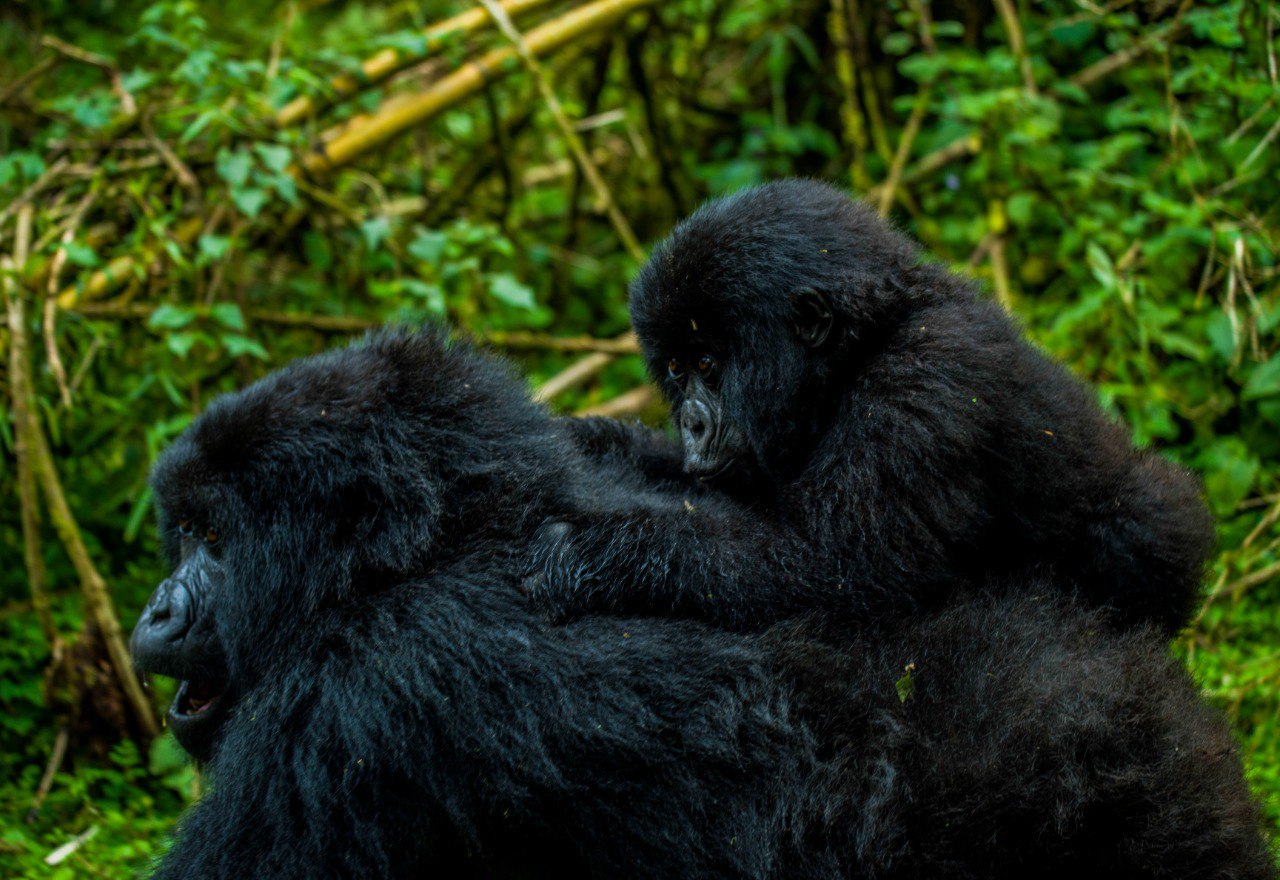
Calm behaviour also produces better photographs, since relaxed gorillas behave naturally and a quiet photographer gets closer to genuine moments. Avoid direct, prolonged staring through the lens at a silverback, which can be read as a challenge, and let the animals settle around you. The strongest gorilla images are usually of natural behaviour, a mother with an infant or a juvenile at play, rather than a posed look at the camera, so patience and stillness do more for your photographs than any amount of repositioning.
Camera Settings for the Forest
The forest is dim and humid, which shapes the settings that work. With flash off, raise your ISO to let in more light, use a wide aperture for a faster shutter, and accept some grain as the price of a sharp, flash-free image. A lens that performs in low light helps more than a long zoom you cannot hold steady.
Bring a spare battery, since cold and altitude drain them faster than expected, and a cloth to wipe mist and rain from the lens. Protect the camera in a dry bag between shots, and consider shooting a few frames early in the hour before settling in to watch, so you are not chasing the perfect image the whole time.
Photographs, Phones, and Sharing
Phones are fine for photography as long as the flash is off and you follow the same rules as a camera. Many visitors get strong images on a phone, especially of a group at moderate distance. The same no-selfie-stick rule applies, so hold the phone in your hand rather than on a pole.
When sharing your images later, you help conservation simply by showing the gorillas respectfully and noting the rules you followed. Responsible photography that does not glamorise getting too close sets a good example for the next visitors, which in a small way supports the tourism that funds protection. Captioning a photo with the distance kept and the flash left off does more good than it might seem, since social images shape what future trekkers think is acceptable behaviour around the animals.
The Permit and Making Your Photos Count
Your hour is short and the permit costs $1,500 per person in 2026, so it pays to be ready to photograph efficiently without missing the experience itself. Preparation beforehand means more of the hour spent watching rather than wrestling with settings.
$1,500 per person in 2026 for one hour, so prepare your camera in advance to make the most of it.
The firmest photography rule; set the camera and phone to no flash before the trek.
Shoot handheld near the gorillas; selfie sticks and tripods are not allowed close to the animals.
Carry one, since cold and altitude drain batteries faster than expected.
Balance the camera with your eyes. The best advice from those who have trekked is to take your shots, then put the camera down and watch, so the hour is a memory and not just a photo library.
Can I use flash when photographing gorillas?
No. Flash is banned because it startles the gorillas and can provoke a defensive reaction. Set your camera and phone to no flash before the trek and confirm it at the start of the hour, since cameras often default to flash in the dim forest light.
Are selfie sticks allowed on a gorilla trek?
No. Selfie sticks are banned near the gorillas because pushing a device toward them is intrusive and can be read as a threat. Tripods are also impractical and not used close to the animals. Handheld photography is the rule.
How close can I get for a photo?
You must keep the required distance even for a better shot, officially seven metres in Rwanda and often closer to ten in practice. Use your zoom rather than your feet, and do not advance toward a gorilla that approaches you.
What camera settings work best for gorillas?
With flash off in the dim, humid forest, raise your ISO, use a wide aperture for a faster shutter, and accept some grain for a sharp image. A lens that performs in low light helps more than a long zoom, and a spare battery matters in the cold.
Can I use my phone to photograph the gorillas?
Yes, as long as the flash is off and you follow the same rules as a camera, including no selfie stick. Many visitors get strong images on a phone, especially of a group at moderate distance.