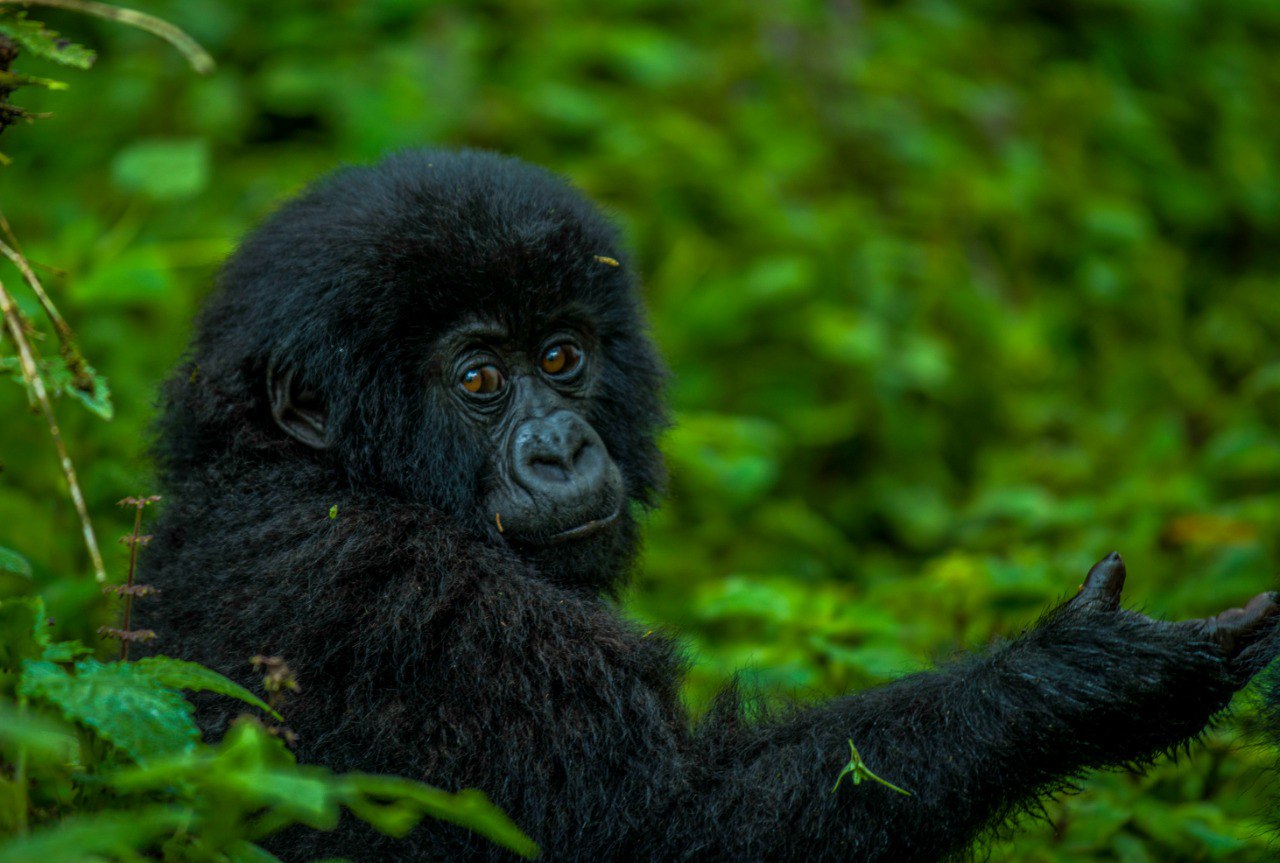
Gorilla group sizes are limited to eight visitors per family per day in Rwanda to reduce disease risk, lower stress on the animals, limit the human footprint, and keep the experience calm for trekkers. Each habituated family in Volcanoes National Park is visited by no more than eight people, once a day, which is also why permits are capped and sell out. The permit costs $1,500 in 2026. Volcanoes National Park lies in northern Rwanda near Musanze along the Virunga Mountains.
This guide explains the reasons behind the eight-visitor rule, how it caps the number of permits available each day, and why each family is visited only once daily. Like most gorilla trekking rules, it traces back to protecting a small, vulnerable population that numbers only around 1,000 to 1,100 animals.
The Eight-Visitor Rule in Brief
The rule is simple: a maximum of eight people may visit any one habituated gorilla family in a single day, and that family is visited only once. It applies to every group open to tourism and is enforced without exception across Rwanda, Uganda, and the Democratic Republic of Congo.
At the morning briefing, rangers divide visitors into groups of up to eight and assign each group to a family. The cap is one of the foundations of how gorilla tourism is managed, and it shapes everything from permit availability to the feel of the hour you spend with the animals.
Reducing Disease Risk
The strongest reason is disease. Mountain gorillas share around 98 percent of their DNA with humans and are highly vulnerable to our respiratory illnesses, which can be fatal to them. Every additional person near a family is an additional source of potential infection.
Eight people breathe out far less, touch far less vegetation, and introduce far fewer pathogens than a group of twenty or thirty would. By holding the number low, the rule directly reduces the volume of disease exposure each family faces, working alongside masks, the distance rule, and the no-sick rule as part of a layered defence.

Lowering Stress on the Gorillas
A smaller group also causes less stress. Although these families are habituated to people, they are wild animals, and a large crowd of humans generates more noise, movement, and pressure than a small one. That disturbance can disrupt feeding, resting, and social behaviour.
Keeping the group to eight lets the gorillas stay relaxed and behave naturally during the visit. A calm family is both healthier and more rewarding to watch, since visitors see genuine behaviour rather than animals on edge from being surrounded.
Limiting the Human Footprint
Beyond any single visit, the rule limits the cumulative footprint of tourism on each family over time. Fewer visitors mean less trampled vegetation, less noise day after day, and a smaller overall human presence in the gorillas’ home range across the year.
This matters because the same families are visited repeatedly, season after season. A low daily cap keeps the long-term pressure on each group manageable, which is part of what makes gorilla tourism sustainable rather than slowly damaging to the very animals it depends on. Over years, the difference between eight visitors a day and a larger, uncapped flow would be enormous, both in physical disturbance and in the steady accumulation of human presence in a small, fragile habitat.
A Better Experience for Trekkers
The rule also improves the visit for trekkers. A group of eight is quiet enough for everyone to get a clear view, to hear the guide, and to watch the family closely without jostling. A larger party would mean more noise, more waiting for a sightline, and a less intimate hour.
Many visitors describe the small group as part of what makes the experience feel personal. The cap that protects the gorillas also delivers the calm, close visit that makes the trek worth its cost, so the rule serves animals and visitors alike. With only seven other people around you, the hour feels less like a tour and more like being quietly admitted into the family’s morning, which is part of why so many trekkers call it the highlight of their trip.
How the Rule Caps Daily Permits
Because each family takes only eight visitors, the total number of permits per day is fixed by the number of habituated families. With around twelve families open to tourism, the park’s daily capacity is roughly 96 trekkers, give or take as families are added or rested.
This is why permits are limited and sell out months ahead in the dry season. The eight-visitor rule, not a lack of demand, is what makes permits scarce, and it is the reason booking early matters so much. The scarcity is a deliberate conservation choice rather than a logistical accident.
Why Each Family Is Visited Only Once a Day
The rule is not only about group size but also frequency. Each family is visited just once per day, so a group of eight is the total daily human contact, not a figure repeated several times over. This doubles the protection, capping both how many people come and how often.
Visiting once a day, early in the morning, leaves the family undisturbed for the rest of the day to feed and rest normally. Together, the eight-person cap and the once-daily rule keep the human presence brief and contained, which is exactly the point. A family might be tracked daily for monitoring, but the tourist visit itself is a single, short window, so the animals spend the overwhelming majority of their time entirely free of visitors.
Permit, Cost, and the Eight-Person Rule
The eight-visitor cap is the reason the $1,500 permit is both limited and valuable. Scarcity supports the price, and the price funds the protection, so the rule sits at the centre of how gorilla tourism pays for conservation.
$1,500 per person in 2026, limited in number by the eight-visitor cap on each family.
The maximum number of visitors to any one family in a single day, enforced without exception.
Each family is visited only once daily, so eight is the total daily human contact.
The cap makes permits scarce, so dry-season dates sell out months ahead.
Understood as a conservation measure, the eight-visitor rule explains both why permits are hard to get and why the experience is so personal. The same cap that protects the gorillas shapes the whole structure of gorilla tourism.
Why are only eight visitors allowed per gorilla family?
To reduce disease risk, lower stress on the animals, limit the human footprint, and keep the experience calm. Eight people introduce far fewer pathogens and far less disturbance than a large group, which protects a population of only around 1,000 to 1,100 animals.
How many people can trek gorillas in Rwanda each day?
With around twelve families open to tourism and eight visitors each, the park’s daily capacity is roughly 96 trekkers. The exact figure shifts as families are added or rested, but the eight-per-family cap fixes the overall limit.
Is each gorilla family visited more than once a day?
No. Each family is visited only once per day, so the group of eight is the total daily human contact. Visiting once, early in the morning, leaves the family undisturbed for the rest of the day.
Why do gorilla permits sell out so fast?
Because the eight-visitor cap fixes the number of permits available each day, supply is small and demand is high, especially in the dry season. The scarcity is a deliberate conservation choice, which is why booking months ahead is important.
Does the small group size make the experience better?
Yes. A group of eight is quiet enough for everyone to see clearly, hear the guide, and watch the family closely without jostling. The cap that protects the gorillas also delivers the intimate, personal hour that makes the trek memorable.
Ready to go? Start planning your trip with our gorilla trekking in Rwanda.