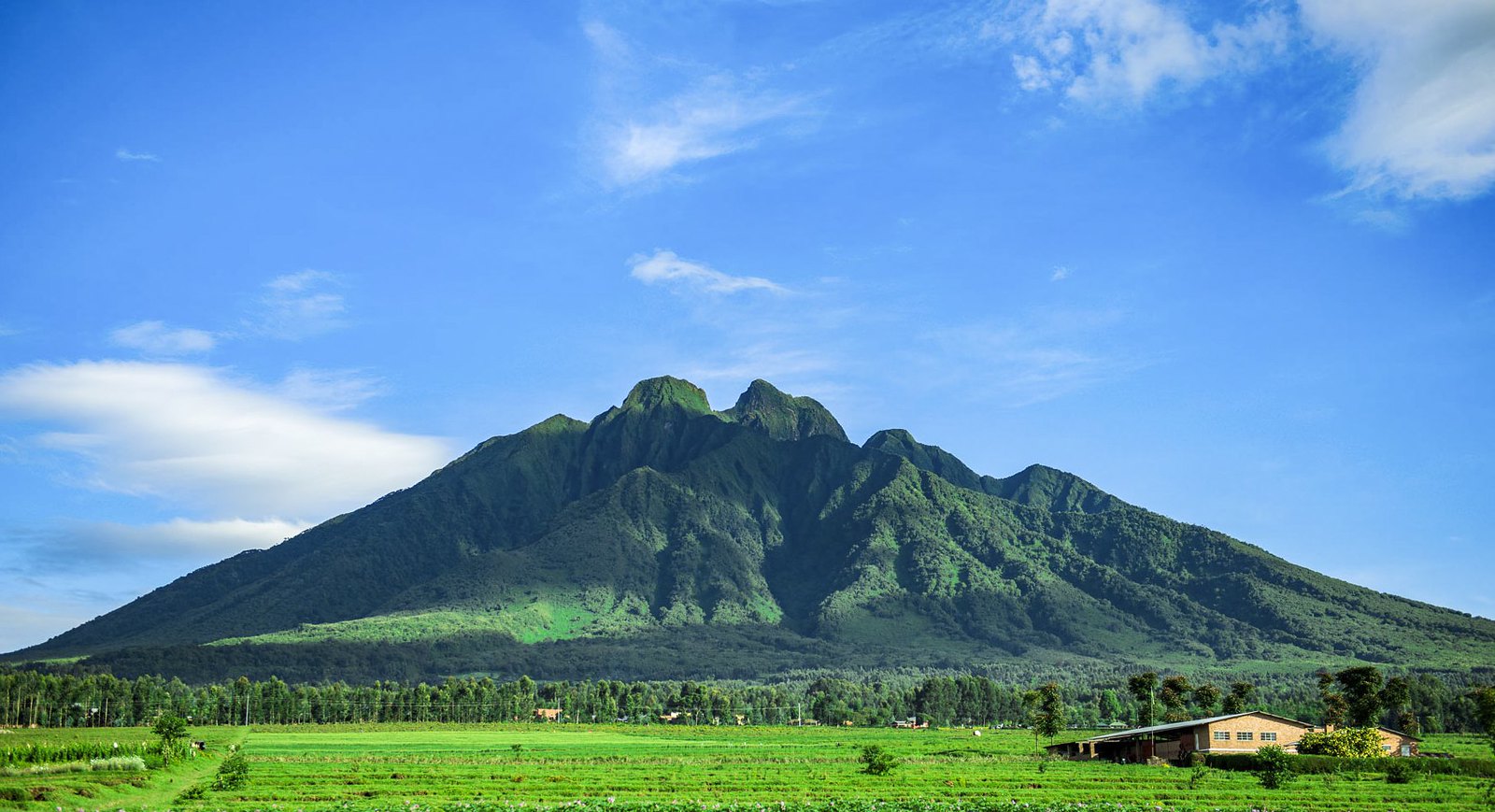
Volcanoes National Park covers about 160 square kilometres in northwest Rwanda, making it the country’s smallest major national park but one of its most visited. Even at its compact size, it holds five volcanoes and around a third of the world’s mountain gorillas, seen on treks costing USD 1,500 for foreign non residents in 2026. Its size is best understood next to Rwanda’s larger parks and the wider Virunga Massif it belongs to.
Size shapes the visitor experience here, from how quickly you reach the forest to how the gorillas are managed within a limited area. This guide sets out the park’s dimensions, compares it with Rwanda’s other parks, and explains why a small park can carry such outsized importance.
The Park’s Size in Numbers
At roughly 160 square kilometres, Volcanoes National Park is modest by African standards. The protected area runs along the Rwandan flank of the Virunga volcanoes, climbing from around 2,400 metres at its lower edges to 4,507 metres at the summit of Karisimbi. Much of that area is steep, forested volcano slope rather than flat ground.
This compactness means the trekking trailheads, the gorilla families, and the park headquarters at Kinigi all sit within a short radius. Visitors rarely travel far inside the park before reaching forest, and the gorilla families occupy ranges packed into the available terrain. The small footprint concentrates both wildlife and people into a tight, intensively protected space.
How It Compares With Rwanda’s Other Parks
The chart below places Volcanoes National Park next to Rwanda’s other national parks by area, showing just how much smaller it is.
Part of a Larger Whole
The park’s true scale is bigger than its borders suggest, because it forms one piece of the Virunga Massif. This transboundary block of forested volcanoes spans three countries, joining Rwanda’s park to Uganda’s Mgahinga Gorilla National Park and the Democratic Republic of Congo’s Virunga National Park. The gorillas move within this shared region rather than recognising national lines.
Seen this way, Volcanoes National Park is the Rwandan window onto a much larger protected ecosystem. The combined massif gives the mountain gorillas the room they need, while each country manages its own section. Rwanda’s relatively small slice still holds a major share of the population, which is part of why it matters so much regardless of its size.
Why a Small Park Carries Such Weight
Size is not the same as significance. Volcanoes National Park may be small, but it shelters around a third of the world’s mountain gorillas and was the setting for the research that transformed how the species is protected. Its density of wildlife and history gives it an importance far beyond its square kilometres.
The compact area also makes intensive protection feasible. Rangers and trackers can monitor the habituated families closely across a limited space, and veterinary teams can reach animals quickly. A small, well guarded park turns out to be well suited to safeguarding a fragile population, which is exactly what has happened here over recent decades.
Room to Grow
The park’s size is not necessarily fixed forever. Rwanda has signalled intentions to expand the protected area over time, giving the gorillas more room as the population grows and easing pressure where forest meets farmland. Any expansion is planned carefully alongside the communities who live on the park’s edge, balancing conservation with local livelihoods.
For now, the working figure remains around 160 square kilometres, and visitors experience a tight, busy park where forest is never far away. Whether or not the boundaries shift, the park’s role as the heart of mountain gorilla conservation in Rwanda is set, and its modest size is part of what makes that role manageable.
Costs of Visiting the Park in 2026
Size aside, these are the fees that matter most for planning a visit.
USD 1,500 foreign non resident, USD 500 African resident, USD 200 East African citizen.
USD 100 per person for foreign non residents.
USD 75 to reach the crater lake at 3,711 metres.
Porter about USD 20, plus transport, lodging, meals, and tips.
Altitude Across the Park
Though small in area, the park covers a wide range of altitude, which is part of what packs so much variety into it. The lower edges sit around 2,400 metres where forest meets farmland, and the land climbs steeply to 4,507 metres at the summit of Karisimbi. That vertical span of more than two kilometres creates distinct climate and vegetation zones stacked above one another.
This altitude range matters more than the flat area on a map suggests. A short horizontal distance can mean a steep climb through bamboo, montane forest, and alpine zones, each cooler and thinner aired than the last. The park’s true scale, in other words, is as much about height as width, which is why a compact reserve can feel large and demanding on foot.
What the Size Means for Your Trek
The park’s small footprint shapes the trekking day in practical ways. Trailheads, gorilla families, and the headquarters at Kinigi all lie within a short radius, so you rarely drive far before starting to walk. Once on foot, though, the steep terrain means even a short distance can take time, and a family that has moved uphill can turn a quick walk into a hard climb.
Because the families live in ranges packed close together, trek lengths vary widely from one day to the next, depending on where your assigned family has wandered. The compactness keeps logistics simple while the gradient keeps the effort real, a combination that defines what a trek here feels like compared with a larger, flatter park.
Comparing With Regional Gorilla Parks
Set against its neighbours in the Virunga Massif, the park’s modest size is typical of mountain gorilla habitat, which is naturally limited. Uganda’s Mgahinga Gorilla National Park is smaller still, while the better known Bwindi forest, also in Uganda, is larger and holds a separate gorilla population. The Democratic Republic of Congo’s Virunga park is far bigger but covers a much wider range of habitats.
Across all of these, mountain gorillas occupy only the forested volcano and highland zones, a restricted band of habitat shared between countries. Rwanda’s slice is small but central, holding a major share of the animals in an area that is intensively protected. Size, in this case, says little about importance, since the gorillas need quality of habitat and protection more than sheer space.
A Small Park Under Pressure
A compact park bordered by farmland faces particular pressures. With dense rural communities living right up to the boundary, there is little buffer between the forest and cultivated land, which can lead to gorillas raiding crops and to friction over space. Managing that edge is a constant task for the park authorities.
Rwanda’s answer has combined firm boundaries, community revenue sharing, crop compensation, and proposals to expand the protected area over time. Giving the gorillas more room while keeping local people on side is a delicate balance, and the park’s small size makes it all the more pressing. The aim is a reserve that can hold a growing population without deepening conflict at its edges.
Frequently Asked Questions About the Park’s Size
How big is Volcanoes National Park?
About 160 square kilometres in northwest Rwanda, making it the smallest of the country’s major national parks.
Is it Rwanda’s smallest park?
Among the major parks, only the smaller Gishwati Mukura, at about 34 square kilometres, is smaller. Akagera and Nyungwe are far larger.
How does it compare to Akagera and Nyungwe?
Akagera is about 1,122 square kilometres and Nyungwe about 1,019, so each is roughly six times the size of Volcanoes National Park.

Why is such a small park so important?
It holds around a third of the world’s mountain gorillas and was the base for the research that shaped their protection.
Is the park part of something larger?
Yes. It forms the Rwandan section of the Virunga Massif, a forested volcano region shared with Uganda and the DRC.
Why is the park so small?
Mountain gorilla habitat is naturally limited to forested highland zones, so the park protects a compact band of that habitat rather than a large open area.
Does the small size make treks short?
Not always. The terrain is steep and the gorilla families roam, so a trek can run from under an hour to several hours regardless of the park’s modest area.
Could the park get bigger?
Rwanda has signalled plans to expand the protected area over time, giving the gorillas more room as numbers grow while working with nearby communities.
Is the whole park open to visitors?
No. Visitor activity is concentrated on set trails and the habituated families, while much of the forest stays undisturbed to protect the wildlife.
Explore our Rwanda gorilla treks for a private, tailor-made trip.