Volcanoes National Park spans about 160 square kilometres, was founded in 1925, contains five volcanoes up to 4,507 metres, and shelters around 350 mountain gorillas, close to a third of the world total. Roughly a dozen habituated families are tracked daily, with permits at USD 1,500 for foreign non residents in 2026. The figures below capture the park’s scale, wildlife, and rules at a glance.
Numbers tell much of this park’s story, from its altitude to its gorilla count to the strict limits on how many people may visit each family. This guide gathers the key facts and figures in one place, grouped so you can find what matters for planning or curiosity.
The Park by the Numbers
The panel below pulls together the headline figures that define the park in 2026.
Location and Land Facts
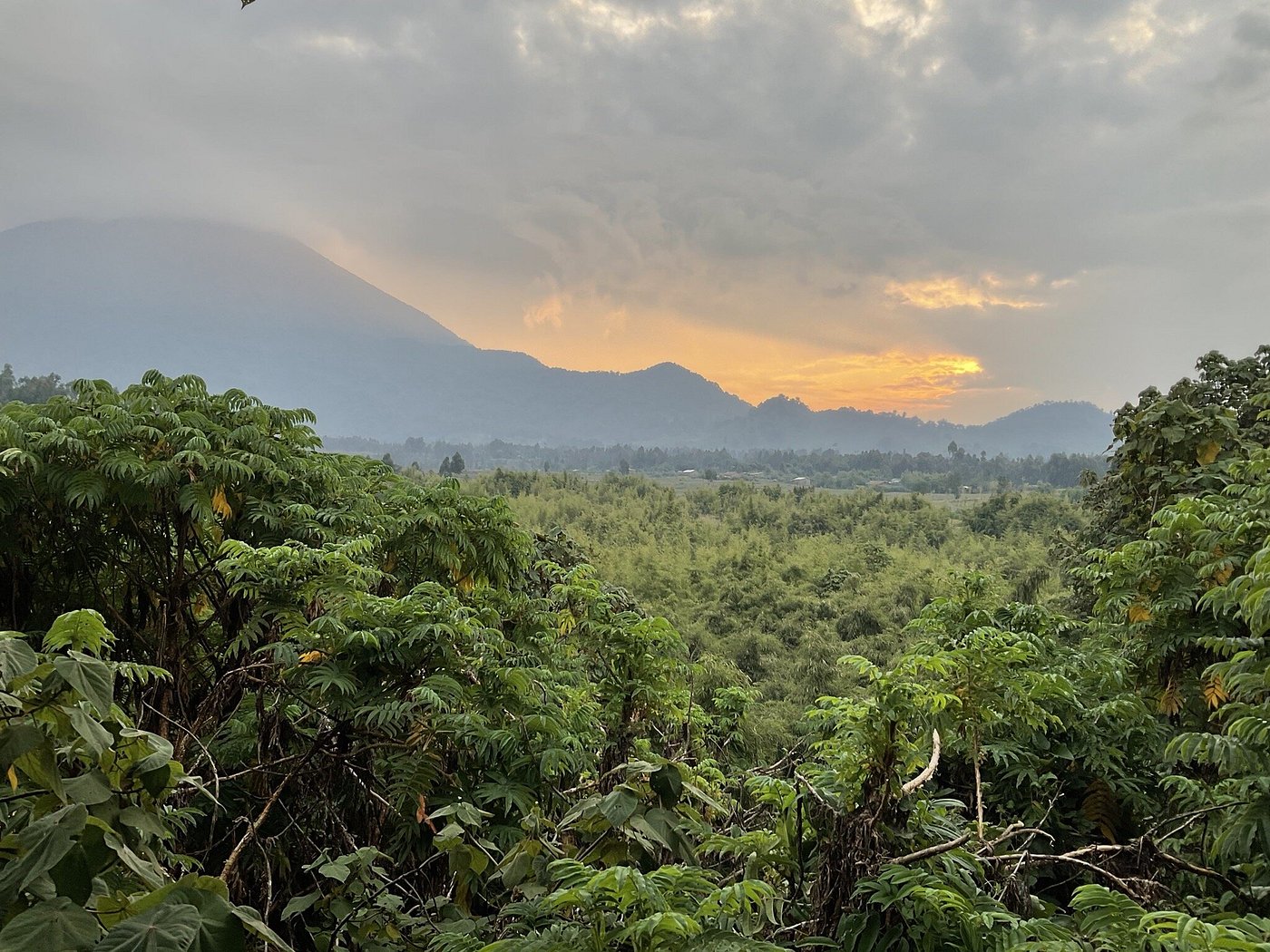
The park occupies the northwest corner of Rwanda, pressed against the borders with Uganda and the Democratic Republic of Congo. Its land rises through several vegetation belts, from lower farmland edges near 2,400 metres up to alpine zones below the summits, all within a protected block of roughly 160 square kilometres.
It carries a notable distinction: dating from 1925, it ranks as the oldest national park on the African continent. That long history places it among the earliest protected areas anywhere in Africa, predating most of the continent’s famous reserves and giving it a heritage that matches its wildlife importance.
The Five Volcanoes by Height
Five volcanoes rise within the park, part of the eight that make up the wider Virunga chain. In order of height they are Karisimbi at 4,507 metres, Muhabura at 4,127 metres, Sabyinyo at about 3,634 metres, Bisoke at 3,711 metres, and Gahinga at roughly 3,474 metres.
Each has its own character in the figures: Karisimbi demands a two day climb, Bisoke holds a summit crater lake, and Sabyinyo’s jagged ridge marks the meeting point of three countries. Together they give the park both its name and its dramatic skyline, with the tallest standing well above 4,500 metres.
The Gorilla Numbers
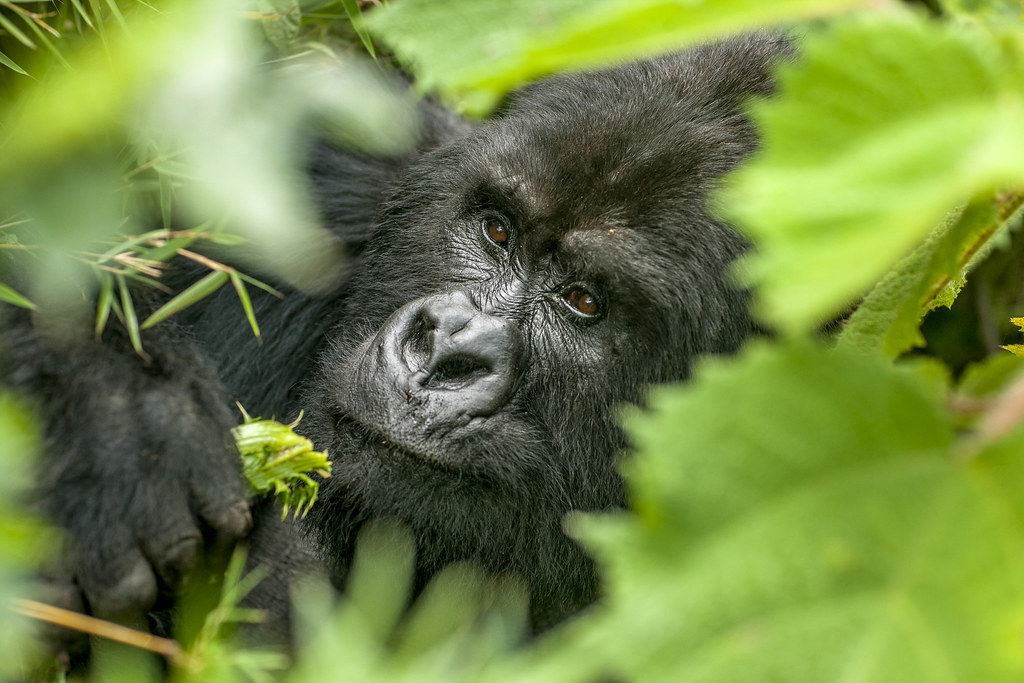
The gorilla figures are the park’s most watched. Around 350 mountain gorillas live here, out of a global total of roughly 1,063 recorded in the most recent census. That places about a third of every mountain gorilla on Earth within this single small park, a concentration found nowhere else.
Roughly a dozen families are habituated for tourism and research, each followed daily by trackers. The species as a whole has climbed from a low near 250 in the early 1980s to today’s figure, and remains the only great ape whose population is increasing, which makes every number in the count a closely tracked measure of progress.
Visitor Rules in Numbers
Strict numerical limits govern how people may visit. No more than eight visitors may see a single gorilla family in a day, and the visit is capped at one hour once the family is reached. Trekkers must be at least 15 years old, and a minimum distance is kept from the animals to protect their health.
These caps fix the park’s daily capacity at a modest level, deliberately keeping visitor pressure low. With around a dozen families available and eight permits each, only a limited number of people trek per day, which is why permits at USD 1,500 sell out in peak periods and why the experience stays uncrowded.
Money and Community Figures
The financial figures link the gorillas to the people around them. A defined share of park revenue, long set at around ten percent, flows into community projects near the park, and a separate fund compensates farmers for crop damage caused by wildlife. Permit income also pays the rangers, trackers, and veterinary teams who protect the families.

Activity fees beyond the gorillas add to the picture: USD 100 for golden monkeys, USD 75 for a Bisoke climb, and up to USD 400 for the two day Karisimbi ascent. Each fee feeds the same protection model, turning the park’s visitor numbers directly into conservation funding year after year.
Costs and Key Figures for 2026
These are the headline fees that sit alongside the park’s facts.
USD 1,500 foreign non resident, USD 500 African resident, USD 200 East African citizen.
Eight visitors per family, one hour per visit, minimum age 15.
Golden monkeys USD 100, Bisoke USD 75, Karisimbi USD 400.
About 350 gorillas in the park, roughly a third of the world total.
Climate and Weather Figures
The park’s highland setting gives it a cool, damp climate year round. Daytime temperatures in the forest commonly sit in the mid teens to low twenties Celsius, dropping sharply with altitude and at night, especially high on the volcanoes. Rainfall is high, feeding the dense vegetation that the gorillas depend on.
Two drier spells, roughly June to mid September and December to February, bring firmer trails and clearer skies, while the wetter months of March to May and October to November see heavier, more frequent rain. No month is truly dry, so a rain jacket is sensible whenever you visit. These weather patterns drive the trekking seasons and shape when the climbs are at their best.
Distances and Access Figures
The key access numbers are simple to remember. The park lies about 105 kilometres from Kigali, a drive of roughly two to three hours on tarmac, ending at the headquarters in Kinigi. Treks begin with a briefing at 7:00 a.m., which is why an overnight stay near the park is the norm rather than a same morning drive.
From Kinigi, trailheads are a short transfer away, and the walk to a gorilla family can run from under an hour to several hours depending on the animals’ position. Nearby Lake Kivu is about one to one and a half hours from the park, a common add on. These distances make the park one of the more accessible gorilla destinations in the region.
The Park in the Virunga Chain
The numbers extend beyond Rwanda’s borders. The park holds five of the eight volcanoes that form the Virunga chain, a block of forested peaks split across three countries. The highest in Rwanda’s section, Karisimbi, reaches 4,507 metres, while the chain as a whole rises higher still across the border.
This shared mountain system is managed jointly in spirit by Rwanda, Uganda, and the Democratic Republic of Congo, each protecting its own portion. The gorillas move across this combined area, which is why the global population figure spans national lines. Rwanda’s park, holding about a third of the world’s mountain gorillas, is the most visited window onto this transboundary chain.
Frequently Asked Questions About Park Facts
How big is the park and when was it founded?
About 160 square kilometres, founded in 1925, which makes it the oldest national park in Africa.
How many volcanoes are in the park?
Five, including Karisimbi at 4,507 metres, the tallest, part of the eight in the wider Virunga chain.
How many gorillas live there?
Around 350, close to a third of the global total of roughly 1,063 mountain gorillas, in about a dozen habituated families.
How many people can visit a gorilla family?
A maximum of eight visitors per family per day, for one hour, with a minimum trekking age of 15.
How much does a permit cost?
USD 1,500 for foreign non residents in 2026, with lower rates of USD 500 and USD 200 for African residents and East African citizens.
What is the highest point in the park?
The summit of Karisimbi at 4,507 metres, the tallest of the five volcanoes within the park and one of the highest peaks in the wider Virunga chain.
How cold does it get?
Daytime forest temperatures often sit in the mid teens to low twenties Celsius, dropping sharply at night and at altitude on the volcanoes.
How many gorilla families can be visited?
Roughly a dozen families are habituated for tourism, each visited by a single group of up to eight people for one hour per day.
Is the park open all year?
Yes. The park and its gorillas can be visited in every month, with the dry seasons offering the firmest trails and clearest weather.
Which volcano has a crater lake?
Bisoke, at 3,711 metres, holds a wide crater lake at its summit, reached on a popular single day climb from the park.
How far is the park from the Uganda border?
The park sits right against the borders with Uganda and the Democratic Republic of Congo, forming part of the shared Virunga volcano chain.
What is the minimum trekking age?
Visitors must be at least 15 years old to track gorillas, a rule applied across the region to protect both people and the animals.
Explore our gorilla trekking for a private, tailor-made trip.