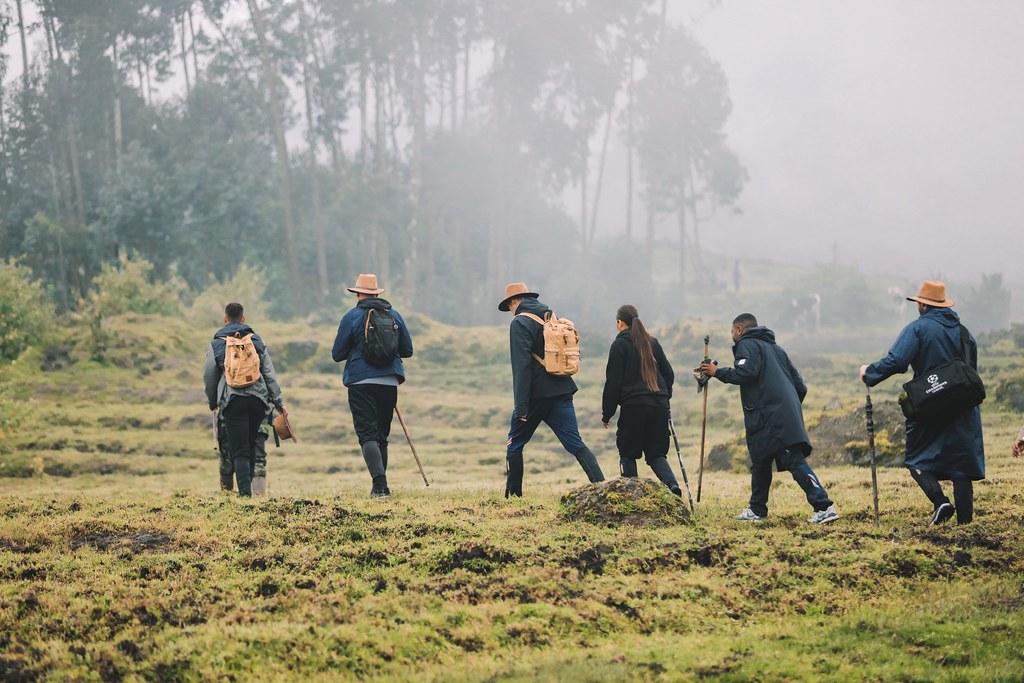
Volcanoes National Park is home to mountain gorillas and golden monkeys alongside buffalo, bushbuck, duiker, spotted hyena, the occasional forest elephant, and well over 170 bird species. The park sits in northwest Rwanda, and its star attraction, the mountain gorilla, is seen on treks costing USD 1,500 for foreign non residents in 2026. The mix of forest, bamboo, and alpine zones supports a varied highland community of animals.
While most visitors come for the gorillas, the park rewards anyone curious about wider wildlife. This guide runs through the primates, mammals, and birds you might find, where they live within the park, and how likely you are to see each one.
The Mountain Gorilla
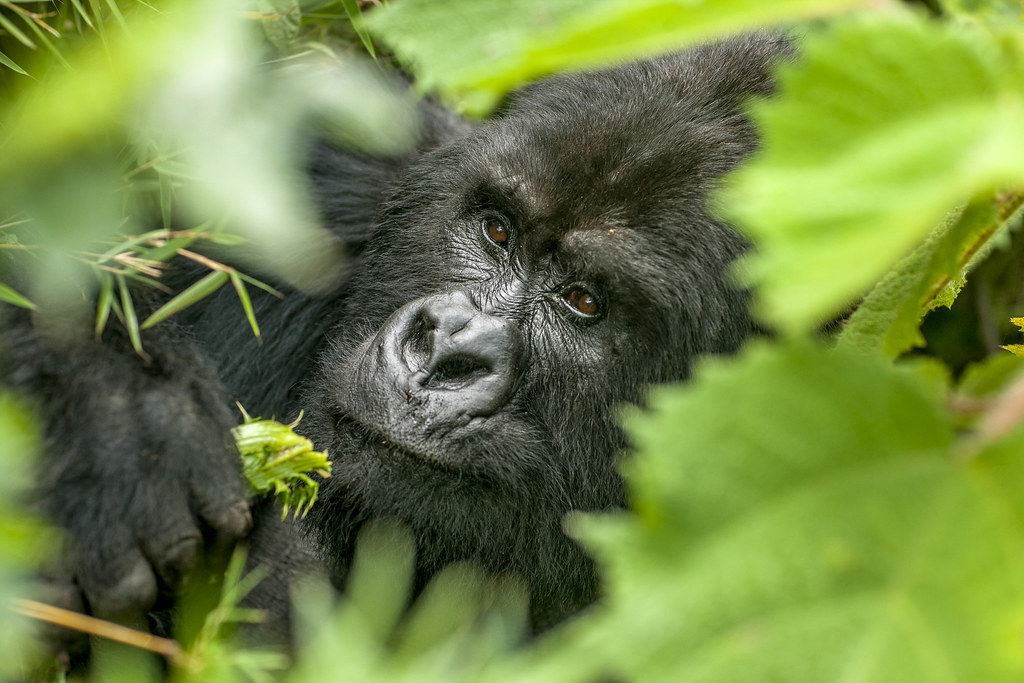
The mountain gorilla is the animal that defines the park. Around a dozen habituated families live on the forested volcano slopes, part of a Rwandan population of roughly 350, which is close to a third of the global total of about 1,063. They are the only great ape whose numbers are rising, a recovery driven by decades of protection.
Seeing them is near certain on a permitted trek, since trackers locate each family before dawn. Visits last one hour, in groups capped at eight, at a respectful distance. Gorillas are seen reliably year round, not seasonally, so the experience does not depend on the month, only on holding a permit.
Golden Monkeys and Other Primates
The golden monkey is the park’s second primate draw, a lively, bright coated monkey found only in the Virunga region. Troops move through the bamboo zones, and tracking them is a gentler, cheaper outing than the gorillas, at USD 100 for foreign non residents. Sightings are common, though the monkeys are fast and active, which makes them a livelier subject than the calm gorillas.
The bamboo and forest belts also shelter smaller, shyer creatures that careful walkers sometimes glimpse. The park’s primate appeal rests mainly on the gorilla and golden monkey pairing, which together make it possible to see two distinct and rare primates in a single short trip.
Wildlife You Might See, by Type
The grid below lists notable species by group, with where they live and how likely a sighting is. Use the buttons to filter by primates, mammals, or birds. Sightings of shyer animals are not guaranteed.
Larger Mammals of the Forest
Beyond the primates, the park holds a scattering of larger mammals, though they are harder to spot in dense forest than on an open savanna. Cape buffalo graze in clearings and are the most likely of the big animals to be seen, while bushbuck slip along the forest edges. Both are wary and tend to move off quickly when people pass.
Shyer still are the black fronted duiker, a small forest antelope, and the rarely glimpsed spotted hyena on the higher slopes. Forest elephants are present in principle but so seldom seen that a sighting would be a real surprise. For most visitors, these mammals are a bonus noticed in passing rather than a target of the trip.
The Birdlife
The park is strong for birds, with well over 170 species recorded across its habitats, including a number of Albertine Rift endemics found only in this part of Africa. The colourful Rwenzori turaco is a favourite sighting, and the varied forest and bamboo zones reward patient watchers with sunbirds, weavers, and forest specialists.
Birding here works well alongside other activities, since a slow nature walk or the walk toward a golden monkey troop often turns up species along the way. Dedicated birders may add a guided nature walk just to look for the endemics, which the park guides know well. Birdlife is present year round, with the wetter months bringing extra activity.
Why the Wildlife Survives Here
The richness of the park’s wildlife rests on protection and habitat. Decades of anti poaching work, ranger patrols, and veterinary care have allowed the gorillas to recover and the wider community of animals to persist. The volcanic terrain, layered into distinct vegetation zones, provides food and shelter across a range of altitudes within a compact area.
Tourism revenue underwrites much of this, with permit fees funding the rangers and trackers who keep the forest safe. Local communities also share in the benefits, which gives people living nearby a stake in conservation. The result is a small park that punches well above its size for wildlife, anchored by the gorillas but far from limited to them.
Costs to See the Wildlife in 2026
Seeing the headline species comes at set activity fees. These are the 2026 rates.
USD 1,500 foreign non resident for a one hour trek visit.
USD 100 per person for foreign non residents.
USD 55 per person, a good option for birders and slower wildlife watching.
Porter about USD 20, plus transport, lodging, and tips.
Reading Gorilla Behaviour
Part of what makes the gorilla hour rewarding is watching how a family behaves. A dominant silverback anchors the group, keeping order and deciding where it moves, while females tend infants and younger animals play and tumble through the vegetation. You may see grooming, feeding on bamboo and leaves, or a youngster testing its strength by beating its chest in miniature.
Guides interpret these moments, explaining the relationships within the family and what a particular posture or sound means. Most behaviour is calm and unbothered by visitors, since the families are habituated to a daily human presence. Knowing what you are watching turns a sighting into something richer, letting you read the quiet drama of family life rather than simply ticking off a species.
The Bamboo Zone and Its Wildlife
The park’s vegetation grows in bands by altitude, and the bamboo belt is one of the most important for wildlife. Golden monkeys feed heavily on young bamboo shoots, and gorillas pass through the zone too, which makes it a productive area for sightings. Above it lie thicker montane forest and, higher still, the open alpine zones near the summits.
Each band supports different animals and plants, from forest birds in the canopy to hardy vegetation on the peaks. This layering, packed into a small park, is why such varied wildlife lives so close together. Walking between zones on a hike or trek, you pass through distinct habitats within a single morning, each with its own community of creatures.
How Sightings Are Managed
Reliable sightings depend on careful management behind the scenes. Each morning, trackers set out early to locate the family assigned to your group, radioing its position back to the guides who lead visitors in. This is why a sighting is near certain even though the gorillas roam freely: the work of finding them is done before you start walking.
Groups are kept small, capped at eight people per family, and only one group visits each family per day, which keeps disturbance low. The guides manage spacing, timing, and behaviour throughout, balancing a good view for visitors against the animals’ comfort. This system lets thousands of people see wild gorillas each year without harming the families they come to watch.
Frequently Asked Questions About the Park’s Wildlife
What animals live in Volcanoes National Park?
Mountain gorillas and golden monkeys, plus buffalo, bushbuck, duiker, spotted hyena, rare forest elephant, and over 170 bird species.
Will I definitely see gorillas?
Sightings are near certain on a permitted trek, because trackers locate each family before visitors set out each morning.
What is a golden monkey?
A bright coated monkey found only in the Virunga region. Tracking them costs USD 100 and is a gentler, livelier outing than the gorillas.

Are there big game animals like lions?
No. This is a forested highland park, not a savanna, so its mammals are forest species like buffalo and bushbuck rather than big cats.
Is the park good for birdwatching?
Yes. With over 170 species and several Albertine Rift endemics, it rewards birders, especially on guided nature walks.
Can I see gorillas and golden monkeys on the same trip?
Yes. Many visitors track gorillas one day and golden monkeys the next, seeing two rare primates within a single short stay in the park.
Are the gorillas dangerous to visitors?
They are wild but habituated and calm around people who follow the rules. Keeping your distance and obeying your guide makes the visit safe for both sides.
What is the best time for wildlife viewing?
The dry seasons of June to September and December to February offer easier trails for trekking, while the wetter months bring more bird activity in the forest.
Ready to go? Start planning your trip with our gorilla tours.