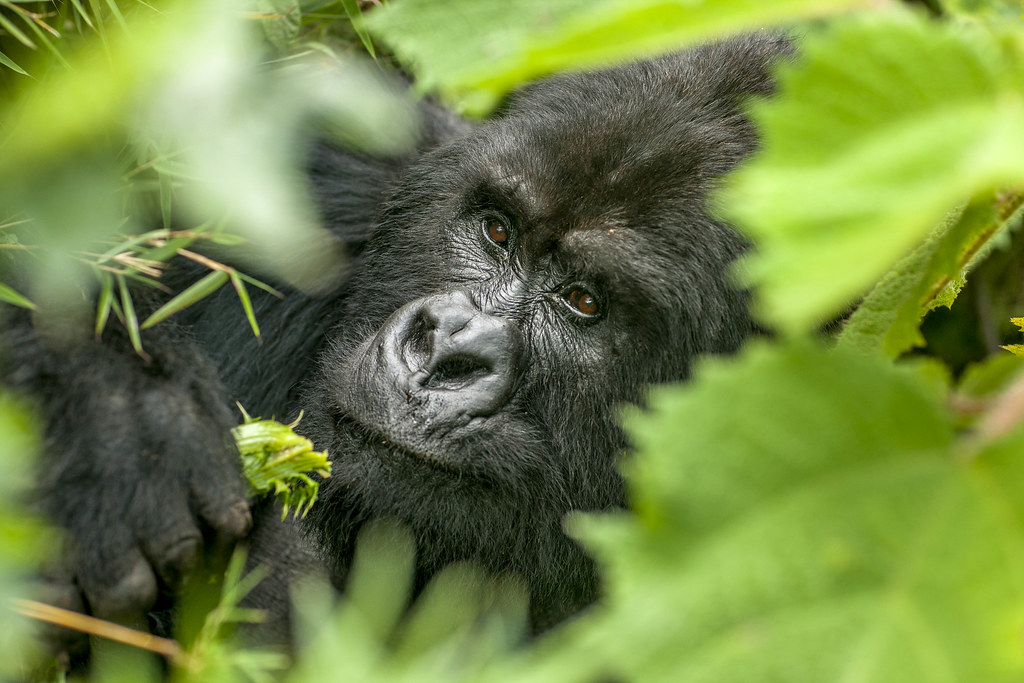
The impact of gorilla trekking on conservation is overwhelmingly positive: the $1,500 permit funds protection, the community revenue share builds local support, and tourism has helped the population recover from a few hundred to over a thousand. There are real risks too, mainly disease transmission and disturbance, which strict rules are designed to manage. On balance, well-regulated trekking is a powerful conservation tool. The gorillas live in Volcanoes National Park in northern Rwanda near Musanze along the Virunga Mountains, part of the only wild mountain gorilla population on Earth.
This guide weighs both sides honestly, explaining the benefits, the risks, and why the rules exist. The conclusion most evidence supports is that trekking, done within strict limits, does far more good than harm, but the limits are what make that true.
Wildlife tourism is often viewed with suspicion, and not without reason, since the act of bringing visitors close to vulnerable animals carries obvious risks. Gorilla trekking sits squarely in that debate, and it deserves an honest accounting rather than easy praise or blanket criticism. Weighing its real benefits against its real risks, and looking at what the evidence actually shows, gives a clearer picture than either the marketing or the worst-case fears suggest.
The Funding Benefit
The clearest impact is funding. Each permit generates substantial revenue that pays for rangers, trackers, veterinary care, and monitoring, turning visitors into a reliable source of conservation income. Because permits are capped and priced high, a small number of trekkers fund a large protection effort.
This funding is steady and self-renewing, unlike one-off donations or grants, giving conservation a dependable financial base. Without it, the intensive daily protection the gorillas receive would be far harder to sustain, so the economic contribution of trekking is foundational to the whole effort.
The Community Benefit
Trekking’s second major impact is building community support. The revenue share that directs around 10 percent of park income to local villages, plus the jobs tourism creates, gives people who live beside the gorillas a direct stake in protecting them, reducing poaching and encroachment.
This social dimension is as important as the money. Conservation in a densely populated region depends on local goodwill, and trekking generates it by making the gorillas a source of benefit rather than conflict. The recovery would not have held without this community buy-in that tourism makes possible.
The Disease Risk
The most serious risk is disease transmission. Gorillas share around 98 percent of human DNA and have little immunity to human illnesses, so a common cold passed to a family could be devastating. This is the threat the rules work hardest to prevent.

Measures include keeping visitors at a distance, often around 10 metres with masks now frequently required, screening out anyone who is ill at the briefing, and limiting contact time. These precautions exist precisely because the disease risk is real, and following them strictly is the most important thing any visitor does to keep trekking safe for the gorillas.
Disturbance and Stress
The other risk is disturbance and stress from human presence. Repeated close contact could in principle alter behaviour or cause stress, which is why each family is visited by only one group of up to eight people, for a single hour, once per day.
Habituated families are monitored by researchers to watch for any harmful effects, and the strict limits keep human pressure low. The evidence suggests that, within these rules, well-managed visits cause little lasting harm, but the limits are not optional extras; they are the conditions that keep the disturbance acceptable.
Why the Rules Make It Work
The positive impact of trekking depends entirely on the rules. The distance requirement, masks, health screening, one-hour limit, eight-visitor cap, and once-daily visits are not bureaucratic hurdles but the mechanisms that hold the risks in check while the benefits flow.
This is why the experience can feel strict, with guides enforcing distance and turning away the unwell. Without these limits, the disease and disturbance risks could outweigh the benefits, so the rules are what convert a potentially harmful activity into a genuinely beneficial one. Respecting them is respecting the whole model.
The Verdict on Balance
Weighing both sides, the verdict is clear: well-regulated gorilla trekking has been a net positive for conservation, central to a population recovery that few endangered great apes have achieved. The funding and community support it provides outweigh its managed risks.
That conclusion holds only because the activity is tightly controlled. The lesson is not that tourism is harmless, but that carefully regulated tourism can be a powerful conservation tool, and that the same activity done without limits could easily do harm. Rwanda’s model shows the benefits winning when the rules are enforced.
Permit and the Impact
The permit is the channel through which trekking’s benefits flow, funding the protection and community support that drive the positive impact. The $1,500 fee is what makes tourism a conservation tool rather than just an experience.
$1,500 per person in 2026, funding rangers, vets, and monitoring.
Around 10 percent of park revenue, building local support for protection.
Disease and disturbance, managed by distance, masks, time, and group limits.
A population recovered past a thousand, downgraded from Critically Endangered in 2018.
The impact of gorilla trekking on conservation, on balance, is one of the strongest arguments for well-managed wildlife tourism anywhere. It funds protection, wins community support, and has helped a species recover, all while strict rules hold its risks in check. The model works because the limits are real.
A useful test of the argument is to imagine the alternative. If trekking were banned tomorrow, the funding for rangers, vets, and monitoring would have to come from somewhere else, the community revenue and jobs would disappear, and the powerful economic case for keeping the forest intact would weaken sharply. Few credible alternatives could replace that combination of money and local support. That counterfactual, more than any single statistic, is what convinces most conservationists that well-regulated trekking, for all its managed risks, is on balance a force for protection.
For the individual traveller, the implication is straightforward and empowering: choosing to trek responsibly, following every rule and supporting the local economy, places you firmly on the positive side of that balance rather than the negative.
Is gorilla trekking good or bad for conservation?
On balance, good. The permit funds protection, the community revenue share builds local support, and tourism has helped the population recover from a few hundred to over a thousand. The risks, mainly disease and disturbance, are real but tightly managed by strict rules.
How does trekking fund conservation?
Each $1,500 permit generates revenue for rangers, trackers, veterinary care, and monitoring, plus around 10 percent of park income shared with communities. Because permits are capped and priced high, a small number of trekkers fund a large, steady protection effort.
What are the risks of gorilla trekking?
The main risks are disease transmission, since gorillas have little immunity to human illness, and disturbance or stress from human presence. Both are managed by distance rules, masks, health screening, the one-hour limit, the eight-visitor cap, and once-daily visits.
Why are the trekking rules so strict?
Because the rules are what hold the risks in check while the benefits flow. The distance, masks, health screening, time, and group limits convert a potentially harmful activity into a beneficial one, so respecting them is vital to keeping trekking good for the gorillas.
Has trekking actually helped the gorillas recover?
Yes. Well-regulated trekking has been central to a population recovery from around 250 in the early 1980s to over a thousand today, with the species downgraded from Critically Endangered to Endangered in 2018. The funding and community support outweigh its managed risks.