The leading eco-friendly gorilla trekking lodges in Rwanda are Bisate Lodge, Singita Kwitonda Lodge, One&Only Gorilla’s Nest, and community-focused options such as Sambora Kinigi and Red Rocks, all near Volcanoes National Park. They combine reforestation, sustainable building, and community support, so where you sleep adds to gorilla conservation rather than detracting from it. The gorilla permit is a separate $1,500 in 2026. Volcanoes National Park lies in northern Rwanda near Musanze along the Virunga Mountains.
This guide profiles the most sustainable lodges, what to look for in a genuinely eco-friendly property, and how staying responsibly supports the gorillas. Rwanda’s strong environmental record, including a long-standing ban on plastic bags, gives the whole country an eco edge, and the best lodges build on it. The choice spans every budget, so an eco-conscious stay is within reach whether you are booking a luxury villa or a simple community guesthouse.
What Makes a Lodge Eco-Friendly
A genuinely eco-friendly lodge does more than use the label. The markers to look for include reforestation and habitat restoration, building with local and sustainable materials, renewable energy and water conservation, careful waste management, and real local employment and community investment.
Rwanda itself sets a high baseline, with one of Africa’s strongest environmental records and a nationwide ban on plastic bags that has been in place for years. The best lodges go further, turning a stay into a direct contribution to the landscape and communities that protect the gorillas, rather than a drain on them. Travellers should be aware that arriving with plastic bags can mean having them confiscated at the airport, a small sign of how seriously the country takes its environmental rules.
Bisate Lodge: Reforestation at Its Core
Bisate Lodge is one of the clearest examples of eco-luxury in the region. Built on former farmland in an eroded volcanic cone, its defining feature is an ambitious reforestation programme that has planted large numbers of indigenous trees, restoring habitat on the edge of the park.
The lodge’s thatched villas use natural forms and materials that sit lightly in the landscape, and its conservation work is woven through the guest experience. For travellers who want their stay to leave the land better than it was, Bisate is a flagship choice, pairing comfort with measurable habitat restoration. Guests can often see the reforestation for themselves, walking among young indigenous trees on the grounds, which makes the conservation story tangible rather than just a line in a brochure.
Singita Kwitonda: Luxury with a Nursery
Singita Kwitonda Lodge pairs modern luxury with a serious sustainability programme, including an on-site nursery and reforestation work that restores indigenous vegetation along the park boundary. The lodge is designed to tread lightly while delivering high comfort, showing that the two need not be in tension.
Its position right at the edge of the park also means the restored land directly extends gorilla habitat. For travellers who want top-tier comfort without setting aside their environmental values, Singita Kwitonda is a strong demonstration that luxury and sustainability can align.
One&Only Gorilla’s Nest and Forest Settings
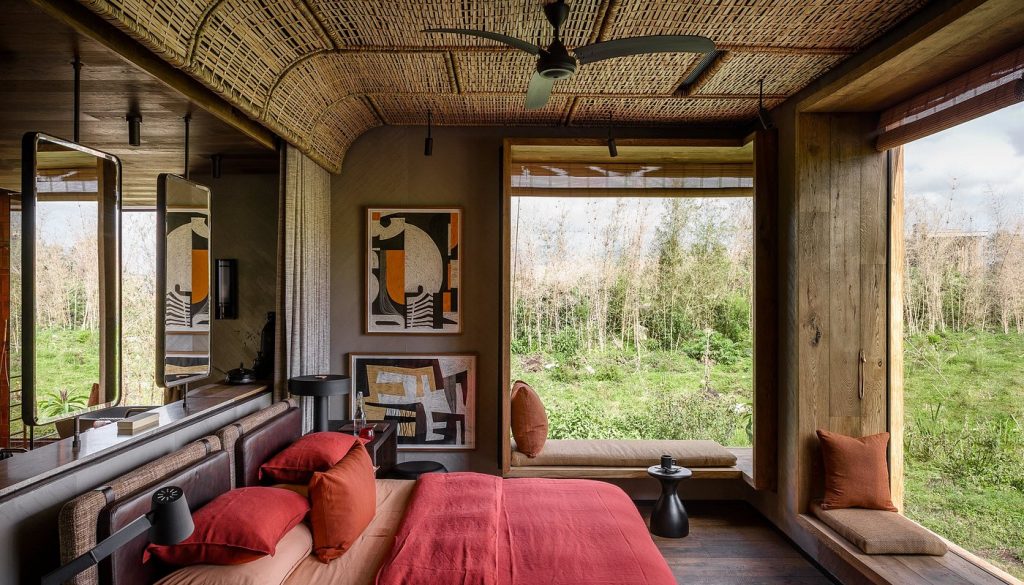
One&Only Gorilla’s Nest is set within a eucalyptus forest at the foothills of the Virungas, with design that integrates the lodge into its green surroundings through winding pathways and accommodations that blend into the trees. The emphasis on the natural setting is part of its appeal.
Forest-set lodges like this keep the built footprint low and the natural surroundings central, which is part of the eco-friendly approach. Combined with a focus on local employment and service, the lodge shows how a luxury property can prioritise its environment as a feature rather than an afterthought. Keeping mature trees and natural vegetation in place, rather than clearing for construction, also preserves habitat for the birds and smaller primates that share the area, adding to the sense of staying within the landscape rather than on top of it.
Community and Budget Eco Options
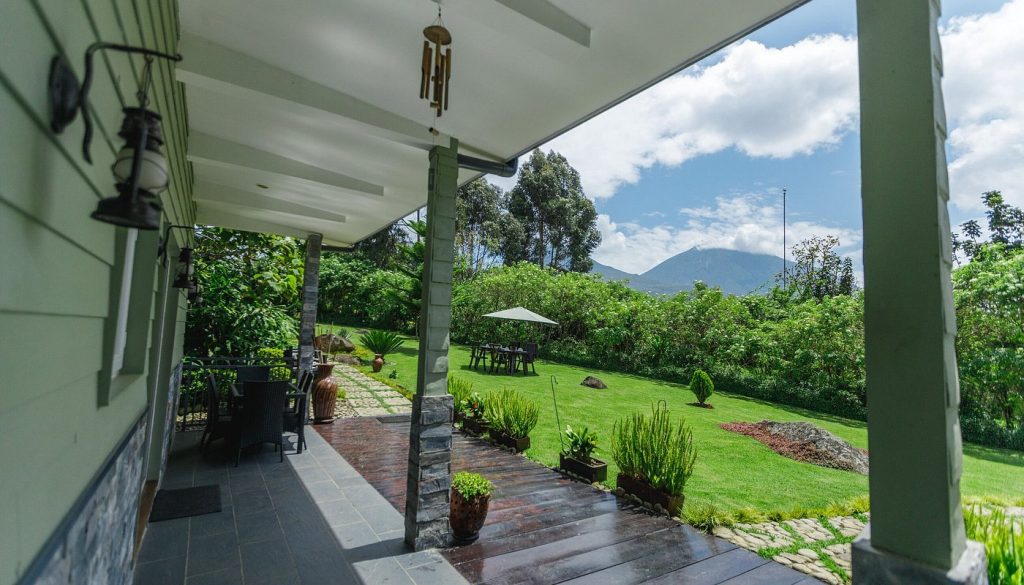
Eco-friendliness is not only for the luxury tier. Sambora Kinigi Lodge earns consistent praise for eco practices and value at the budget end, while Red Rocks centres community tourism, channelling income to local people and offering cultural activities that connect guests to village life.
Community-based options like these put money directly into the hands of people living around the park, which is one of the most powerful forms of conservation support. For budget-conscious travellers who care about impact, these lodges prove that staying responsibly does not require a luxury spend. Some community lodges and cultural villages are run partly by former poachers who now earn from tourism, so a stay there directly funds the shift away from the activities that once threatened the gorillas.
How an Eco Stay Supports the Gorillas
Choosing an eco-friendly lodge supports the gorillas in two ways. First, habitat restoration through reforestation expands and protects the forest the gorillas depend on, directly improving their environment. Second, community investment gives local people a stake in conservation, reducing the pressures that once threatened the animals.
This mirrors the broader logic of gorilla tourism, where a living gorilla becomes more valuable than a dead one. An eco lodge concentrates that effect, ensuring more of your spend flows into the land and the communities that keep the gorillas safe, rather than leaking away. Habitat is a particular concern as the gorilla population grows, since the families need room to expand, and reforestation on former farmland around the park is one of the few ways to add to the space available to them.
Permit and Cost at Eco Lodges
Eco-friendly lodges span every price tier, all separate from the gorilla permit. The $1,500 permit is the same wherever you stay, so choosing an eco lodge is about where your accommodation money goes rather than a change to the trekking cost.
$1,500 per person in 2026, the same from any lodge, separate from accommodation.
Bisate, Singita Kwitonda, and One&Only at high-end rates with reforestation and sustainability programmes.
Sambora Kinigi and Red Rocks offer eco and community focus at low cost.
Eco lodges channel more of your spend into habitat restoration and local communities.
Whatever your budget, an eco-friendly choice ensures more of what you spend reinforces the conservation that protects the gorillas. It is a way to make the surrounding trip, not just the trek, part of the reason gorilla numbers keep recovering. Over a whole trip, the cumulative effect of choosing an eco lodge, hiring a porter, and buying from community sellers is real, since each decision directs a little more money toward the people and the habitat the gorillas depend on.
What are the most eco-friendly lodges for gorilla trekking in Rwanda?
Bisate Lodge, Singita Kwitonda Lodge, and One&Only Gorilla’s Nest lead at the luxury tier with reforestation and sustainable design, while Sambora Kinigi and Red Rocks offer eco and community focus on a budget. All channel money into the landscape and communities.
What makes a lodge genuinely eco-friendly?
Real markers include reforestation and habitat restoration, building with local sustainable materials, renewable energy and water conservation, careful waste management, and genuine local employment and community investment, rather than just using the eco label.
How does staying at an eco lodge help the gorillas?
In two ways: habitat restoration through reforestation expands and protects the forest the gorillas depend on, and community investment gives local people a stake in conservation. Both reinforce the system that has helped gorilla numbers recover.
Are there budget eco-friendly lodges?
Yes. Sambora Kinigi Lodge is praised for eco practices and value, and Red Rocks centres community tourism and cultural activities. These put money directly into local communities, proving responsible stays do not require a luxury budget.
Is Rwanda an environmentally friendly destination?
Rwanda has one of Africa’s strongest environmental records, including a long-standing nationwide ban on plastic bags. This gives the whole country an eco baseline, and the best lodges build on it with reforestation, sustainable design, and community programmes.
Ready to go? Start planning your trip with our gorilla trekking.