Gorilla tourism supports conservation by turning the $1,500 permit into funding for rangers, trackers, veterinary care, and daily monitoring, while channelling around 10 percent of park revenue to local communities so people benefit from protecting the gorillas rather than harming them. This model has helped the mountain gorilla population grow, a rare success for an endangered species. The trekking takes place in Volcanoes National Park in northern Rwanda near Musanze along the Virunga Mountains, home to part of the world’s only wild mountain gorilla population.
Conservation
How Gorilla Tourism Supports Conservation
How your trek protects the gorillas - the Dian Fossey legacy, the recovery from near-extinction, and the communities at the heart of it.
The Complete Guide
Everything in this guide6 in-depth articles
Explore every part of Rwanda gorilla trekking in conservation & research - written by our local East African guides.
01
Challenges Facing Mountain Gorillas Today
The main challenges facing mountain gorillas today are disease, limited habitat, their small and concentrated population,…
Read guide →
02
Gorilla Population Recovery in Rwanda
The gorilla population recovery in Rwanda is one of conservation's clearest success stories: mountain gorilla numbers…
Read guide →
03
Gorilla Research Projects in Rwanda
Gorilla research projects in Rwanda centre on the Dian Fossey Gorilla Fund's Karisoke programme, the Gorilla…
Read guide →
04
The Impact of Gorilla Trekking on Conservation
The impact of gorilla trekking on conservation is overwhelmingly positive: the $1,500 permit funds protection, the…
Read guide →
05
The Legacy of Dian Fossey
The legacy of Dian Fossey is the survival and study of the mountain gorilla itself: the…
Read guide →
06
The Role of Local Communities in Gorilla Conservation
Local communities are central to gorilla conservation in Rwanda: through a revenue-sharing scheme that directs around…
Read guide →
This guide explains how the money flows, what it pays for, and why tourism has become central to keeping these animals alive. The core idea is simple: by making living gorillas more valuable than dead ones, tourism aligns human and animal interests in a way that few conservation efforts manage.
Conservation usually struggles for money, competing for grants and donations that arrive unevenly and rarely cover the daily cost of protecting a species year after year. Gorilla tourism solves much of that problem by building the funding into the experience itself, so that the people who come to see the gorillas are, by the simple act of paying for a permit, financing their survival. Understanding how that works, and where the money actually goes, shows why this model has succeeded where better-funded efforts elsewhere have not.
The Funding Mechanism
At the heart of the model is the permit fee. Each $1,500 permit is not just an entry ticket but a contribution to a system, with the revenue funding the people and programmes that protect the gorillas every day. Because numbers are capped and prices kept high, a relatively small number of visitors generate substantial, reliable income.
This makes gorilla tourism a rare case where the conservation funding is built directly into the visitor experience. Every traveller who treks is, by paying the permit, financing ranger salaries, veterinary work, and community projects, so the act of visiting and the act of protecting become one and the same.
Funding the People Who Protect Gorillas
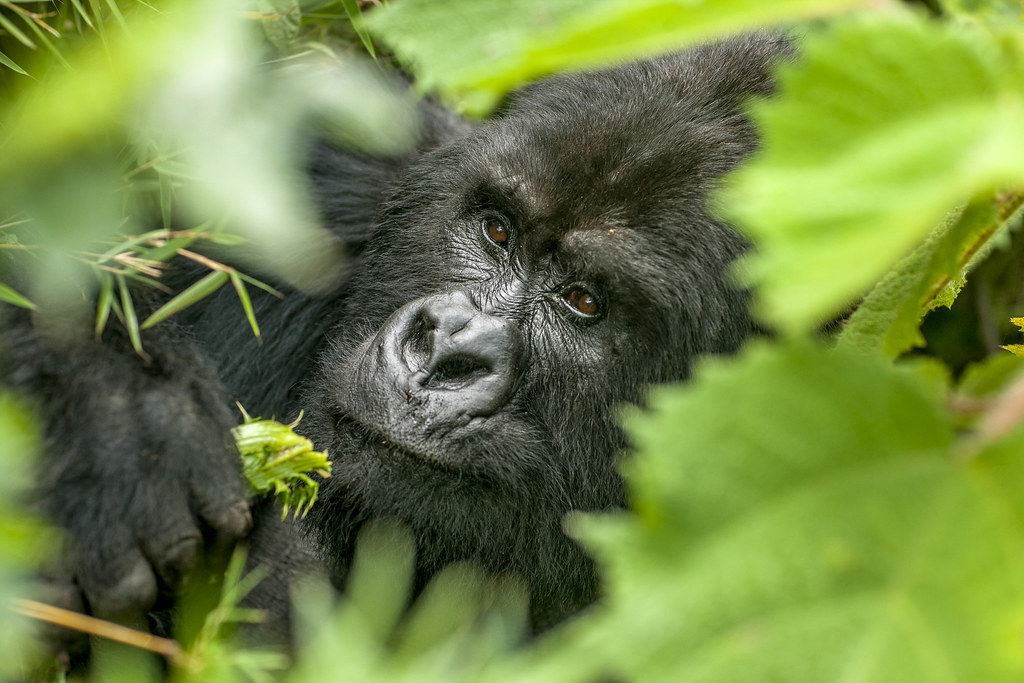
Much of the revenue pays for rangers and trackers, the people who locate each family before dawn, record their health, and guard them through the day. This daily presence deters poaching, catches illness early, and builds the detailed knowledge that keeps the families safe and habituated.
Veterinary care is another major use, with a dedicated programme treating gorillas for snare injuries, respiratory illness, and other threats in the wild. Because the gorillas share so much of their biology with humans, this care is delicate and skilled work, and tourism revenue helps make it possible across the population.
The Community Revenue Share
A defining feature of Rwanda’s model is the community revenue share, with around 10 percent of park revenue directed to communities around the park, among the most generous such schemes in Africa. This funds schools, health clinics, water projects, and other local infrastructure.
The logic is that conservation fails if local people see no benefit and bear all the cost of living beside protected wildlife. By sharing revenue, the model gives communities a direct stake in the gorillas’ survival, turning neighbours of the park into partners in protecting it rather than competitors for its land.
Creating Jobs and Livelihoods
Beyond the formal revenue share, tourism creates livelihoods. Porters, guides, drivers, lodge staff, cooks, and craftspeople all earn income from visitors, spreading the economic benefit widely through the area around the park and into the town of Musanze.
Some of these jobs have transformed lives directly, including former poachers who now work as porters or in community tourism projects. When protecting the forest pays better than exploiting it, the incentive to poach or clear land falls, which is exactly the shift that long-term conservation depends on.
Turning Poachers into Protectors
One of the clearest signs of the model working is the number of former poachers now employed in tourism and conservation. Community projects and porter work give people who once hunted in the forest a legitimate, better-paying alternative, and many have become advocates for the gorillas they once threatened.
This shift matters because poaching, often of other animals with gorillas caught in snares, was a serious historic threat. By offering a livelihood tied to living gorillas, tourism removes much of the economic pressure that drove people into the forest, replacing it with a reason to keep the gorillas safe.
A Proven Conservation Success
The result of all this is measurable: the mountain gorilla population has grown from a low point of a few hundred to over a thousand, and the species was reclassified from Critically Endangered to Endangered in 2018. This is one of the few cases where intensive, funded conservation has reversed a decline.

Tourism is not the only factor, but it is central, providing the steady funding and the community buy-in that underpin the whole effort. The recovery shows that a well-designed tourism model can do more than entertain visitors; it can keep a species alive and help it rebuild.
Permit and the Conservation Return
Understood this way, the permit is both the cost of an experience and an investment in conservation. The $1,500 fee funds the protection that has helped the gorillas recover, so visitors are paying for an hour and contributing to a survival effort at the same time.
Gorilla permit
$1,500 per person in 2026, funding rangers, trackers, veterinary care, and monitoring.
$1,500 per person in 2026, funding rangers, trackers, veterinary care, and monitoring.
Community share
Around 10 percent of park revenue to local schools, clinics, and infrastructure.
Around 10 percent of park revenue to local schools, clinics, and infrastructure.
Local jobs
Porters, guides, drivers, and lodge staff earning income from visitors.
Porters, guides, drivers, and lodge staff earning income from visitors.
The return
A population grown past a thousand and downgraded from Critically Endangered in 2018.
A population grown past a thousand and downgraded from Critically Endangered in 2018.
For travellers who want their trip to mean something beyond the experience itself, gorilla tourism offers a rare alignment: the very act of visiting funds the protection of what you have come to see. The permit is steep, but few tourism dollars anywhere work so directly to keep an endangered species alive.
It is worth being clear that this model is not automatic or risk-free; it works because Rwanda has chosen to price permits high, cap numbers tightly, and channel a meaningful share to communities, rather than chasing volume. Other places have tried wildlife tourism and seen the money leak away from conservation or the animals overwhelmed by crowds. What makes the gorilla model effective is the discipline behind it, and that discipline is something every visitor upholds by accepting the high price and the strict rules as the point rather than an inconvenience.
Gorilla tourism makes a living gorilla worth more than a dead one, to the rangers who guard it, the communities beside it, and the country that protects it. That single shift is what has helped the species recover.
If you want your visit to support conservation as fully as possible, hire a porter, tip the team fairly, buy crafts from community cooperatives, and choose lodges with genuine community and reforestation programmes. These choices direct more of your spending into the local systems that protect the gorillas, extending the impact of your permit well beyond the trek itself.
How does gorilla tourism support conservation?
The $1,500 permit funds rangers, trackers, veterinary care, and daily monitoring, while around 10 percent of park revenue goes to local communities and tourism creates jobs. This gives people a direct stake in protecting the gorillas, and the model has helped the population grow.
How much of the permit goes to conservation and communities?
Permit revenue funds the core conservation work directly, and around 10 percent of park revenue is shared with communities around the park for schools, clinics, and infrastructure, among the most generous such schemes in Africa.
Does tourism really help gorillas, or just disturb them?
Strict rules limit disturbance, and the funding tourism provides has been central to a population recovery from a few hundred to over a thousand, with the species downgraded from Critically Endangered in 2018. The benefits, when well managed, clearly outweigh the controlled disturbance.
How does tourism reduce poaching?
By creating livelihoods tied to living gorillas, including jobs for former poachers as porters and in community projects. When protecting the forest pays better than exploiting it, the economic pressure that drove poaching falls.
How can I make my visit support conservation more?
Hire a porter, tip the team fairly, buy crafts from community cooperatives, and choose lodges with genuine community and reforestation programmes. These choices direct more of your spending into the local systems that protect the gorillas.
Browse our Rwanda gorilla safaris to begin planning your journey.
Watch
See it for yourself
 Speak to a local expert
Karibu
Ready to meet the gorillas?
Let Insight Safari Holidays, locally owned since 2000, handle your permits, lodges and logistics. Tailor-made Rwanda gorilla trekking, planned by people who call these forests home.