Volcanoes National Park is a 160 square kilometre protected area in northwest Rwanda, famous as the place to track mountain gorillas and home to five of the eight Virunga volcanoes. Gorilla permits cost USD 1,500 for foreign non residents in 2026, and the park sits about two to three hours from Kigali. Established in 1925, it is the oldest national park in Africa and the centre of Rwandan wildlife tourism.
Volcanoes
Complete Guide to Volcanoes National Park
The complete guide to Volcanoes National Park - the Virunga volcanoes, wildlife, trails, fees and everything that makes it Rwanda’s crown jewel.
The Complete Guide
Everything in this guide9 in-depth articles
Explore every part of Rwanda gorilla trekking in volcanoes national park - written by our local East African guides.
01
Attractions Near Volcanoes National Park
Attractions near Volcanoes National Park include the Musanze caves, the Twin Lakes of Burera and Ruhondo,…
Read guide →
02
Best Hiking Trails in Volcanoes National Park
The best hiking trails in Volcanoes National Park are the Bisoke crater climb, the two day…
Read guide →
03
Best Things to Do in Volcanoes National Park
The best things to do in Volcanoes National Park are gorilla trekking, golden monkey tracking, hiking…
Read guide →
04
How Large Is Volcanoes National Park?
Volcanoes National Park covers about 160 square kilometres in northwest Rwanda, making it the country's smallest…
Read guide →
05
Visiting Volcanoes National Park from Kigali
Volcanoes National Park is about 105 kilometres from Kigali, a two to three hour drive northwest…
Read guide →
06
Volcanoes National Park Conservation Success Story
Volcanoes National Park has helped lift mountain gorilla numbers from near collapse in the early 1980s…
Read guide →
07
Volcanoes National Park Entrance Fees
Volcanoes National Park does not charge a separate entrance fee for activities, because each activity fee…
Read guide →
08
Volcanoes National Park Facts and Figures
Volcanoes National Park spans about 160 square kilometres, was founded in 1925, contains five volcanoes up…
Read guide →
09
Wildlife Found in Volcanoes National Park
Volcanoes National Park is home to mountain gorillas and golden monkeys alongside buffalo, bushbuck, duiker, spotted…
Read guide →
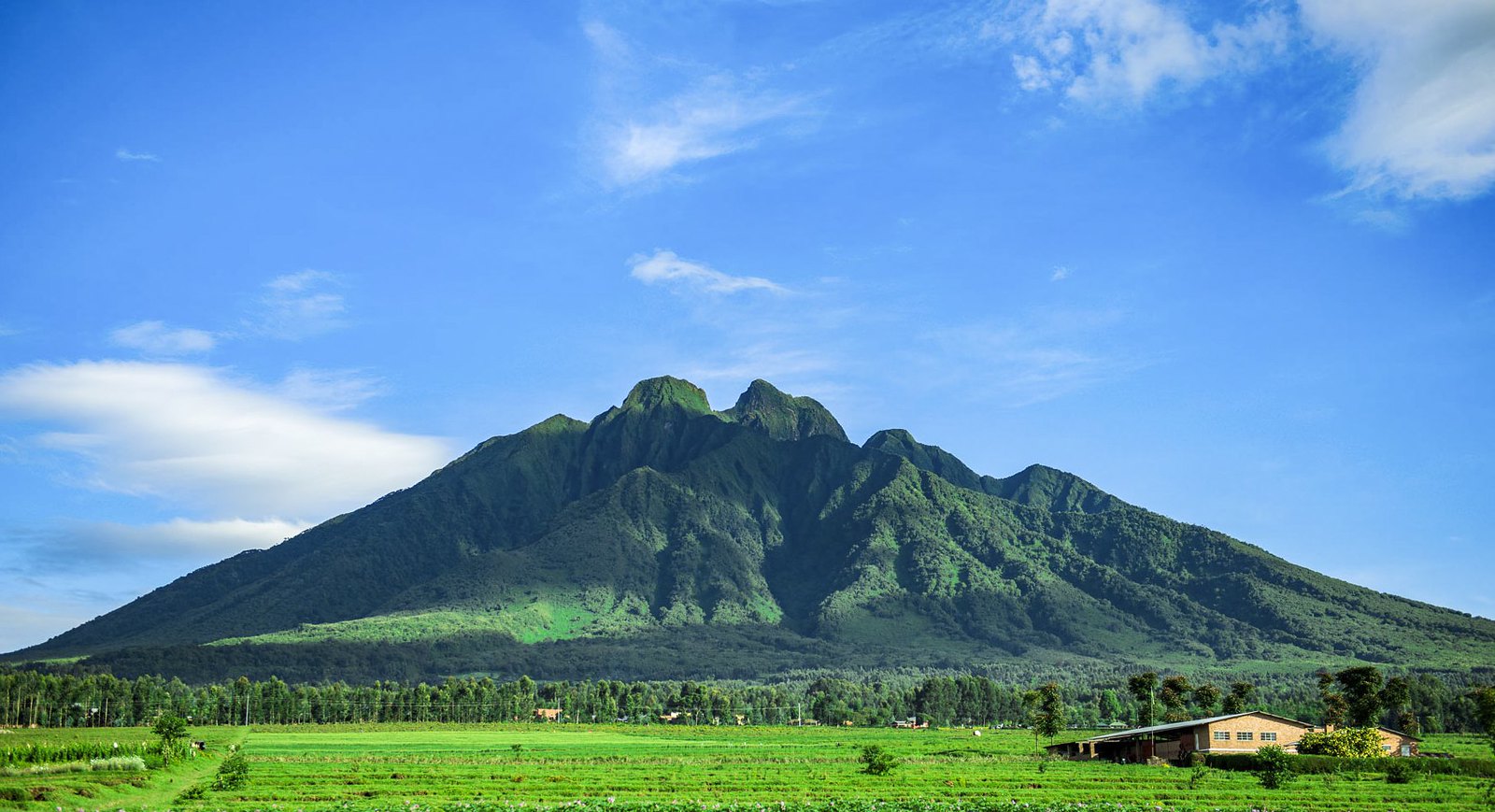
This guide pulls together everything a first time visitor needs: where the park is, what lives there, what you can do, what it costs, and how to plan a trip. Whether you are coming for the gorillas or the wider Virunga scenery, the practical details below will help you build a confident itinerary.
Where the Park Is
The park lies in Rwanda’s far northwest, in the volcanic highlands along the borders with Uganda and the Democratic Republic of Congo. Its headquarters are at Kinigi, near the town of Musanze, formerly known as Ruhengeri, which serves as the main base for visitors. From Kigali it is roughly 105 kilometres on good tarmac, a drive of about two to three hours.
Volcanoes National Park forms the Rwandan section of the larger Virunga Massif, a chain of forested volcanoes shared with Uganda’s Mgahinga park and the DRC’s Virunga park. Together these protected areas safeguard the world’s mountain gorillas, with Rwanda’s park holding a substantial share. The setting is high and cool, with altitudes climbing from around 2,400 metres to over 4,500 metres at the highest peak.
The Volcanoes Themselves
The park takes its name from the five volcanoes within its boundaries. Karisimbi is the tallest at 4,507 metres, a two day climb capped with cold, thin air. Bisoke, at 3,711 metres, holds a wide crater lake and is the most popular single day climb. Muhabura rises to 4,127 metres, a steep day hike, while Gahinga and the jagged Sabyinyo complete the set.

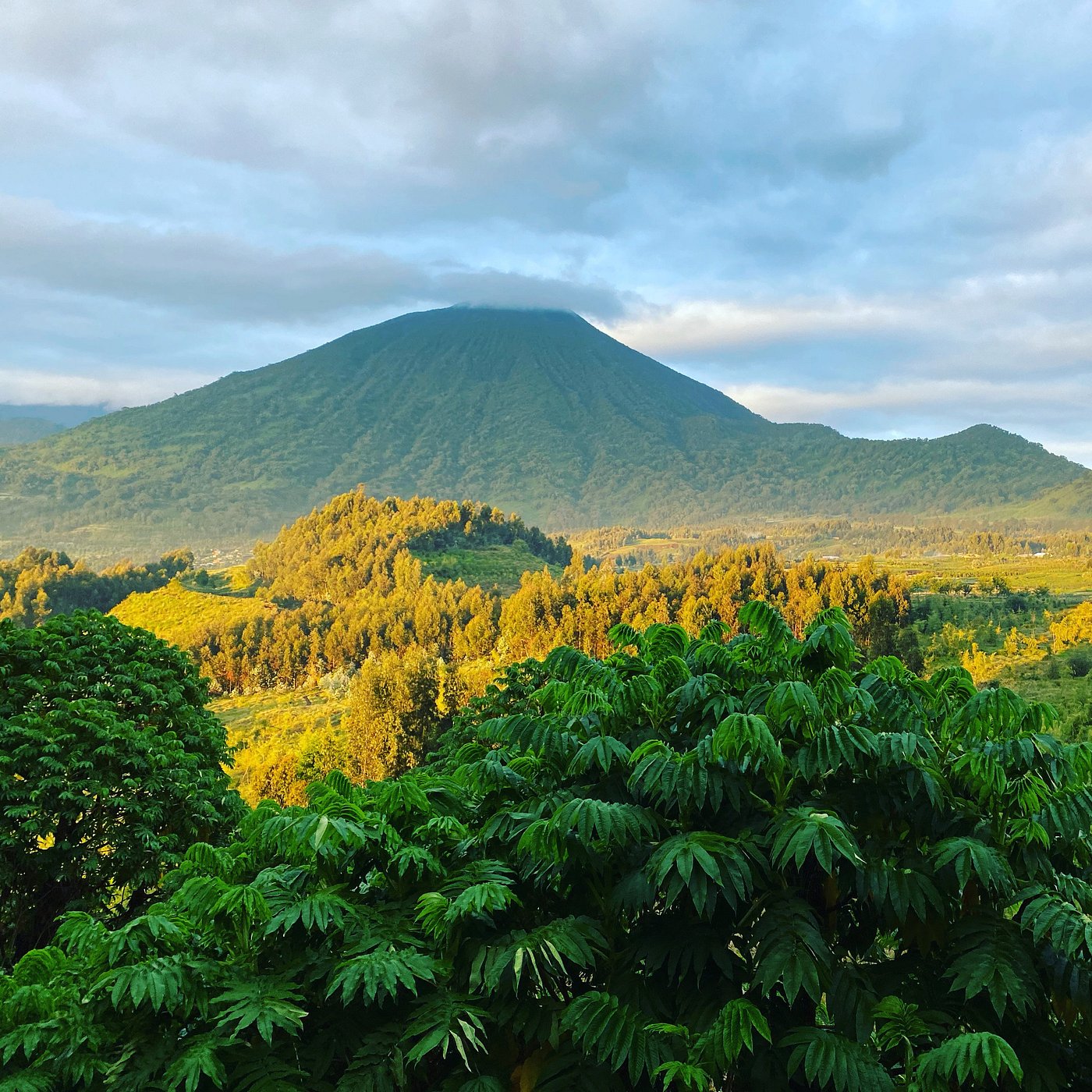
These peaks shape the whole park, from the steep terrain trekkers climb to the cloud forests where the gorillas live. The slopes carry distinct vegetation bands, from bamboo to alpine zones near the summits, and the volcanic soil supports the dense growth that feeds the wildlife. The scenery alone draws hikers, quite apart from the primates.
The Park at a Glance
The grid below gathers the headline facts for quick reference, all current for 2026.
What You Can Do
Gorilla trekking is the headline activity, a half day on the forested slopes ending in one hour with a habituated family. Beyond it, the park offers golden monkey tracking, a gentler outing to see a primate found only in the Virungas. Volcano hikes range from the popular Bisoke day climb to the demanding two day Karisimbi ascent.
Other options include the hike to Dian Fossey‘s tomb and the site of her old research camp, guided nature walks, and cultural visits to communities on the park’s edge. Many visitors pair the gorillas with one or two of these to fill a two or three day stay, turning a single trek into a rounded trip through the region.
When to Visit
The park is open year round, and gorillas are found in every month, so the choice of timing is about comfort and crowds. The dry seasons, roughly June to mid September and December to February, bring firmer trails and lighter rain, which makes them the most popular and the hardest for permits. Book several months ahead for these windows.
The wetter months of March to May and parts of October and November are quieter and greener, with permits easier to secure and a chance of promotional pricing. The trade off is mud underfoot and a higher chance of rain during your trek. Flexible, budget aware visitors often find these months the smarter choice.
Where to Stay and How to Get There
Most visitors base themselves around Musanze or the villages near Kinigi, where lodging ranges from simple guesthouses to high end lodges within sight of the volcanoes. Staying close matters, because treks start with a 7:00 a.m. briefing at headquarters, which rules out a same morning drive from the capital.
Getting there is straightforward. A private vehicle or operator transfer from Kigali takes two to three hours on tarmac, and public buses run to Musanze for budget travellers, with a short taxi to Kinigi from there. The roads are in good condition, and the drive itself, climbing into terraced hills, sets the tone for the highland scenery ahead.
Costs to Plan For
The permit is the largest cost, but not the only one. These are the 2026 figures to budget around.
Gorilla permit
USD 1,500 foreign non resident, USD 500 African resident, USD 200 East African citizen.
USD 1,500 foreign non resident, USD 500 African resident, USD 200 East African citizen.
Golden monkey tracking
USD 100 per person for foreign non residents.
USD 100 per person for foreign non residents.
Volcano hikes
USD 75 for Bisoke, USD 400 for the two day Karisimbi climb.
USD 75 for Bisoke, USD 400 for the two day Karisimbi climb.
Extras
Porter about USD 20, plus transport, lodging, meals, and tips.
Porter about USD 20, plus transport, lodging, meals, and tips.
Making the Most of Your Hour
The hour with a gorilla family passes quickly, so a little preparation pays off. Listen closely at the Kinigi briefing, where guides explain how to behave around the animals, then keep your movements slow and quiet on the trail. Once you reach the family, the guide positions the group, and your job is to watch, photograph without flash, and take in the behaviour rather than rush.
Keep cameras ready before you arrive, since fiddling with settings wastes precious minutes. Asking your guide questions about the family, its silverback, and its young deepens the visit far more than a stream of photos. Many visitors find the quiet moments, when a gorilla simply rests or grooms nearby, are the ones they remember, so resist the urge to fill every second with the camera.
Health Rules That Protect the Gorillas
Because gorillas share much of our biology, they catch human illnesses easily, so strict health rules apply. Anyone visibly unwell may be turned back, and a minimum distance of several metres is kept at all times, with face coverings used to lower the risk of passing on infection. These measures protect a small, fragile population from diseases that could spread fast through a family.
Follow every instruction from your guide, avoid eating or drinking near the animals, and never move toward a gorilla even if it comes closer to you. The rules can feel cautious, but they are the reason habituated families stay healthy enough to be visited at all. Treating them seriously is part of being a responsible visitor to the park.
Packing for the Park
The forest is wet, steep, and cool, so pack for those conditions. Sturdy waterproof hiking boots with good grip are the most important item, paired with long trousers, a long sleeved top, and a rain jacket. Gardening style gloves protect your hands on stinging plants and rough vines, and gaiters keep mud and ants out of your boots.
Bring a daypack with water, a snack, and your camera, plus a hat and sunscreen for the open sections. A walking pole helps on slick slopes, and a porter, hired for around USD 20, can carry your bag and steady you on the climb. Layers matter, since mornings are cold and the exertion soon warms you up.
Frequently Asked Questions About Volcanoes National Park
Where is Volcanoes National Park?
In northwest Rwanda near the town of Musanze, about 105 kilometres and two to three hours from Kigali, with headquarters at Kinigi.
What is the park famous for?
Mountain gorilla trekking, golden monkeys, and five of the eight Virunga volcanoes, set in Africa’s oldest national park, established in 1925.
How much does it cost to visit?
A gorilla permit is USD 1,500 for foreign non residents. Other activities range from USD 75 for a Bisoke hike to USD 100 for golden monkeys.
When is the best time to go?
The dry seasons of June to September and December to February for firmer trails, or the wetter months for quieter, cheaper, greener trekking.
How long should I stay?
Two to three days lets you combine a gorilla trek with golden monkeys, a volcano hike, or a cultural visit without rushing.
Do I need to book in advance?
Yes, especially for dry season gorilla permits, which sell out months ahead. Quieter months allow shorter notice.
Is there a minimum age to trek?
Yes. Gorilla trekking has a minimum age of 15, in line with rules across the region, so the activity suits older children, teenagers, and adults rather than young children.
Watch
See it for yourself
 Speak to a local expert
Karibu
Ready to meet the gorillas?
Let Insight Safari Holidays, locally owned since 2000, handle your permits, lodges and logistics. Tailor-made Rwanda gorilla trekking, planned by people who call these forests home.