Gorilla trekking in Rwanda happens in one place only: Volcanoes National Park in the country’s far northwest, near Musanze town and the gateway village of Kinigi. The park holds about 12 habituated gorilla families spread across the slopes of five volcanoes, and a 2026 permit costs USD 1,500 for foreign non-residents. Visitors are assigned to a specific family on the morning of the trek, so where you actually go within the park depends on which family you draw and how far it has roamed.
Unlike Uganda, which has several gorilla parks and sectors, Rwanda concentrates all of its gorilla tourism in a single protected area. The real choice, then, is not which park but which family, and which side of the park you set out from. The families differ in size, location, and how strenuous the walk to reach them tends to be.
Volcanoes National Park Is Rwanda’s Only Gorilla Trekking Park
Volcanoes National Park, known in French as Parc National des Volcans, covers about 160 square kilometres of montane rainforest and bamboo. Established in 1925, it is the oldest national park in Africa, and it forms the Rwandan section of the wider Virunga Massif shared with Uganda and the DRC. Five of the eight Virunga volcanoes sit within its boundary: Karisimbi, Bisoke, Muhabura, Gahinga, and Sabyinyo.
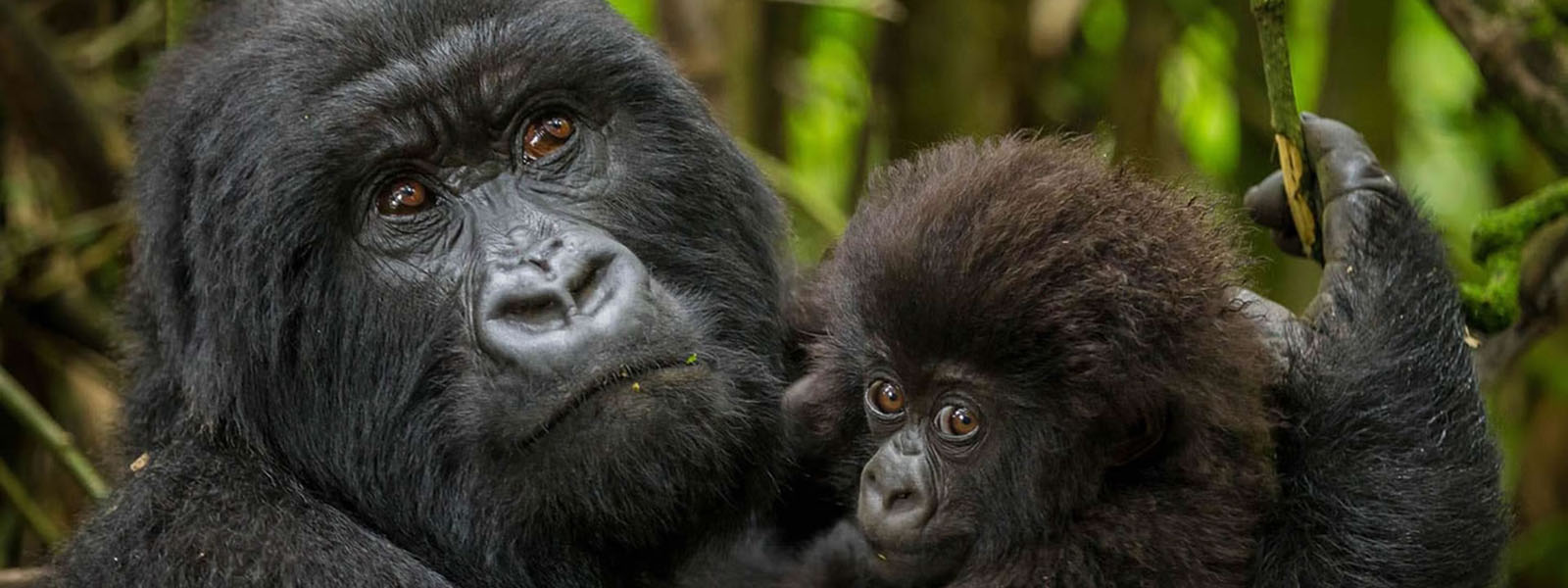
Every gorilla trek in Rwanda begins at the park headquarters in Kinigi, a short distance from Musanze. There is no second gorilla park in the country, so all permits, briefings, and group allocations run through this one base. The park also protects golden monkeys and serves as the starting point for volcano hikes and the walk to Dian Fossey’s grave, but the gorillas are the reason most visitors come.
Where the Gorilla Families Live Within the Park
The park’s habituated families occupy different parts of the volcano slopes, and that geography shapes your trek. Families that range on the lower, gentler ground near the park edge usually mean a shorter, easier walk, while those that favour higher altitudes can require several hours of steep climbing.
On trek morning the head guides at Kinigi allocate each group of eight to a family, weighing your stated fitness and preference against where the families are that day. Advance trackers have already set out at dawn to pinpoint each family from its overnight nest, so the guides know roughly how far each walk will be before you leave. If you want the shortest possible trek, this is the moment to say so.
Susa Family and the Higher Volcano Treks
The Susa family is the most storied group in the park, originally studied by Dian Fossey and once the largest known family. It ranges on the higher slopes of Mount Karisimbi, Rwanda’s tallest volcano at 4,507 metres, which makes reaching it one of the more demanding treks in the park. The reward is a large family in dramatic high-altitude terrain.
Other families that favour the upper slopes, such as groups around Karisimbi and Bisoke, suit fit trekkers who want a longer walk and do not mind altitude. These higher treks are typically allocated to those who indicate they are comfortable with a strenuous hike. Walking times of four to six hours each way are possible when a family has moved high or far.
Easier Family Treks Near the Park Edge
Several families range closer to the trailheads and offer gentler options. Groups such as Agashya and Kwitonda often sit on more moderate ground, and families like Igisha and Sabyinyo can involve shorter approaches depending on their daily movement. These are commonly assigned to older trekkers, families with teenagers, or anyone who prefers a walk closer to two hours than five.
Because gorillas move every day, no family is permanently easy or hard to reach. A group that needed a long climb last week may be near the forest edge today. This is why the guides reassess allocation each morning rather than fixing it in advance, and why telling them your preference matters more than choosing a family by name.
Rwanda Gorilla Families Compared by Trek Difficulty
The grid below sets out a selection of the park’s habituated families with their general location and typical walking demand. Treat it as a guide rather than a fixed rule, since daily movement changes the picture. Use the buttons to highlight a difficulty level.
Gorilla Permit Costs and Where to Book
Wherever your family turns out to be, the permit is the same single document for the whole park. These are the 2026 figures and what they cover.
USD 1,500 per person in 2026, valid for one trek to one family in Volcanoes National Park.
USD 500 for African citizens and foreign residents of African countries.
USD 200 for citizens of Rwanda and other East African Community states.
Through the Rwanda Development Board on the Irembo platform, or via a licensed tour operator, ideally several months ahead.
Where to Stay Near Volcanoes National Park
Because all treks start at Kinigi, lodging clusters around Musanze and the park gate. Staying within 20 to 40 minutes of headquarters lets you make the 7:00 a.m. briefing without a punishing pre-dawn drive. Options run from simple guesthouses in Musanze town to mid-range lodges on the park approach and high-end properties on the forest edge.
The closer and more comfortable lodges sit at the upper end of the price range, while Musanze town offers cheaper beds a little further out. Whichever you pick, the short distances within this corner of Rwanda mean you are never far from the trailheads, the golden monkey tracking sites, or the volcano hikes.
How to Get to the Gorilla Trekking Area
Volcanoes National Park is reached by road from Kigali in two to three hours on a sealed highway through Musanze. There is no airstrip at the park for scheduled flights, so nearly all visitors arrive by vehicle, usually transferring the afternoon before their trek. The main road to the park office is paved, though lodge access tracks can be rough in the wet season.
The same base works for a wider northern Rwanda trip. From Kinigi you can add golden monkey tracking, the Dian Fossey grave hike, or a climb up Bisoke to its crater lake. Lake Kivu lies within a couple of hours for a relaxed end to the trip, and the broader country adds Akagera and Nyungwe for those wanting more wildlife.

Frequently Asked Questions About Where to Trek Gorillas in Rwanda
Can you trek gorillas anywhere in Rwanda besides Volcanoes National Park?
No. Volcanoes National Park is the only place in Rwanda where gorilla trekking takes place. Rwanda's other parks, Akagera and Nyungwe, do not have mountain gorillas.
Can I choose which gorilla family I visit?
Not directly, but you can state a preference for an easier or harder trek at the morning briefing. Guides allocate families based on fitness, group size, and where each family is that day.
How many gorilla families can be visited in Rwanda?
About 12 families are habituated for trekking, with a maximum of eight visitors per family per day. A few additional families are habituated only for research.
Which is the easiest gorilla family to reach?
It changes daily because the families move. Groups ranging on lower slopes near the park edge, such as Sabyinyo at times, tend to involve shorter walks, but your guide confirms this each morning.
Where do I report for my trek?
All treks start at Kinigi park headquarters near Musanze, where you must arrive by 7:00 a.m. for permit checks, group allocation, and the briefing.