Rwanda’s mountain gorillas are special because they belong to one of only two surviving wild populations of a subspecies that cannot live in captivity, and they make up roughly a third of the global total. Found only in Volcanoes National Park within the Virunga Massif, these gorillas share about 98 percent of human DNA, live at altitudes above 2,500 metres, and represent one of conservation’s clearest recoveries. A 2026 permit to visit one of the park’s habituated families costs USD 1,500 for foreign non-residents.
Mountain gorillas are not the same as the lowland gorillas seen in zoos, because no mountain gorilla has ever survived in captivity. What you see in Rwanda is a fully wild animal in its only natural home. Several features set this population apart, from its genetics to its physical adaptations to the story of its survival.
Rwanda’s Gorillas Belong to a Rare Wild Subspecies
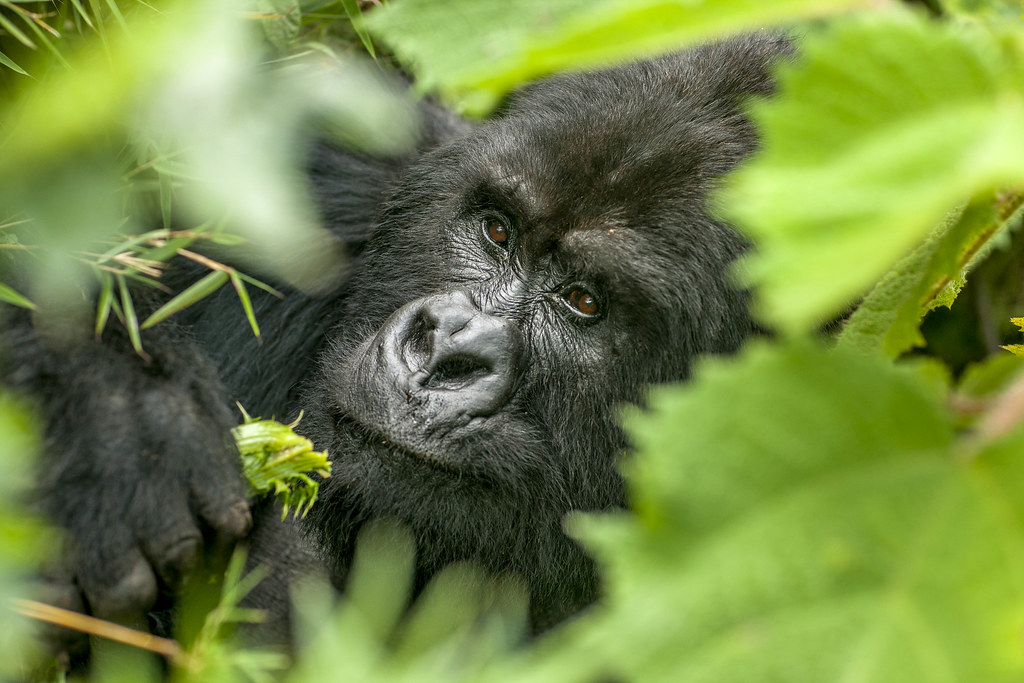
The gorillas in Volcanoes National Park are mountain gorillas, a subspecies of the eastern gorilla. They exist in just two populations worldwide: the Virunga Massif, shared by Rwanda, Uganda, and the DRC, and the Bwindi Impenetrable Forest in Uganda. There is no third home and no captive population anywhere, which makes every individual you might see entirely wild.
This rarity is the foundation of what makes them special. Lowland gorillas can be kept in zoos and number in the thousands, but mountain gorillas have resisted captivity, with no individual surviving the attempt. Their entire existence depends on protecting their high-altitude forest, so the gorillas of Rwanda are both a wildlife attraction and a living measure of habitat conservation.
They Share Around 98 Percent of Human DNA
Mountain gorillas share roughly 98 percent of their DNA with humans, placing them among our closest living relatives alongside chimpanzees. That genetic closeness is visible in their behaviour: families have clear social bonds, individuals form lasting relationships, mothers raise infants over years, and the dominant silverback leads and protects the group.
The same closeness creates a vulnerability. Because their bodies are so similar to ours, mountain gorillas can catch human respiratory illnesses, which is why trekkers must keep their distance, wear masks, and stay away entirely if they are unwell. Each animal also has a unique nose print, similar to a human fingerprint, which researchers use to identify individuals across decades of monitoring.
Adapted for Life High on Rwanda’s Volcanoes
Rwanda’s gorillas live on the cool, wet slopes of five volcanoes, mostly between 2,500 and 4,000 metres. To handle the cold, they have grown thicker, longer fur than their lowland relatives, a clear physical adaptation to altitude. They feed largely on the abundant vegetation around them, including bamboo shoots, leaves, stems, and wild celery, and they build fresh nests to sleep in each night.

This high-altitude life shapes the trekking experience too. The bamboo and more open vegetation on the Rwandan slopes often make the gorillas easier to see and photograph than those in denser forests. A family typically stays within a preferred range, moving daily as it feeds, which is how trackers relocate each group every morning.
Rwanda Holds a Large Share of the World’s Mountain Gorillas
What also makes Rwanda’s gorillas notable is sheer proportion. Volcanoes National Park protects roughly a third of all mountain gorillas on Earth. The chart below shows how the global population divides between the two surviving homes, based on the most recent census figures.
The Only Great Ape Whose Numbers Are Rising
Mountain gorillas hold a distinction no other great ape can claim: their population has grown rather than shrunk in recent decades. In the early 1980s the Virunga population had fallen to around 242 animals, and extinction looked likely. Sustained protection reversed that, and the global total has since climbed past 1,000.
Rwanda’s contribution to that recovery is central. Daily tracking, anti-poaching patrols, veterinary care, and the revenue from the USD 1,500 permits all feed back into keeping the animals safe. When you visit a Rwanda family, you are seeing animals from a population that science once expected to lose, which gives the experience a weight that goes beyond simply watching wildlife.
Family Life and the Role of the Silverback
Each Rwanda gorilla family is led by a dominant silverback, the mature male named for the silver-grey hair that grows across his back with age. He decides where the group feeds and rests, settles disputes, and defends the family. A family also includes several adult females, juveniles, and infants, and its membership shifts over time as individuals join or leave.
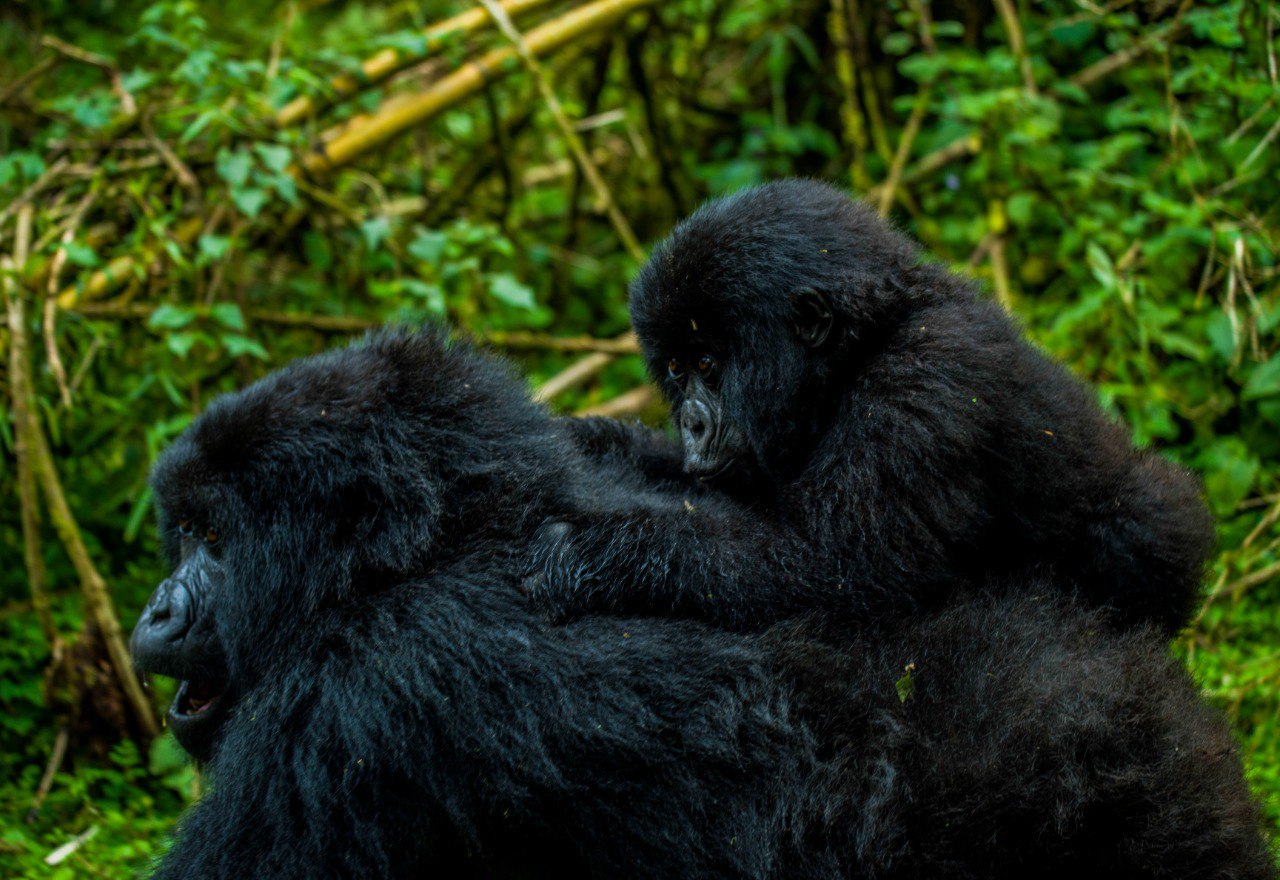
During your hour with a family you typically see this social structure at work: youngsters wrestling and climbing, mothers carrying infants, and the silverback watching over everything. These behaviours, observed continuously since Dian Fossey’s era, are a large part of what makes the Rwanda gorillas compelling. The animals are individuals with names, histories, and relationships that the trackers know well.
Cost to Visit Rwanda’s Mountain Gorillas in 2026
Seeing these gorillas requires a permit, and the price reflects how tightly access is controlled. These are the 2026 figures.
USD 1,500 per person for one hour with a habituated family in Volcanoes National Park.
USD 500 for African citizens and foreign residents of African countries.
USD 200 for citizens of Rwanda and other East African Community states.
Park protection, daily monitoring, veterinary care, and community projects around the park boundary.
How to Visit Volcanoes National Park
Rwanda’s gorillas are reached through Volcanoes National Park in the northwest, about two to three hours by road from Kigali. The gateway is Kinigi, near Musanze town, where all treks begin with a 7:00 a.m. briefing. The minimum age to trek is 15, and groups are capped at eight visitors per family.
The same area lets you pair the gorillas with other Virunga wildlife, including the golden monkeys that share the forest, found in only one other location on Earth. The walk to Dian Fossey’s grave at the old Karisoke site adds context to the conservation story behind the gorillas you came to see.
Frequently Asked Questions About Rwanda’s Mountain Gorillas
Are Rwanda’s gorillas the same as zoo gorillas?
No. Zoo gorillas are lowland gorillas. Rwanda’s are mountain gorillas, a subspecies that has never survived in captivity, so every one lives wild in its natural forest.
How closely related to humans are mountain gorillas?
They share roughly 98 percent of human DNA, which shows in their social behaviour and also means they can catch human illnesses, the reason for the distance and mask rules.
How many mountain gorillas does Rwanda have?
Volcanoes National Park protects roughly a third of the global total, with about 12 families habituated for trekking. The worldwide count stands near 1,063 from the most recent census.
Why can’t mountain gorillas live in zoos?
Attempts to keep them in captivity have failed, with no individual surviving. Their reliance on a specific high-altitude forest diet and environment is one reason their conservation depends entirely on protecting the wild habitat.
What is a silverback?
A silverback is the dominant mature male of a gorilla family, named for the silver-grey hair on his back. He leads the group, settles conflicts, and protects the family.
Browse our gorilla trekking in Rwanda to begin planning your journey.