Mountain gorilla conservation in Rwanda is the story of a population pulled back from near-extinction through research, anti-poaching work, and tourism revenue. From a low of around 242 gorillas in the Virunga mountains in the early 1980s, sustained protection helped lift the global total to about 1,063 individuals at the most recent census. Centred on Volcanoes National Park and the work begun by Dian Fossey, this recovery is funded today partly by the USD 1,500 permit each visitor pays in 2026.
Mountain gorillas are the only great ape whose numbers have risen in recent decades, and Rwanda’s role in that outcome is large. The conservation story explains why trekking is so tightly controlled, why permits cost what they do, and why local communities are central to keeping the gorillas safe.
A Species on the Edge of Extinction
By the early 1980s the mountain gorillas of the Virunga Massif had been reduced to roughly 242 animals, down from estimates of several hundred two decades earlier. Poaching, the capture of infants for trade, habitat loss to farming, and the constant threat of human disease had pushed the subspecies toward collapse. Scientists openly feared the mountain gorilla might vanish before the end of the twentieth century.
The situation in Rwanda was made worse by the fact that mountain gorillas cannot survive in captivity, so there was no fallback population to draw on. Every gorilla lived in the wild, in a shrinking band of high-altitude forest squeezed by surrounding agriculture. Saving them meant protecting that forest and stopping the killing, a task that required both science and enforcement.
Dian Fossey’s Research and Anti-Poaching Work
The conservation effort took shape around Dian Fossey, who founded the Karisoke Research Center in 1967 between Mount Karisimbi and Mount Bisoke. Over 18 years she documented gorilla behaviour in detail and built one of the largest databases on any wild animal, work that gave conservationists the knowledge needed to protect the families.
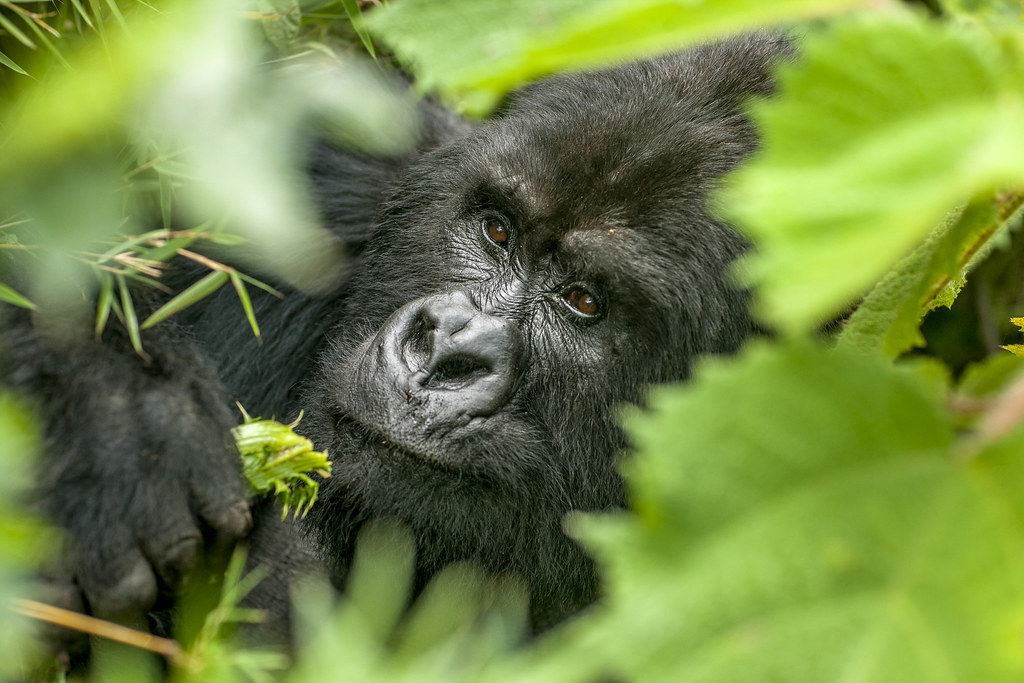
Fossey moved from observation to active defence, mounting anti-poaching patrols, destroying traps, and confronting those who hunted the gorillas. She founded the Digit Fund in 1978, named for a silverback killed by poachers, to support this work. Her campaigns were effective and controversial, and she was murdered at Karisoke in December 1985. The organisation that became the Dian Fossey Gorilla Fund carried her mission forward, and its trackers now protect roughly half of Rwanda’s gorilla families every day.
Conservation Through Rwanda’s Years of Crisis
The 1990s tested every gain. Rwanda’s civil war turned Volcanoes National Park into a conflict zone, and the 1994 genocide devastated the country. The Karisoke camp was destroyed and relocated several times, with some researchers continuing their work in hiding under extreme danger.
Against these odds, the gorillas largely held on. Dedicated trackers kept monitoring families wherever it was possible, and the institutional commitment to the animals survived the collapse around it. When stability returned at the end of the decade, the conservation framework was still intact enough to rebuild, and trekking resumed around 1999. That continuity through crisis is one of the more striking parts of the story.
The Population Recovery in Numbers
The clearest measure of success is the population itself. The chart below traces the recorded counts from the low point of the 1980s to the most recent census, showing the steady climb. Figures are drawn from published census data.
How Tourism Pays for Protection
Modern conservation in Rwanda runs largely on tourism money. The USD 1,500 permit is set high on purpose, under a low-volume model that admits few people and channels the proceeds into protecting the gorillas. The fee pays for the trackers who locate families at dawn, the armed rangers who guard them, veterinary care for sick or injured animals, and the monitoring that records every birth and death.
Crucially, around 10 percent of permit revenue is shared with the communities living around the park, funding schools, health centres, and infrastructure. Additional money compensates farmers when gorillas or other wildlife damage crops. This makes the gorillas an asset to local people rather than a nuisance, which reduces the incentive to poach and builds local support for protection. Many porters and rangers are former poachers now employed by tourism.
Kwita Izina and Cross-Border Cooperation
Since 2005 Rwanda has held Kwita Izina, the annual ceremony that names gorilla infants born in the park each year. Beyond celebration, it functions as a public conservation record, tying each new birth to the wider recovery and keeping the gorillas in the national consciousness.
Because gorilla families move freely across the borders of the Virunga Massif, Rwanda also works closely with Uganda and the DRC. The three countries share monitoring data, coordinate anti-poaching patrols, and manage the habitat as a single ecosystem despite the political boundaries that cut through it. This cross-border collaboration is part of why the population has recovered across the whole massif, not just within Rwanda.
What Your Permit Funds in 2026
Every permit directly supports the conservation effort. These cards show where the money goes.
USD 1,500 per foreign non-resident in 2026, the financial engine of Rwanda’s gorilla protection.
Funds trackers, armed rangers, veterinary care, and the daily monitoring of each family.
About 10 percent supports local schools, clinics, and infrastructure around the park.
Additional funds repay farmers for damage, reducing conflict between people and wildlife.
Seeing the Conservation Story Firsthand
Visitors can connect with this story on the ground at Volcanoes National Park, reached from Kigali in two to three hours. The hike to Dian Fossey’s grave and the remains of the original Karisoke camp leads through the landscape where the research and anti-poaching work took place. The Dian Fossey Gorilla Fund’s Ellen DeGeneres Campus, opened in 2022, now anchors the science.
A standard gorilla trek itself is part of the conservation model, since the permit you buy keeps the protection running. Spending an hour with a habituated family, watching trackers who know each individual by sight, makes the link between tourism and survival concrete in a way no report can.

Frequently Asked Questions About Gorilla Conservation in Rwanda
How many mountain gorillas were there at the lowest point?
The Virunga population fell to around 242 individuals in the early 1980s, when extinction was widely feared. Sustained protection has since lifted the global total to about 1,063.
Are mountain gorilla numbers still rising?
Yes. Mountain gorillas are the only great ape whose population has grown in recent decades, the result of decades of protection across Rwanda, Uganda, and the DRC.
How does buying a permit help conservation?
The USD 1,500 permit funds trackers, rangers, veterinary care, and monitoring, and a share goes to surrounding communities. The low-volume model keeps visitor numbers down while funding protection.
What role did Dian Fossey play?
She founded the Karisoke Research Center in 1967, documented gorilla behaviour, and led anti-poaching work until her murder in 1985. Her organisation continues to protect Rwanda’s gorillas today.
Why is community involvement important?
Sharing revenue and compensating crop damage makes gorillas valuable to local people, reducing poaching and building support. Many rangers and porters are former poachers now working in tourism.