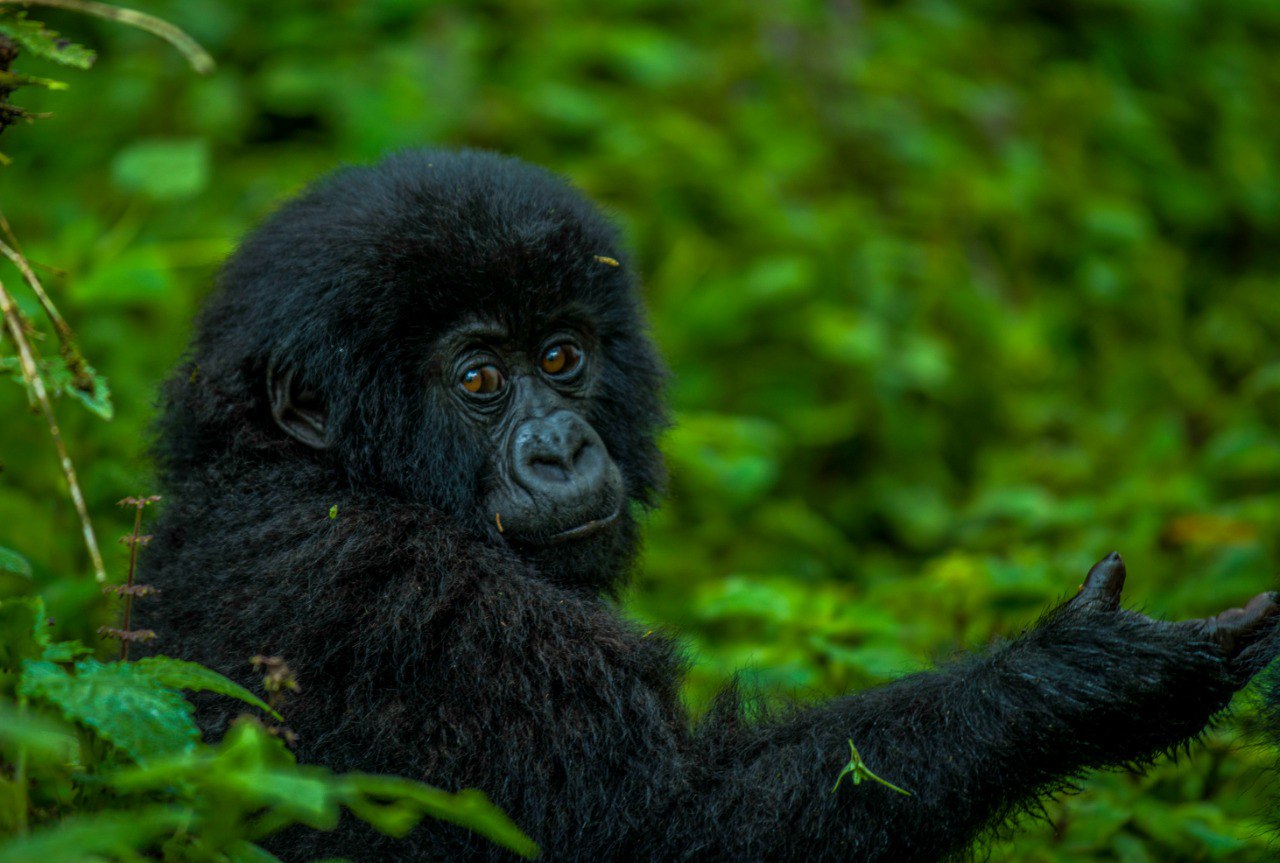
The mountain gorillas of Rwanda are a wild subspecies of the eastern gorilla, living only on the high volcanic slopes of Volcanoes National Park within the Virunga Massif. Rwanda protects roughly a third of the global total of about 1,063 mountain gorillas, organised into around 12 families that visitors can trek for one hour with a 2026 permit costing USD 1,500. They differ from the lowland gorillas seen in zoos in genetics, habitat, and the fact that they have never survived in captivity.
Understanding what these animals actually are clarifies why a Rwanda gorilla trek is unlike any other wildlife trip. From their classification and physical traits to how families are structured and where they live, here is the mountain gorilla explained.
What Mountain Gorillas Are
Mountain gorillas are one of two subspecies of the eastern gorilla, the other being the eastern lowland gorilla. They are large, ground-dwelling apes, with adult silverback males weighing up to around 200 kilograms and standing well over a metre and a half when upright. Despite their size and strength, they are by nature gentle and non-aggressive plant-eaters.
They live exclusively in two wild populations: the Virunga Massif, shared by Rwanda, Uganda, and the DRC, and Uganda’s Bwindi Impenetrable Forest. There is no captive population anywhere, since attempts to keep mountain gorillas in zoos have always failed. The animals you see in Rwanda are therefore entirely wild, which is part of what makes meeting them so different from a zoo visit.
How Mountain Gorillas Differ From Other Gorillas
Rwanda’s mountain gorillas are often confused with the western lowland gorillas familiar from zoos and documentaries, but the two are distinct. Mountain gorillas have thicker, longer fur suited to cold, high-altitude forests, and they live at elevations where lowland gorillas could not. The grid below sets out the main differences. Use the buttons to highlight one type.
Where Rwanda’s Mountain Gorillas Live
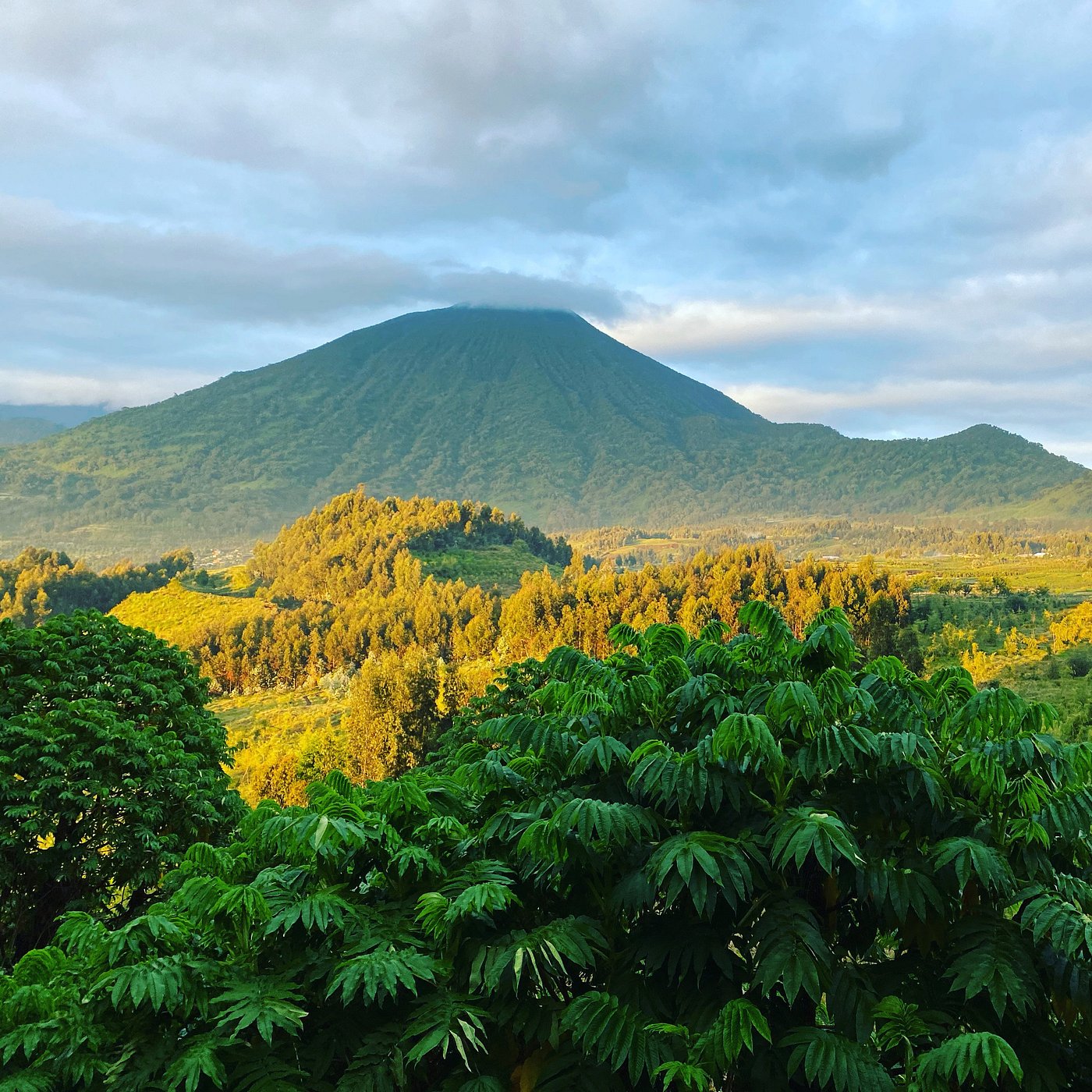
Rwanda’s gorillas occupy Volcanoes National Park in the far northwest, on the slopes of five Virunga volcanoes: Karisimbi, Bisoke, Muhabura, Gahinga, and Sabyinyo. They range mostly between 2,500 and 4,000 metres, in cool, wet montane forest and bamboo. The park forms the Rwandan portion of the wider Virunga Massif, and the gorillas move freely across the borders into Uganda and the DRC.
Within this habitat, families keep to a preferred range and move daily as they feed and build new nests. The bamboo zones and more open vegetation in parts of the park make the gorillas relatively visible compared with denser forests. This is the only part of Rwanda where mountain gorillas exist, so all trekking is concentrated here.
How Gorilla Families Are Structured
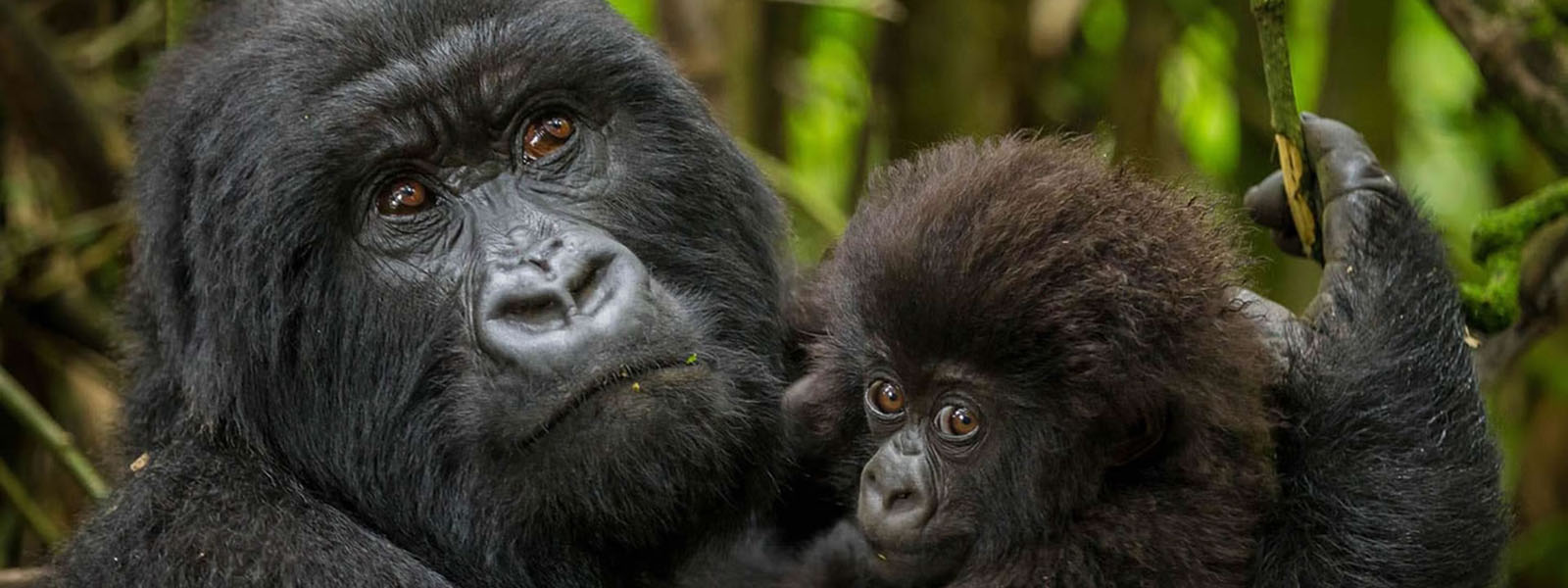
Mountain gorillas live in stable family groups led by a dominant silverback, the mature male whose back hair turns silver-grey with age. He decides where the family feeds and rests, mediates disputes, and defends the group from threats. A typical family also includes several adult females, juveniles, and infants, though composition shifts as individuals are born, mature, join, or leave.
Rwanda’s habituated families each have a name and a known history, tracked continuously since the research era. Names like Susa, Agashya, Kwitonda, and Sabyinyo refer to specific groups that rangers know in detail. During a trek you typically watch this social structure in action: infants playing, mothers nursing, and the silverback presiding calmly over the family.
What Mountain Gorillas Eat and How They Live
Mountain gorillas are mainly herbivores, feeding on the abundant vegetation around them: bamboo shoots, leaves, stems, roots, wild celery, and fruit when available. An adult can eat many kilograms of plant matter a day, which is why families move continually through their range in search of food. They get most of their water from this moist diet rather than from drinking.
Each evening a family builds fresh nests of bent vegetation to sleep in, then moves on the next day, which is how trackers relocate each group every morning from where it nested. Infants stay close to their mothers for years, and the slow reproductive rate is one reason the population recovered gradually rather than quickly. Their days revolve around feeding, resting, grooming, and play.
The Conservation Status of Rwanda’s Gorillas
Mountain gorillas remain endangered, but their story is one of recovery rather than decline. From a low of around 242 in the Virunga mountains in the early 1980s, the global total has climbed to about 1,063, making them the only great ape whose numbers are rising. Rwanda’s protection, anchored at Volcanoes National Park, is central to this.
The recovery depends on continued effort. The gorillas face ongoing risks from human disease, given their genetic closeness to people, and from the pressure of living in a small, bordered habitat surrounded by farmland. The trekking rules, distance limits, and masks all exist to manage the disease risk, and the permit revenue funds the protection that keeps the population growing.
Cost to See Rwanda’s Mountain Gorillas in 2026
Visiting requires a permit, priced to keep numbers low. These are the 2026 figures.
USD 1,500 per person for one hour with a habituated family in Volcanoes National Park.
USD 500 for African citizens and foreign residents of African countries.
USD 200 for citizens of Rwanda and other East African Community states.
Maximum eight visitors per family per day, with a minimum trekking age of 15.
How to Visit the Mountain Gorillas
Rwanda’s mountain gorillas are reached through Volcanoes National Park, about two to three hours by road from Kigali. All treks begin at Kinigi headquarters with a 7:00 a.m. briefing, after which groups are assigned to a family and set out with rangers and trackers. Most visitors stay near Musanze the night before.
The same forest is home to golden monkeys, found in only one other place on Earth, so many visitors track both primates from the same base. The hike to Dian Fossey’s grave adds the research history behind these animals. Whichever activities you choose, the gorillas remain the centrepiece, and the daily tracking makes a sighting very likely.
Frequently Asked Questions About Rwanda’s Mountain Gorillas
What kind of animal is a mountain gorilla?
It is a subspecies of the eastern gorilla, a large ground-dwelling ape that lives only in the wild highlands of Rwanda, Uganda, and the DRC. They are gentle plant-eaters despite their size.
How many mountain gorillas are in Rwanda?
Volcanoes National Park protects roughly a third of the world’s mountain gorillas, with about 12 families habituated for trekking. The global count is around 1,063.
What do mountain gorillas eat?
Mainly vegetation: bamboo shoots, leaves, stems, roots, wild celery, and some fruit. They get most of their water from this moist plant diet and move daily to feed.
Are mountain gorillas dangerous?
They are generally calm and non-aggressive toward people who follow the rules. A silverback may occasionally make a display charge, but guides know how to manage these rare moments.
Can mountain gorillas be seen in zoos?
No. Mountain gorillas have never survived in captivity, so the only way to see one is in the wild in Rwanda, Uganda, or the DRC.
Explore our Rwanda gorilla tours for a private, tailor-made trip.