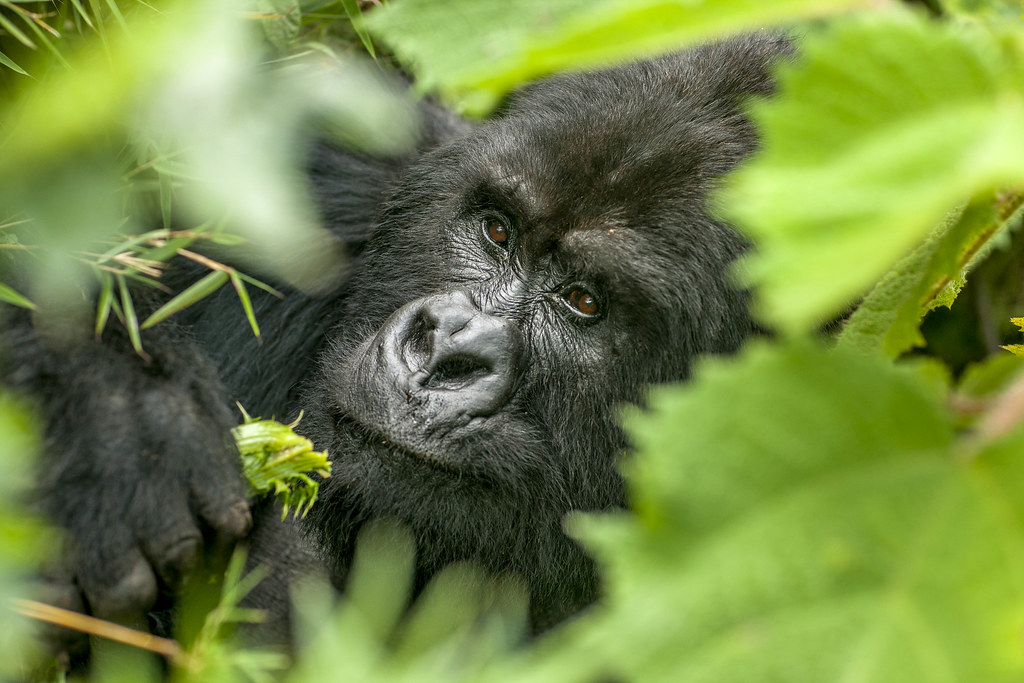
Gorilla trekking in Rwanda works through a permit system: you buy a single permit, report to Kinigi park headquarters by 7:00 a.m., get assigned to one of about 12 habituated families, then hike with a ranger and trackers until you find the gorillas and spend one hour with them. A 2026 permit costs USD 1,500 for foreign non-residents. All treks take place in Volcanoes National Park, a montane rainforest in northwest Rwanda that protects roughly a third of the world’s mountain gorillas.
The system is built around small groups and tight daily limits. Each gorilla family receives a maximum of 8 visitors per day, which keeps the total number of trekkers low and reduces stress on the animals. Understanding the steps in order, from booking the permit to the walk back out, removes most of the uncertainty people carry into their first trek.
How the Rwanda Gorilla Permit System Works
Everything starts with the permit, which is the single document that authorises you to enter the park and visit a gorilla family. The Rwanda Development Board (RDB) issues all permits, either directly through the Irembo online platform or through a licensed tour operator who books on your behalf. A permit is tied to a specific date, and because numbers are capped, treks sell out fast in the dry months.
For 2026 the price is USD 1,500 per person for foreign non-residents, USD 500 for foreign residents of Africa and African citizens, and USD 200 for citizens of Rwanda and other East African Community countries. A 30 percent low-season reduction is sometimes offered between November and May, bringing the non-resident rate down to about USD 1,050 when conditions such as additional nights in Akagera or Nyungwe are met. The permit covers park entry, the guided trek, the trackers, the armed escort, and one hour with the gorillas. It does not cover transport, lodging, meals, porters, or tips.
Because each permit funds a slice of park protection and the community revenue-sharing scheme, the high price is part of Rwanda’s deliberate low-volume model. Booking three to six months ahead is advisable, and nine to twelve months ahead for peak dates in June through September.

What Happens at Kinigi Park Headquarters
On trek day you report to Kinigi headquarters, on the edge of Volcanoes National Park near Musanze town, by 7:00 a.m. Most lodges sit 20 to 40 minutes away, so a wake-up around 5:00 a.m. is normal. Rangers check your permit and your passport, since the minimum age of 15 is verified against your travel document.
While coffee is served and traditional Intore dancers often perform, the head guides divide arriving visitors into groups of eight, one group per gorilla family. Group allocation is based on fitness and preference, so if you want a shorter, gentler walk, say so at this point. Some families stay near the trailhead while others range high up the volcano slopes, and the guides match people to families accordingly.
Each group then receives a pre-trek briefing covering the rules of behaviour around gorillas, what to do if a silverback approaches, and how the hour with the family will run. Listening carefully here matters, because once you reach the gorillas there is little time for instruction.
How the Trek Into Volcanoes National Park Unfolds
After the briefing you drive a short distance to your family’s trailhead, where local porters can be hired for about USD 20. A porter carries your daypack, offers a steady hand on steep ground, and earns a living from tourism, with many being former poachers now employed through the park. Hiring one is among the most practical decisions you can make.
The hike begins through farmland and bamboo before entering thicker forest. Advance trackers set out at dawn to locate each family from where they nested the night before, and they radio the position back to your guide. This is why finding the gorillas is reliable: the team already knows roughly where they are. Walking time ranges from under an hour to five hours or more, depending on how far the family has moved, with most treks falling somewhere in the middle.
Volcanoes National Park sits mostly above 2,500 metres, so the combination of altitude, mud, and steep slopes makes the terrain, rather than the gorillas, the real physical test. Sturdy waterproof boots, gloves, and a rain layer handle most of it.
Your One Hour With a Rwanda Gorilla Family
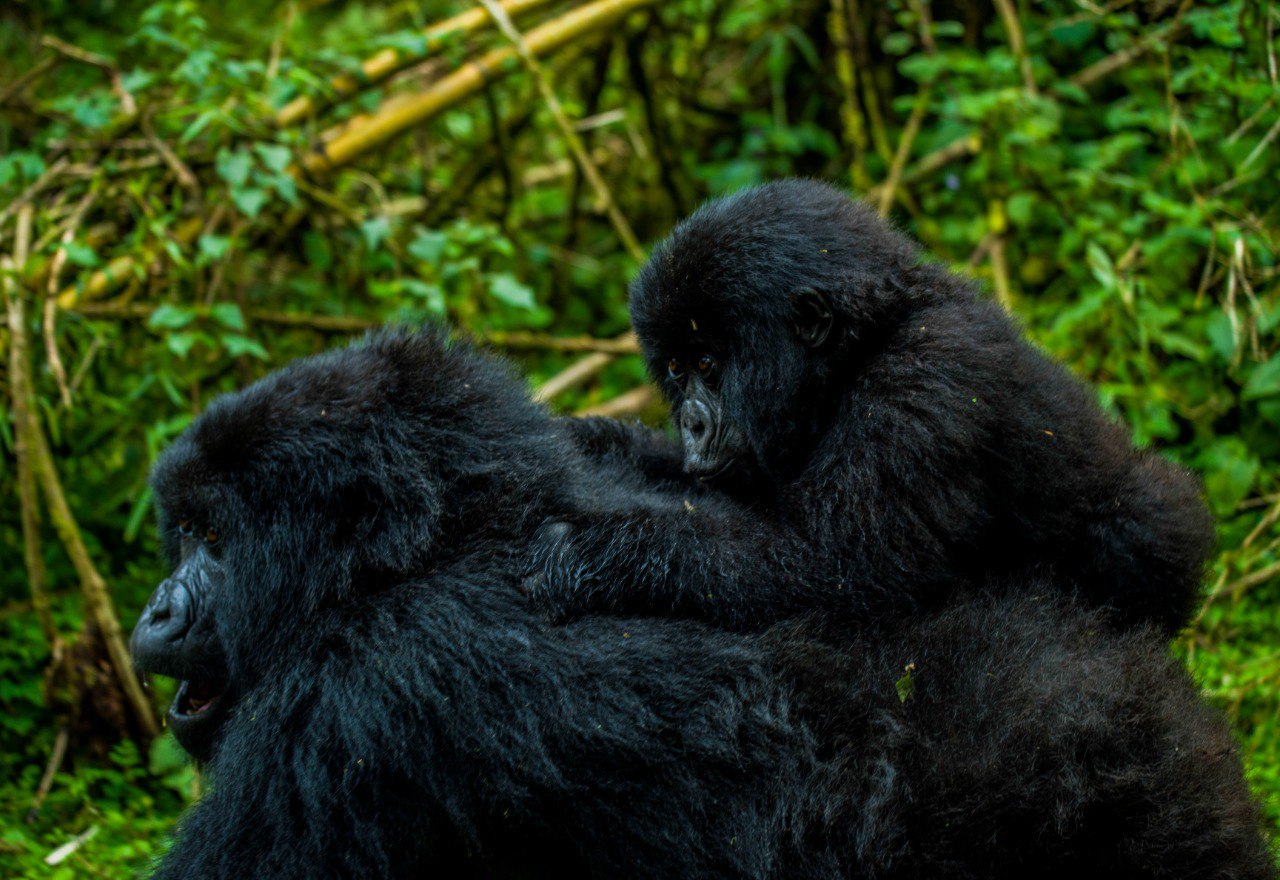
Once the trackers signal that the family is close, you leave your daypack and walking poles with the porters and approach quietly on foot. The one-hour clock starts when the group makes visual contact with the gorillas. During that hour you watch the family feed, rest, groom, and play, often with juveniles tumbling close by while the silverback keeps watch.
The rules during this hour exist mainly to protect the gorillas, which share roughly 98 percent of human DNA and can catch human respiratory illnesses. You keep at least 7 metres back, wear a face mask, avoid flash photography, stay low and quiet, and do not eat, drink, or smoke. If a curious youngster moves toward you, you stay still and let it pass rather than reaching out. Anyone with a cold or cough is asked not to trek at all.
When the hour ends, the guide signals the group to withdraw, and you retrace the route to the trailhead. Most trekkers are back at their vehicle by early to mid afternoon, where certificates of completion are handed out at headquarters.
Rwanda Gorilla Trekking Costs Beyond the Permit
The permit is the headline figure, but a complete trek involves several other line items. Planning the full budget prevents surprises.
USD 1,500 per person for foreign non-residents in 2026. Covers park entry, guides, trackers, escort, and one hour with the family.
About USD 20 per trek. Carries your pack and assists on steep ground. Optional but widely recommended.
Roughly USD 10 to 20 for the ranger group and USD 10 to 15 for a porter. Driver-guides commonly receive USD 15 to 25 per day.
Private transfers from Kigali plus two or more nights near Musanze. Lodge tiers run from budget guesthouses to high-end properties.
Timeline of a Rwanda Gorilla Trekking Day
The day follows a predictable sequence. The interactive timeline below lays out each stage from the early wake-up to the afternoon return, with the figures verified for 2026.
How to Get to Volcanoes National Park From Kigali
Volcanoes National Park lies in northwest Rwanda near the town of Musanze, formerly called Ruhengeri. From Kigali International Airport the drive takes about two to three hours on a sealed, well-maintained road, which is one of the main reasons Rwanda is the most accessible place in Africa to trek gorillas. Most visitors transfer the afternoon before their trek and stay near Kinigi.
The road from Musanze to the park office is paved, but the side tracks to individual lodges often are not, so a four-wheel-drive vehicle is sensible in the wet months. Tour operators usually fold transfers into their packages. Self-driving is possible, though the pre-dawn start and the non-refundable permit make a driver-guide the lower-risk option.
Best Time for Gorilla Trekking in Rwanda
Gorillas can be tracked year-round, and the animals themselves do not change with the seasons. What changes is the ground underfoot. The two dry seasons, June to mid-September and December to February, bring firmer trails and easier walking, which is why these are the busiest and most expensive months to book.
The wetter months from March to May and October to November mean muddier slopes and a higher chance of rain, but also fewer trekkers and the possibility of the low-season permit reduction. Many experienced trekkers prefer these quieter periods. Whichever season you choose, the gorillas are found on almost every trek because of the daily tracking, so timing affects comfort rather than success.
Frequently Asked Questions About Gorilla Trekking in Rwanda
How long does gorilla trekking in Rwanda take?
Plan for a full morning into the early afternoon. The walk to the family ranges from under an hour to five hours or more, you spend exactly one hour with the gorillas, then you hike back. Most trekkers return to the park gate by early to mid afternoon.
Is gorilla trekking physically hard?
It is moderate rather than extreme. The main challenge is altitude, mud, and steep slopes rather than distance. A reasonable level of fitness is enough, and hiring a porter for about USD 20 makes the steeper sections much easier.
What is the minimum age to trek gorillas in Rwanda?
You must be at least 15 years old, and rangers verify this against your passport at Kinigi. There is no upper age limit, though older trekkers should weigh the physical demand for themselves.
Are you guaranteed to see gorillas?
Sightings are not formally guaranteed, but the daily work of advance trackers who locate each family at dawn means the success rate is very high. On almost every trek the assigned family is found.
What happens if I miss the 7:00 a.m. briefing?
Arriving late can cost you the trek, and the permit is non-refundable. This is why most visitors stay close to Kinigi the night before and use a driver-guide who knows the timing.