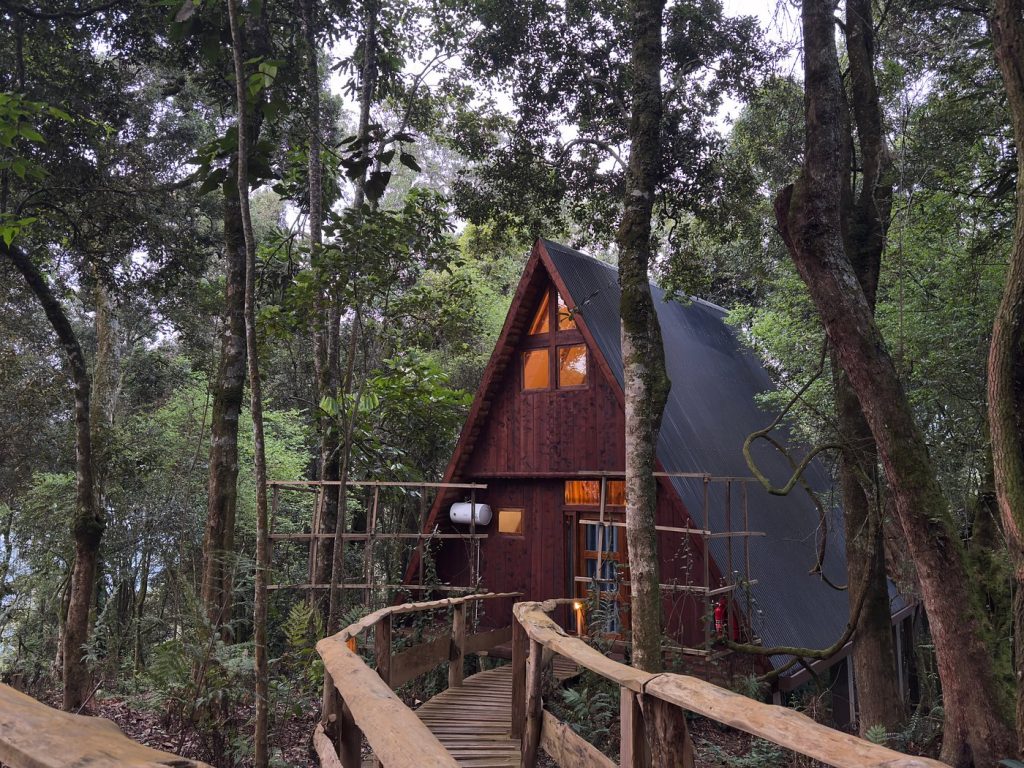
Munazi Eco Lodge is a welcome addition to southwestern Rwanda, and a natural base for exploring Nyungwe Forest National Park, the country’s great montane rainforest where chimpanzee trekking and the celebrated canopy walk draw visitors from across the world. While much of Rwanda’s fame rests on gorilla trekking in the volcanic north, the south offers a very different kind of forest experience, and Munazi places you right at its heart. The lodge opened inside the park in 2025 and sits only a few kilometres from the Uwinka Visitor Centre, the main gateway to the reserve. Do note that a chimpanzee trekking permit is required and booked separately, currently around $150 per person for international visitors through the Rwanda Development Board.
This guide looks at what to expect from a stay at Munazi: the rooms, the lodge’s genuinely eco-minded design, the food, the activities on the doorstep, how to reach it and when to visit. It is written for travellers weighing up where to sleep while exploring one of Africa’s oldest and most biodiverse rainforests.
The Rooms
Munazi is built around well-spaced A-frame chalets set into the forest, their steep timber frames designed to draw in natural light and frame clear views of the canopy beyond. Each unit is en-suite, with hot showers, comfortable beds, mosquito nets and solar lighting, and the newer rooms offer hot and cold running water and Wi-Fi. There is also a standout VIP A-frame with its own jacuzzi, a king-sized bed and a soft-furnished sitting area, for those who want a little extra comfort after a long day on the forest trails. The chalets are deliberately spread out, so each feels private and quiet, with birdsong rather than neighbours for company.
Design and Sustainability
What sets Munazi apart is how it was built. The lodge uses reclaimed exotic timber taken from within the national park, a choice that helps native plants regenerate where non-native species once stood. Much of the furniture and infrastructure is handcrafted by local cooperatives and construction teams, working under the oversight of park management and site engineers. The result is a lodge that feels rooted in its surroundings rather than imposed upon them, and one that channels benefit to the communities living alongside the forest. If you are interested in how tourism revenue underpins protection of Rwanda’s wild places, our note on how tourism supports conservation gives useful context.
Dining
Meals at Munazi are served on a full-board basis, cooked by local staff using fresh ingredients. After an early start and several hours tracking chimpanzees or walking beneath the canopy, a hot cooked meal back at the lodge is no small comfort. The full-board arrangement also makes practical sense given the lodge’s setting deep inside the park, where there are no restaurants nearby to wander off to.
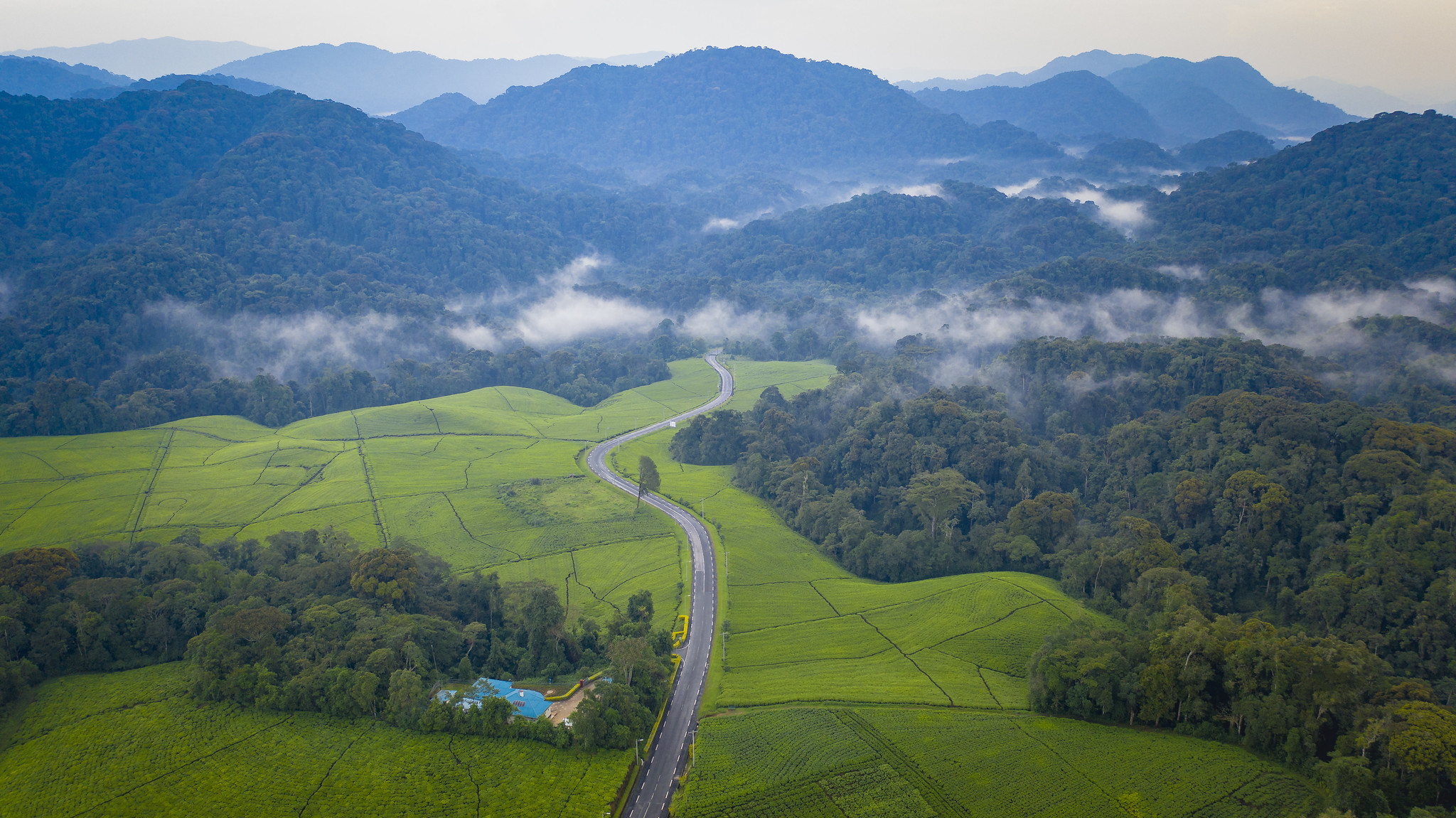
Nyungwe Activities (Chimpanzees, Canopy Walk, Birding)
The great draw of Nyungwe is its wildlife, and Munazi’s position inside the park puts the headline activities within easy reach. Chimpanzee trekking is the signature experience: setting out early with a ranger guide to find a habituated community, and, if fortune allows, spending time watching them feed and move through the trees. The forest is also home to Angolan black-and-white colobus monkeys, which move in large, loose troops, along with mountain and silver monkeys.
The famous canopy walkway is the other must-do, a suspended bridge that carries you high above the forest floor for a rare view across the treetops. Birders are exceptionally well served here too, with colourful turacos and a long list of Albertine Rift endemics making Nyungwe one of the finest birding sites in the region. Guided nature hikes and the newer canopy zipline round out the options for those wanting more time in the forest.
Where It Is and How to Get There
Munazi sits inside Nyungwe Forest National Park, roughly five kilometres from the Uwinka Visitor Centre and around a thirty-minute drive from the park headquarters. From Kigali it is a scenic but long journey, usually five to six hours by road, winding south and west through tea country and hills. Many visitors break the drive or combine Nyungwe with other stops, and a private vehicle with a driver-guide is the most common way to arrive. Choosing where to stay is part of the planning; our guide on how to choose the right lodge is a helpful companion when weighing up options across Rwanda.
Rates and Best Time to Stay
Rates at Munazi are quoted per person per night on a full-board basis and are best confirmed directly on enquiry, as they vary by room type and season. Expect prices to peak during the long dry season, broadly June to September, and again over the shorter dry period around December to February, when trekking conditions are at their most reliable and demand is highest. These are the times to book well ahead. The wetter months can bring lower rates and a quieter forest, though trails are muddier and sightings less predictable. Whenever you travel, secure your chimpanzee permit early, as daily numbers are strictly limited.
Is Munazi Eco Lodge inside Nyungwe National Park?
Yes. Munazi is located inside Nyungwe Forest National Park, about five kilometres from the Uwinka Visitor Centre and roughly a thirty-minute drive from the park headquarters, which makes it an unusually convenient base for early morning treks.
Do I need a chimpanzee permit, and is it included?
A chimpanzee trekking permit is required and booked separately from your accommodation. For international visitors it currently costs around $150 per person through the Rwanda Development Board, and daily numbers are limited, so book in advance.
What activities can I do from the lodge?
Chimpanzee trekking, the canopy walkway, birding for turacos and Albertine Rift endemics, guided nature hikes, colobus monkey tracking and the canopy zipline are all within reach of the lodge.
How far is Munazi from Kigali?
The drive from Kigali takes roughly five to six hours by road through the hills and tea plantations of southern Rwanda. A private vehicle with a driver-guide is the usual way to travel.
When is the best time to stay?
The dry seasons, broadly June to September and December to February, offer the most reliable trekking conditions but are also the busiest and priciest. The wetter months are quieter and often cheaper, though trails are muddier.