Gishwati Mukura National Park in western Rwanda offers around ten things to do, led by chimpanzee tracking in the Gishwati sector, with golden monkey tracking, guided forest walks, a hike to the Kazeneza waterfall, birding for Albertine Rift endemics, and community visits to tea farms and local healers. Most activities run on guided walks booked through the park, with a 2026 chimpanzee permit at about $250 per person including park entry. Gishwati Mukura is Rwanda’s fourth and newest national park, gazetted in 2015 and opened to tourism in 2020, covering roughly 34 square kilometres on the Congo Nile divide.
The park sits about 157 kilometres and a three to four hour drive from Kigali, close to Lake Kivu and within reach of both Volcanoes and Nyungwe. It is small, quiet, and still regenerating after decades of deforestation, which means lower visitor numbers and, in places, clearer sightlines through the recovering forest. All activities require a guide, and most depend on staying at the local guesthouse or lodge. Each thing to do is set out below with its 2026 cost and what to expect on the ground.
Chimpanzee Tracking in the Gishwati Sector
Chimpanzee tracking is the main reason to visit Gishwati Mukura and the activity the park was created to support. The Gishwati sector holds a small group of around 20 chimpanzees that have been gradually habituated since tourism began. A chimpanzee permit costs about $250 per person for international visitors in 2026, generally including park entry, and is booked through the Rwanda Development Board or a licensed operator. Rates here have shifted as the park develops, so confirm the current figure when you book.
Treks begin with a briefing at the park headquarters at around 6:00 in the morning, then move into the forest on foot. Because the group is small and the forest hilly, the walk can run four hours or more, and sightings are less certain than in the larger, longer established communities at Nyungwe. When the chimps are found, visitors get one hour with them. The trade off for the lower odds is solitude: you are unlikely to share the forest with other groups, and the recovering habitat makes for an interesting walk in its own right.
Golden Monkey Tracking in the Forest
Golden monkey tracking is the second primate activity in Gishwati Mukura, following the troops of this localised Albertine Rift subspecies through the regenerating forest. Golden monkeys are smaller, faster, and more numerous than the chimps, which usually makes them easier to find on a guided walk. The activity is part of the park’s guided primate tracking and is arranged through the lodge or guesthouse along with a park guide.
The walk is generally shorter and less demanding than the chimp trek, on forest trails among bamboo and secondary growth. Golden monkeys are active and constantly moving, feeding on bamboo shoots and fruit, so viewing is lively even if photography is tricky. Tracking them here gives a quieter alternative to the busier golden monkey activity in Volcanoes National Park, with the same species in a very different, restoration focused setting.
Tracking L’Hoest’s and Blue Monkeys
Alongside chimps and golden monkeys, Gishwati protects L’Hoest’s monkeys and blue monkeys, both of which are regularly seen on guided forest walks. L’Hoest’s monkeys are ground dwelling and shy, often crossing trails in single file, while blue monkeys keep to the canopy and mixed forest. Serval cats and other small mammals also live in the park, though they are seldom seen.
These primates are usually encountered as part of a general nature or primate walk rather than a dedicated trek, so a single morning can turn up several species. The recovering forest, with its mix of open and dense patches, can actually improve visibility compared with older, thicker rainforest. A knowledgeable guide is key to spotting and identifying the animals, and to explaining how the forest is being restored around them.
Guided Nature Walks Through the Forest
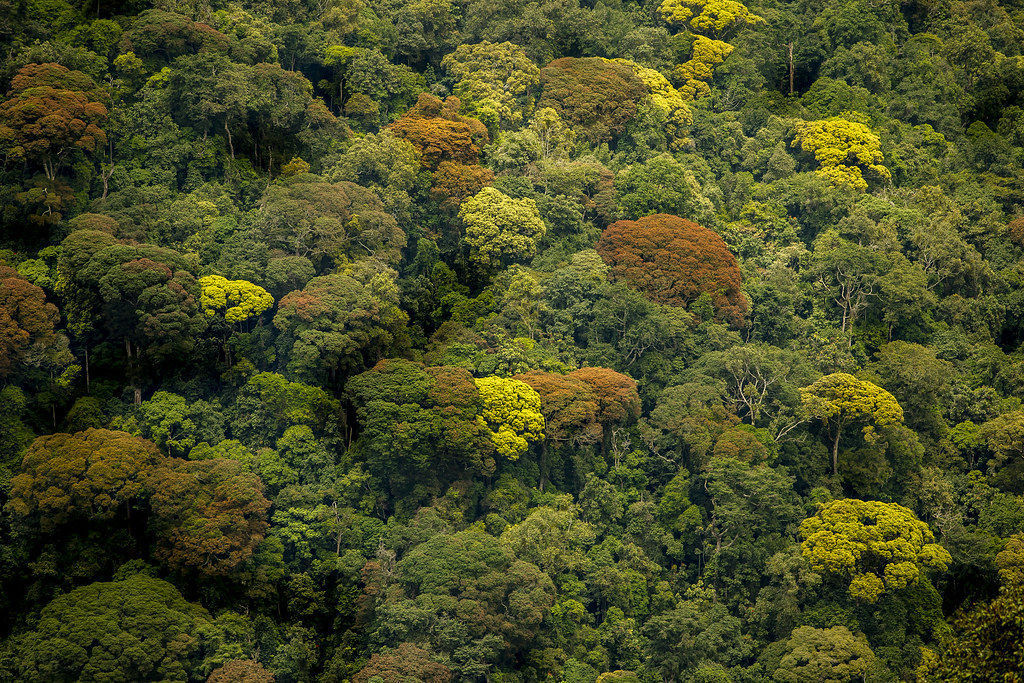
Guided nature walks are the backbone of a visit to Gishwati Mukura and are open to all guests, not just primate trackers. Trails run from the guesthouse across a tea plantation and into secondary forest, following a river valley among more than 60 tree species, including hardwoods, bamboo, ferns, and orchids. Walks vary from short loops to longer half day routes, and a guide accompanies every outing.
The walks focus on the forest itself: the trees, butterflies, chameleons, birds, and the primate calls that carry through the canopy. Because the park is part of a large landscape restoration effort, guides explain how the forest is being rebuilt to stabilise slopes, improve soil, and regulate the streams that feed both the Congo and Nile basins. For travellers who want time in the forest without the early start and uncertainty of a chimp trek, this is the most flexible thing to do in the park.
Hiking to the Kazeneza Waterfall
One of the most rewarding walks in the park follows a forest trail to the Kazeneza waterfall, set deep in the Gishwati sector. The route crosses the tea plantation near the guesthouse, drops into the forested river valley, and ends at the falls and the pools below them. It is a moderate hike with a steep section near the water, taking a half day depending on pace and stops.
Along the way the trail passes through the same recovering forest used for primate tracking, so monkeys, birds, and butterflies are common companions. The waterfall is a natural turning point and a good spot to rest before the climb back. This hike combines the scenery, the wildlife, and the river systems the park protects into a single outing, and it suits travellers who want a clear destination rather than an open ended forest wander.
Birding for Albertine Rift Endemics
Gishwati Mukura is a strong birding site for its size, with 232 species recorded in the Gishwati forest and a further 163 at Mukura, including a set of Albertine Rift endemics and forest specialists. Because the park is compact, birding is done on foot along the nature trails, and a specialist guide helps pick out species by call in the recovering canopy. Sought after birds include the Rwenzori turaco, regal sunbird, purple breasted sunbird, strange weaver, and Rwenzori batis.
The mix of forest edge, regenerating growth, and tea plantation buffer creates varied habitat that supports both forest birds and more open country species. Early morning gives the most activity, and the cool highland climate keeps birding productive through much of the year. For birders working their way around Rwanda’s parks, Gishwati adds species and a quieter setting than the busier sites, and it pairs naturally with the primate walks.
Tea Plantation and Farm Visits
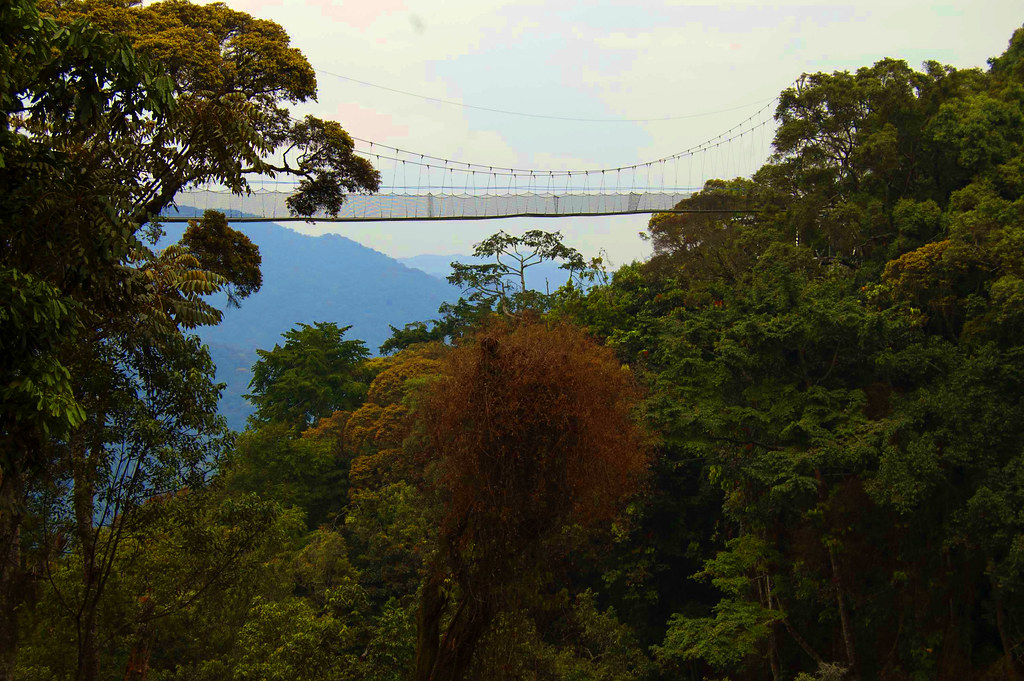
The forest is buffered by tea plantations, and a tea plantation visit is one of the easiest and most popular community activities around the park. Visitors can walk among the tea fields that ring the guesthouse, watch the picking, and learn how the leaf is grown and processed. The plantations also give wide views across the rolling hills that define this part of western Rwanda.
Farm visits extend this into the daily life of the communities that depend on the park’s restoration. These community based activities channel tourism income directly to local people, which is central to the park’s conservation model: a forest that supports livelihoods is a forest people protect. The tea and farm visits are gentle, suit any fitness level, and work well as an afternoon activity after a morning trek.
Cultural Experiences With Local Communities
Community based tourism is built into a Gishwati Mukura visit, and the cultural programme run with neighbouring villages is one of the park’s distinctive things to do. Visitors can watch and join traditional dance and music, try craft making such as basket weaving, and learn beekeeping from local producers. Some programmes include making banana beer and other everyday skills that show how the communities live alongside the forest.
These experiences are hands on rather than staged, and the money supports the same households whose cooperation keeps the restoration on track. They give context that a wildlife walk alone cannot, linking the recovering forest to the people who once cleared it for mining and farming and now depend on its protection. The cultural activities are flexible in length and can be arranged through the guesthouse or lodge.
Visiting Traditional Healers and Medicinal Plants
A more unusual community activity is spending time with traditional healers who use the forest’s plants for medicine. Guided by local practitioners, visitors learn which species are gathered, how they are prepared, and the role this knowledge has played in the communities around Gishwati for generations. It ties directly to the park’s plant diversity, since many of the trees and herbs used are part of the forest being restored.
This is a slow, conversational experience rather than an active one, and it offers a window into local culture that few Rwandan parks present. It also underlines why protecting the forest matters to people beyond tourism, since the plants have practical value in daily life. Combined with the tea, farm, and craft visits, it rounds out a cultural day that complements the forest walks.
Photography and Scenic Ridge Walks
Sitting high on the Congo Nile divide, Gishwati Mukura offers wide views over layered hills, tea fields, and forest, which makes it a quiet spot for landscape and wildlife photography. Scenic ridge walks from the guesthouse follow the high ground with open vistas on one side and forest on the other, and on clear days the view stretches toward Lake Kivu and the wider highlands.
The recovering forest, the primates, the birds, and the tea plantations all give subjects, and the low visitor numbers mean you rarely have to share a viewpoint. Misty mornings are common at this altitude and can make for atmospheric images. For travellers who value calm and space over a checklist of guaranteed sightings, the photography and the ridge walks are reason enough to include the park in a wider Rwanda route.
Cost of Activities in Gishwati Mukura in 2026
Gishwati Mukura is one of Rwanda’s more affordable parks because the chimp permit is far below the gorilla permit price, and most other activities are arranged with the lodge or guesthouse rather than priced individually. The figures below are 2026 international visitor guides. Because the park is young and still developing, rates can change, so confirm with the Rwanda Development Board or your operator. Staying at the local guesthouse or lodge is effectively required to access the guided activities.
Use the spotting guide below to see what you might find in the park and how likely each is. Filter by type, then read the notes. The guide is a planning aid, since the forest is still regenerating and no sighting is guaranteed.
How to Reach Gishwati Mukura, Where to Stay, and When to Go
Gishwati Mukura lies in western Rwanda, in the Rutsiro and Ngororero districts, about 157 kilometres and three to four hours by road from Kigali. The route runs through the western highlands and is often combined with Lake Kivu, which is close enough for a lakeside stay before or after a forest visit. Only the Gishwati sector is open to tourism; the Mukura forest, about 50 kilometres away, remains closed to visitors. Every activity in the park must be done with a guide.
Accommodation is limited and effectively determines access. The community run Forest of Hope Guest House offers simple rooms and a campsite, and staying there is the standard way to join the guided walks. Gishwati Lodge, a small set of forest cottages developed under a long term management agreement, provides a higher tier of comfort. The drier months of June through September and December through February give the firmest trails and best access, while the wetter months bring greener forest and fewer visitors. Because the park is young and small, treating it as a one or two night addition to a wider Rwanda route, rather than a standalone destination, tends to work best.
How much does chimpanzee tracking cost in Gishwati Mukura in 2026?
A chimpanzee permit costs about $250 per person for international visitors in 2026, generally including park entry. Because the park is new and still developing its tourism, rates have varied, so confirm the current figure with the Rwanda Development Board or a licensed operator when you book.
Are chimpanzee sightings guaranteed?
No. The Gishwati sector holds a small group of around 20 chimpanzees that are still being habituated, so sightings are less reliable than at Nyungwe. The trek can be long and steep. Many travellers pair Gishwati with a Nyungwe trek if seeing chimps is a priority.
Do I have to stay at the park to visit?
In practice yes. Guided activities are arranged through the Forest of Hope Guest House or Gishwati Lodge, and all visits require a guide. Staying on site is the standard way to access the chimp trek, primate walks, waterfall hike, and birding.
What else can I do besides primate tracking?
Guided nature walks, the Kazeneza waterfall hike, birding for Albertine Rift endemics, scenic ridge walks, and a range of community activities including tea and farm visits, craft making, beekeeping, cultural dance, and time with traditional healers.
How does Gishwati Mukura fit into a Rwanda itinerary?
It works best as a one or two night stop within a wider route, often linked with Lake Kivu and on the way between Volcanoes in the north and Nyungwe in the south. It suits travellers who value quiet, restoration focused forest over guaranteed wildlife numbers.
Ready to go? Start planning your trip with our gorilla tours.