
• Gorilla permits cost $1,500 per person and must be booked months in advance through the Rwanda Development Board
• Physical fitness preparation is required as treks can last 2-8 hours through steep, muddy terrain
• Proper gear including waterproof clothing and sturdy hiking boots is mandatory for safety and comfort
• Strict behavioral rules protect both gorillas and visitors during the one-hour observation period
• Best trekking months are June through September and December through February for optimal weather conditions
Understanding Rwanda Gorilla Trekking Basics
Gorilla trekking in Rwanda takes place exclusively in Volcanoes National Park, home to 12 habituated gorilla families. Each family can accommodate a maximum of eight visitors per day, creating an intimate wildlife experience that supports conservation efforts.
The Rwanda Development Board manages all gorilla tracking permits through a centralized system. Permits are released one year in advance and sell out quickly during peak seasons. The $1,500 permit fee directly funds gorilla protection programs and community development projects.
Permit Booking Process
Secure permits through authorized tour operators or directly from the Rwanda Development Board. Payment requires a 30% deposit with full payment due 90 days before your trek date. Permit transfers between dates incur additional fees, and cancellations follow strict refund policies.
Trek Duration and Difficulty
Gorilla treks vary significantly in duration and difficulty. Some families live close to park boundaries, resulting in 30-minute hikes. Others require 6-8 hours of hiking through dense bamboo forests and steep volcanic slopes. Rangers assign groups based on fitness levels and preferences discussed during morning briefings.
Pre-Trek Rwanda Gorilla Trekking Tips for Success
Physical preparation determines trek enjoyment and safety. Regular cardiovascular exercise, hiking practice, and leg strengthening exercises prepare your body for challenging terrain. Altitude training helps if you live at sea level, as Volcanoes National Park sits at 8,000-10,000 feet elevation.
Medical Considerations
Gorillas share 98% of human DNA, making them susceptible to human diseases. Visitors showing cold, flu, or respiratory symptoms cannot participate in treks. Recent COVID-19 protocols require negative test results within 72 hours of trekking. Travel insurance covering medical evacuation is strongly recommended.
Vaccination Requirements
Yellow fever vaccination is mandatory for entry into Rwanda. Hepatitis A and B, typhoid, and meningitis vaccinations are recommended. Malaria prophylaxis is advised as Volcanoes National Park lies in a malaria zone. Consult a travel medicine specialist 6-8 weeks before departure.
Packing List for Gorilla Trekking
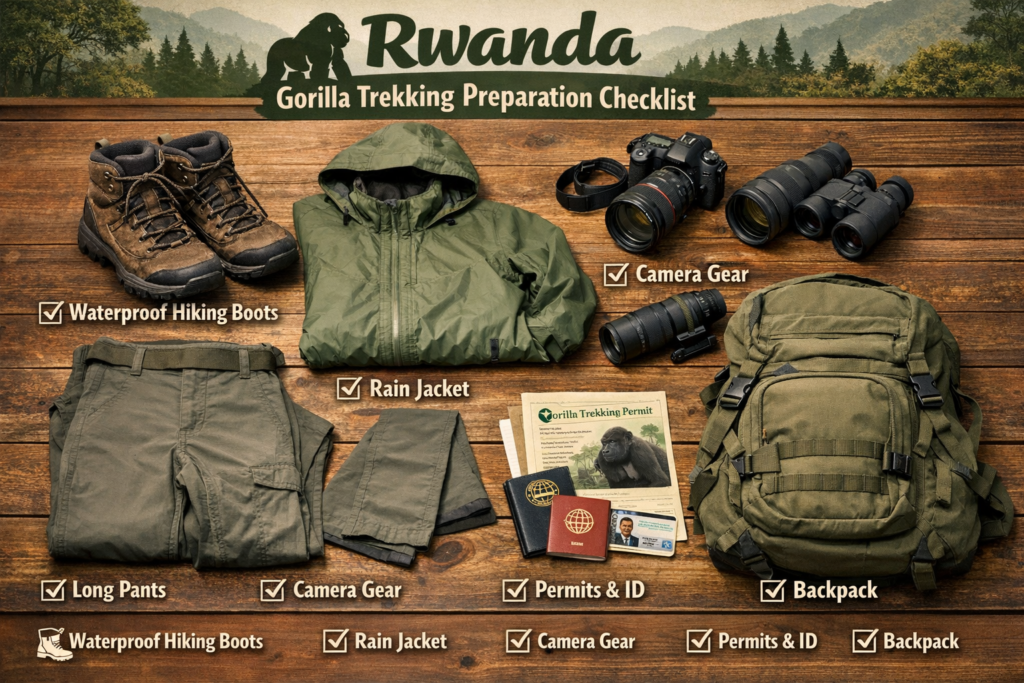
Pack waterproof hiking boots with ankle support and good tread. Gaiters prevent mud and debris from entering boots. Long pants and long-sleeved shirts protect against stinging nettles and insects. Waterproof rain jackets are mandatory as weather changes rapidly in mountain forests.
Bring gardening gloves for gripping vegetation during steep climbs. A small daypack carries water, snacks, and camera equipment. Porters are available for $20 to carry heavy bags and assist with difficult terrain.
Essential Rwanda Gorilla Trekking Tips During Your Visit
Morning briefings at park headquarters begin at 7:00 AM sharp. Rangers explain safety protocols, gorilla family assignments, and trekking expectations. Groups are limited to eight people plus guides and trackers. Late arrivals forfeit their permits without refunds.
Tracking and Observation Protocol
Advance scouts locate gorilla families before tourist groups begin trekking. Radio communication keeps guides updated on gorilla movements and locations. Once gorillas are found, visitors receive final instructions before approaching the family group.
Maintain a minimum seven-meter distance from all gorillas. Sudden movements and loud noises stress the animals and can trigger defensive behaviors. Photography is permitted without flash. Video recording requires special permits arranged in advance.
Gorilla Behavior Understanding
Silverback gorillas lead family groups and may display dominance through chest beating or charging. Remain calm, avoid direct eye contact, and follow guide instructions immediately. Submissive postures like crouching and looking down demonstrate non-threatening behavior.
Young gorillas often show curiosity about visitors but should never be touched or approached. Mother gorillas with infants require extra space and respect. Feeding or offering objects to gorillas is strictly prohibited and results in immediate trek termination.
Weather and Timing Considerations
Rwanda’s equatorial climate creates two distinct seasons affecting gorilla tours in Rwanda. Dry seasons from June to September and December to February offer the best trekking conditions with minimal rainfall and clearer forest paths.
Wet seasons bring heavy afternoon rains making trails muddy and slippery. However, fewer tourists and lush forest scenery create unique advantages. Gorilla behavior remains consistent year-round as they don’t migrate or hibernate.
Advanced Rwanda Gorilla Trekking Tips for Optimal Experience
Book accommodations near Volcanoes National Park to minimize early morning travel time. Luxury lodges like Bisate Lodge and Singita Kwitonda Lodge offer premium locations within 30 minutes of park headquarters. Budget options in Musanze town provide basic amenities at lower costs.
Photography Preparation
Camera settings require adjustment for low-light forest conditions. Use higher ISO settings (800-1600) to compensate for limited sunlight under dense canopy. Fast autofocus lenses perform better in dim conditions. Bring extra batteries as cold mountain air drains power quickly.
Silent camera modes prevent disturbing gorillas with shutter noise. Telephoto lenses allow quality shots while maintaining required distances. Memory cards should have ample space as the one-hour observation period passes quickly.
Cultural Integration Opportunities
Combine gorilla tracking in Rwanda with cultural experiences in nearby communities. Iby’Iwacu Cultural Village offers traditional dance performances, craft demonstrations, and local cuisine tastings. Former poachers now work as cultural guides, demonstrating conservation success stories.
Golden monkey trekking provides additional primate encounters in the same park. These endangered primates live in bamboo forests and offer different photographic opportunities. Combined permits save money compared to separate bookings.
Conservation Impact Understanding
Gorilla trek revenue directly supports anti-poaching efforts, habitat protection, and community development. Local communities receive 10% of permit fees through revenue-sharing programs. This economic model transforms former poachers into conservation advocates and tourism workers.
Veterinary teams monitor gorilla health daily and provide medical care when needed. Habituation programs slowly introduce wild gorilla families to human presence over 2-3 years. Only families comfortable with humans receive tourist visits.
Safety and Etiquette Rwanda Gorilla Trekking Tips
Personal safety depends on following guide instructions without question. Gorillas are wild animals capable of unpredictable behavior despite habituation. Guides carry weapons for emergency protection but prioritize prevention through proper protocols.
Emergency Procedures
Medical emergencies in remote forest locations require helicopter evacuation. Travel insurance covering adventure activities and medical evacuation is mandatory. Satellite communication devices allow guides to contact emergency services from any location.
Weather emergencies including sudden storms or landslides can trap trekking groups. Guides carry emergency supplies and know shelter locations throughout the park. Flexible scheduling allows for weather delays without permit penalties.
Group Dynamics Management
Trekking groups include people of varying fitness levels and ages. Slower hikers should not feel pressured to keep pace with faster members. Guides adjust routes and rest stops based on group capabilities. Porter services help less mobile visitors complete challenging sections.
Communication with guides improves safety and experience quality. Express concerns about fitness, medical conditions, or equipment problems immediately. Guides prefer addressing issues early rather than managing emergencies later.
Environmental Responsibility
Leave no trace principles apply strictly in gorilla habitat. Pack out all trash including food wrappers and water bottles. Human waste must be buried at least 250 meters from water sources and gorilla areas. Toilet paper should be packed out rather than buried.
Minimize noise pollution to avoid disturbing wildlife beyond gorilla families. Forest elephants, buffalo, and numerous bird species share the habitat. Respect for the entire ecosystem enhances conservation outcomes and visitor experiences.
Maximizing Your Rwanda Gorilla Trek Investment
Gorilla trekking in Rwanda represents a significant financial investment requiring careful planning to maximize value. Consider extending stays to include multiple activities and reduce per-day accommodation costs. Rwanda offers excellent infrastructure making multi-day itineraries comfortable and efficient.
Budget Planning Strategies
Beyond permit costs, budget for accommodation, meals, transportation, and guide tips. Mid-range lodges cost $200-400 per night while luxury options exceed $1,000 nightly. Local restaurants and markets offer affordable meal alternatives to hotel dining.
Porter fees, guide tips, and souvenir purchases add to total costs. Budget $50-100 for tips and incidental expenses per person per day. ATMs in Kigali and Musanze accept international cards, but carry cash for rural areas.
Booking Timeline Optimization
Start planning 12-18 months before desired travel dates. Popular months sell out quickly, limiting accommodation and flight options. Shoulder seasons offer better availability and pricing while maintaining good weather conditions.
Travel insurance should be purchased immediately after booking to cover cancellation scenarios. Medical coverage, trip interruption, and adventure activity coverage protect significant financial investments.
We help travelers secure gorilla permits and plan their trek responsibly. Our local expertise removes uncertainty from the planning process and builds confidence for this once-in-a-lifetime wildlife encounter.
Contact our Rwanda specialists to begin planning your gorilla trekking adventure. Permits are limited, and advance booking is required to secure your preferred dates in 2026.
