
- Permit costs $1,500 per person for a one-hour gorilla encounter in Volcanoes National Park
- Total trip costs range from $2,500-5,000 including accommodation, transport, and guides
- Physical demands are moderate to challenging with 2-8 hours of hiking on steep, muddy terrain
- Success rate is 95%+ for gorilla sightings with experienced local guides
- Conservation impact is significant with permit fees directly funding gorilla protection programs
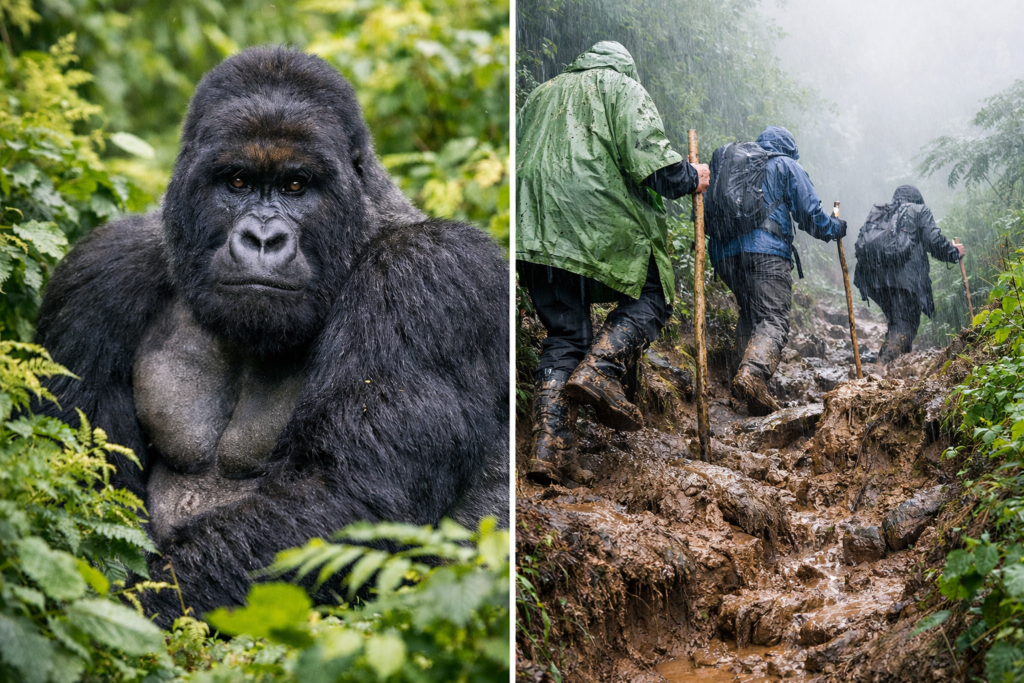
Understanding Gorilla Trekking Costs in Rwanda
The financial commitment for gorilla tracking in Rwanda extends far beyond the permit fee. A gorilla trekking permit costs $1,500 per person for foreign visitors, making it one of Africa’s most expensive wildlife activities. This price reflects the exclusivity and conservation value of the experience.
Daily permit allocation remains strictly limited. Volcanoes National Park issues only 96 permits per day across 12 gorilla families. Each group accommodates a maximum of 8 visitors, creating intense demand during peak seasons from June to September and December to February.
Additional costs accumulate quickly. Accommodation near the park ranges from $100 per night for basic lodges to $800+ for luxury options. Ground transportation from Kigali airport costs approximately $200 round trip. Local guide fees add another $50-100 per day, while porter services cost $20-30.
Total budget planning requires careful consideration. A basic 3-day gorilla trekking trip costs $2,500-3,000 per person. Mid-range options reach $3,500-4,500, while luxury experiences exceed $5,000. These figures include permits, accommodation, meals, transport, and guide services.
What Makes Gorilla Tours in Rwanda Unique
Rwanda’s approach to gorilla tourism sets global standards for wildlife conservation and visitor experience. The country’s recovery from the 1994 genocide includes remarkable conservation success, with mountain gorilla populations increasing by 25% since 2010.
Volcanoes National Park offers unmatched accessibility. Located just 2.5 hours from Kigali International Airport, the park eliminates the multi-day travel requirements common in other gorilla destinations. This proximity allows for efficient trip planning and reduces overall costs compared to Uganda or Democratic Republic of Congo alternatives.
Gorilla families are well-habituated to human presence. Each of the 12 trackable groups has undergone years of careful conditioning. Rangers spend daily time with these families, monitoring health and behavior patterns. This habituation process creates calm, predictable encounters where gorillas continue natural behaviors during visits.
Professional guide standards exceed regional norms. All gorilla trek guides complete extensive training in wildlife behavior, first aid, and visitor safety. Many guides have worked with specific gorilla families for over a decade, developing deep knowledge of individual personalities and movement patterns.
Conservation results are measurable and significant. Gorilla trekking revenue funds anti-poaching operations, veterinary care, and community development programs. Local communities receive 10% of tourism revenue directly, creating economic incentives for wildlife protection.
The Physical Reality of Gorilla Trekking
Gorilla trek difficulty varies significantly based on weather conditions, gorilla location, and individual fitness levels. Understanding these physical demands helps determine if the experience matches your capabilities and expectations.
Terrain challenges are consistent across all treks. Volcanoes National Park sits at 8,000-14,000 feet elevation with steep volcanic slopes. Trails consist of narrow paths through dense vegetation, often muddy and slippery. Hikers navigate bamboo forests, stinging nettles, and thick undergrowth that requires pushing through vegetation.
Trek duration ranges from 2-8 hours depending on gorilla location. Gorilla families move continuously in search of food, covering 1-3 miles daily. Some families stay close to park boundaries while others venture deep into the forest. Weather affects visibility and trail conditions, potentially extending trek times.
Weather conditions impact every aspect of the experience. Rwanda’s mountain climate brings frequent rain, mist, and temperature changes. Morning temperatures start around 50°F (10°C) and can drop further at higher elevations. Rain creates muddy, slippery conditions that increase difficulty and safety risks.
Age and fitness requirements are clearly defined. Minimum age is 15 years with no upper age limit for physically capable individuals. Participants must walk continuously for several hours on uneven terrain. Those with heart conditions, respiratory issues, or mobility limitations should consult medical professionals before booking.
Porter services provide valuable assistance. Local porters carry backpacks, provide stability support, and assist with difficult terrain sections. Porter fees of $20-30 directly benefit local communities while making treks more manageable for visitors.
Comparing Rwanda to Other Gorilla Destinations
Is gorilla trekking in Rwanda worth it compared to Uganda and Democratic Republic of Congo alternatives? Each destination offers distinct advantages and challenges that affect overall value and experience quality.
Rwanda provides superior infrastructure and safety. The country maintains excellent roads, reliable communication networks, and stable political conditions. Medical facilities in Kigali meet international standards, providing peace of mind for travelers. Government efficiency streamlines permit processes and reduces bureaucratic delays.
Uganda offers lower costs with longer travel times. Gorilla permits in Bwindi Impenetrable National Park cost $700, representing significant savings. However, reaching the park requires 8-10 hours of challenging road travel from Entebbe Airport. Accommodation options are more limited, and infrastructure quality varies significantly.
Democratic Republic of Congo presents the lowest costs but highest risks. Virunga National Park charges $400 for gorilla permits when operations are active. Security concerns frequently close the park to tourists, making trip planning unreliable. Political instability and limited infrastructure create additional challenges for international visitors.
Rwanda’s gorilla families show more consistent habituation. The country’s systematic approach to gorilla conditioning produces calmer, more predictable encounters. Visitors report closer approaches and more natural behavior compared to some families in neighboring countries.
Conservation impact varies significantly between destinations. Rwanda’s transparent revenue sharing and measurable conservation outcomes provide clear evidence of tourism benefits. Uganda and DRC face greater challenges in fund distribution and anti-poaching effectiveness.
Conservation Impact and Ethical Considerations
Rwanda’s gorilla tourism model demonstrates how wildlife experiences can drive meaningful conservation outcomes. Understanding these impacts helps answer whether gorilla trekking in Rwanda provides value beyond personal satisfaction.
Revenue allocation creates direct conservation benefits. Each $1,500 permit generates approximately $1,200 for conservation programs after operational costs. These funds support ranger salaries, anti-poaching equipment, veterinary care, and habitat protection initiatives. Annual tourism revenue exceeds $18 million, representing Rwanda’s largest conservation funding source.
Community involvement ensures long-term sustainability. Local communities receive 10% of gorilla tourism revenue through the Rwanda Development Board’s community fund. These payments fund schools, health clinics, and infrastructure projects in villages surrounding Volcanoes National Park. Community members work as porters, guides, and lodge staff, creating economic alternatives to activities that threaten gorilla habitat.
Scientific research benefits from tourism infrastructure. Gorilla tourism funds ongoing research into mountain gorilla behavior, genetics, and health. Daily monitoring by guides provides continuous data on gorilla populations, feeding patterns, and social structures. This research informs conservation strategies and helps protect gorilla populations across the region.
Habitat protection extends beyond park boundaries. Tourism revenue supports buffer zone management and community conservation programs. Farmers receive compensation for crop damage caused by gorillas, reducing human-wildlife conflict. Reforestation projects funded by tourism create wildlife corridors connecting protected areas.
International awareness drives additional support. Visitors become conservation ambassadors, sharing experiences and supporting gorilla protection initiatives after returning home. Social media exposure and word-of-mouth recommendations increase global awareness of mountain gorilla conservation needs.
Planning Your Rwanda Gorilla Trek
Successful gorilla trekking requires advance planning and realistic expectations. Understanding booking processes, timing considerations, and preparation requirements maximizes your chances of a positive experience.
Permit booking requires 6-12 months advance notice. Peak season permits (June-September, December-February) sell out quickly due to limited daily availability. We recommend booking permits immediately after confirming travel dates. Permit fees must be paid in full at booking and are non-refundable except in cases of park closure.
Timing affects both cost and experience quality. Dry seasons (June-September, December-February) offer better hiking conditions but higher accommodation prices and permit demand. Wet seasons (March-May, October-November) bring lower costs and fewer crowds but muddy, challenging trail conditions. Weather remains unpredictable year-round at high elevations.
Physical preparation improves trek enjoyment. Start cardiovascular training 8-12 weeks before travel, focusing on hiking endurance and leg strength. Practice walking on uneven terrain with a daypack. Altitude acclimatization helps, though most visitors adapt quickly to Volcanoes National Park elevations.
Equipment requirements are specific and important. Waterproof hiking boots with ankle support are mandatory. Long pants and long-sleeved shirts protect against stinging nettles and vegetation. Rain gear, warm layers, and gardening gloves complete the essential kit. Camera equipment should include extra batteries and waterproof protection.
Health considerations require advance planning. Yellow fever vaccination is mandatory for entry to Rwanda. Malaria prophylaxis is recommended though risk is low at park elevations. Travel insurance should cover emergency evacuation and adventure activities. Visitors with recent illness should postpone trips to protect gorilla health.
Group dynamics affect the overall experience. Gorilla groups are assigned based on fitness levels and preferences when possible. Communicate any physical limitations or special requirements during booking. Porter services should be arranged in advance, especially during peak seasons.
Making the Decision: Is Gorilla Trekking in Rwanda Worth It?
The value proposition of Rwanda gorilla trekking depends on individual priorities, financial capacity, and travel goals. Evaluating these factors helps determine if the experience justifies the significant investment required.
Financial considerations extend beyond the initial cost. A complete Rwanda gorilla trek represents a major travel expense, often exceeding $3,000-5,000 per person. This investment could fund multiple other African wildlife experiences or extended travel in other regions. Consider opportunity costs and budget impacts carefully before committing.
Wildlife encounter quality varies significantly. While success rates exceed 95%, encounter quality depends on gorilla behavior, weather, and group dynamics. Some visitors spend only brief moments with gorillas due to their movement or stress levels. Others enjoy extended, close observations of natural behaviors. Expectations should remain flexible.
Physical demands may exceed comfort levels for some travelers. Steep, muddy terrain and unpredictable weather create challenging conditions. Hikers with mobility issues, heart conditions, or low fitness levels may struggle to complete treks safely. Honest self-assessment prevents disappointment and safety risks.
Conservation impact provides lasting value beyond personal experience. Gorilla tourism directly funds protection programs and community development. Visitors contribute to species survival and local economic development. This conservation impact adds meaning and value that extends far beyond the trek itself.
Exclusivity and rarity justify premium pricing for many travelers. Mountain gorillas exist only in Rwanda, Uganda, and Democratic Republic of Congo. Population numbers remain critically low despite recent increases. The opportunity to observe these animals may not exist for future generations, creating urgency for current travelers.
Alternative experiences offer different value propositions. Tanzania and Kenya provide diverse wildlife viewing at lower costs. South Africa offers accessible luxury safari experiences. Botswana delivers exclusive, high-end wildlife encounters. Compare these alternatives against Rwanda’s specific offerings and your personal interests.
