
• Waterproof hiking boots with ankle support are required for gorilla trekking in Rwanda due to muddy, uneven terrain
• Boots must have deep tread patterns for traction on slippery volcanic soil and steep slopes
• Gaiters are recommended to prevent mud, thorns, and insects from entering your boots
• Break in new boots at least two weeks before your trek to avoid blisters
• Pack extra wool socks and consider bringing backup footwear for your Rwanda trip
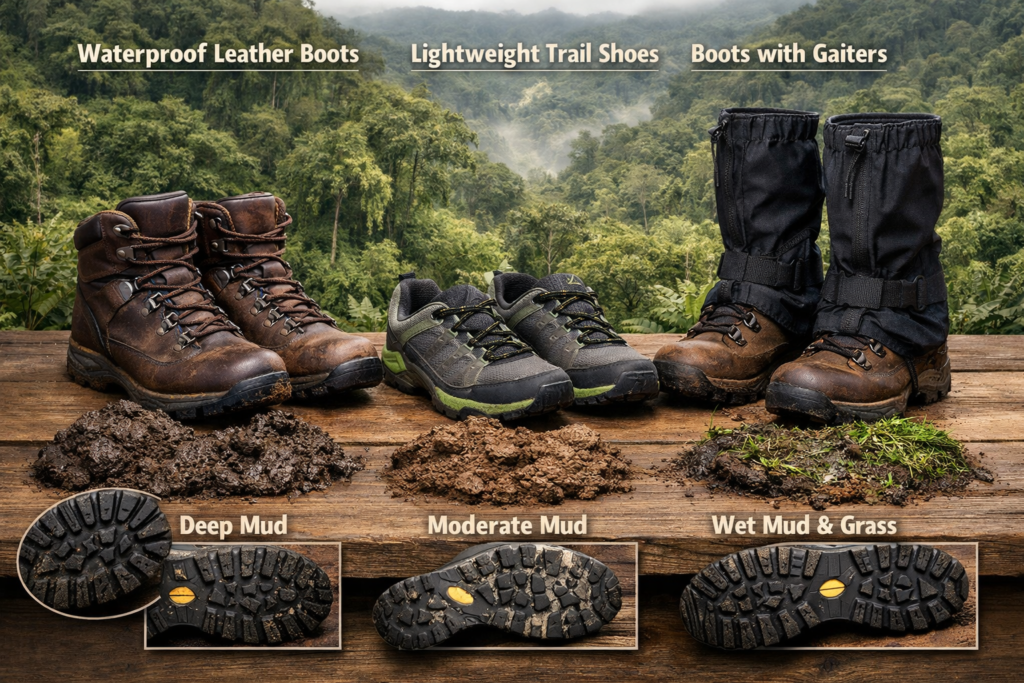
Why Proper Footwear Matters for Gorilla Tracking in Rwanda.
The terrain in Volcanoes National Park presents unique challenges that standard athletic shoes cannot handle. Gorilla families move freely through their habitat, leading trekking groups across steep volcanic slopes, through bamboo forests, and over muddy trails that can become treacherous after rain.
Volcanic soil composition creates particularly slippery conditions. The rich, dark earth that supports the mountain forest becomes extremely slick when wet, causing even experienced hikers to lose their footing without proper traction. Rangers report that inadequate footwear is one of the primary causes of trek delays and safety incidents.
Weather variability adds another layer of complexity. Morning mist can soak the forest floor, afternoon rains can flood trails, and temperature changes affect both comfort and safety. The elevation ranges from 2,400 to 4,507 meters, meaning conditions can shift rapidly as groups move through different forest zones.
Trek duration uncertainty makes comfort crucial. While some gorilla encounters happen within an hour of departure, others require six to eight hours of hiking through challenging terrain. Your feet must remain comfortable and protected throughout this entire period, regardless of how long the search takes.
Essential Features for Shoes for Gorilla Trekking in Rwanda
Waterproof Protection
Waterproof boots are non-negotiable for gorilla tours in Rwanda. The forest floor remains damp year-round, streams cross many trails, and rain can begin without warning. Leather boots with waterproof membranes provide the most reliable protection, though they require longer break-in periods.
Synthetic waterproof materials dry faster but may not offer the same durability over multiple days of trekking. Gore-Tex and similar breathable waterproof fabrics balance protection with comfort, preventing both water entry and excessive moisture buildup inside the boot.
Seam sealing becomes critical in these conditions. Water will find any weakness in boot construction, so look for boots with fully sealed seams or plan to apply additional waterproofing treatment before your trip.
Ankle Support and Stability
The uneven terrain and hidden obstacles in the forest make ankle injuries a significant risk. High-top boots that extend above the ankle provide stability when stepping on hidden roots, rocks, or uneven ground.
Rigid heel counters and firm midsoles help prevent ankle rolling on steep slopes. The volcanic terrain includes loose rocks and unstable surfaces that can shift unexpectedly under foot weight.
Lacing systems should allow for precise fit adjustment. Your feet will swell during long treks, and proper lacing helps maintain support while accommodating this natural expansion.
Aggressive Tread Patterns
Traction requirements for gorilla trekking exceed those of typical hiking trails. The combination of mud, wet vegetation, and steep inclines demands deep, widely-spaced lugs that can grip slippery surfaces and shed mud effectively.
Vibram soles with multi-directional tread patterns perform well in these conditions. The rubber compound should remain flexible in cool, damp conditions while providing enough firmness for stability on rock surfaces.
Self-cleaning tread design prevents mud buildup that reduces traction. Look for patterns with sufficient space between lugs to allow mud and debris to clear naturally with each step.
Recommended Shoe Types for Gorilla Trekking in Rwanda
Mid to High-Cut Hiking Boots
Full leather hiking boots remain the gold standard for gorilla trekking in Rwanda. Brands like Scarpa, Lowa, and Asolo manufacture boots specifically designed for muddy, technical terrain similar to the Virunga Mountains.
Leather construction provides durability against thorns and sharp volcanic rock. Full-grain leather boots require more break-in time but offer superior protection and longevity compared to synthetic alternatives.
Weight considerations matter during long treks. While heavier boots provide more protection, they also increase fatigue over time. Mid-weight boots typically offer the best balance of protection and comfort for most trekkers.
Waterproof Trail Runners
Lightweight hikers with extensive trekking experience sometimes choose waterproof trail runners for better agility and reduced weight. This option works only for those with strong ankles and experience hiking in technical terrain.
Quick-drying materials help with comfort during multi-day stays, as trail runners dry much faster than leather boots between treks. However, they provide less protection against thorns and sharp objects.
Reduced ankle support makes this option suitable only for experienced hikers who rarely experience ankle problems on uneven terrain.
Mountaineering Boots
For treks during the wettest seasons or for those planning multiple consecutive days of gorilla tracking, mountaineering boots provide maximum protection. These boots handle the most extreme conditions but may be unnecessarily heavy for single-day treks.
Crampon compatibility is unnecessary for gorilla trekking but indicates the level of durability and traction these boots provide. The rigid construction excels in muddy, rocky conditions.
Extended break-in requirements mean these boots must be worn extensively before travel to prevent blisters and pressure points during treks.
Sizing and Fit Considerations for Gorilla Trek Footwear
Proper boot sizing for gorilla trekking differs from regular hiking boot fitting. The combination of thick socks, potential foot swelling, and long duration wear requires specific sizing adjustments.
Toe room should allow for slight forward movement without the toes hitting the front of the boot during downhill sections. A thumb-width of space between the longest toe and boot front prevents black toenails and pressure points.
Width accommodation becomes crucial with thick wool socks. Boots that fit perfectly with thin socks may become uncomfortably tight with the thick, cushioned socks recommended for long treks.
Heel lock prevents blisters and hot spots. The heel should sit firmly in the boot cup without lifting during the walking motion. This fit point often determines overall boot comfort during extended wear.
Professional fitting at outdoor specialty stores helps identify the correct size and width. Many people wear incorrectly sized boots for casual hiking but cannot tolerate poor fit during demanding treks like gorilla tracking.
Essential Accessories for Gorilla Trekking Footwear
Gaiters
Gaiters provide crucial protection against mud, thorns, and insects that standard boots cannot prevent. The thick vegetation in gorilla habitat includes thorny plants that can penetrate gaps between boots and pants.
Waterproof gaiters prevent mud from entering boots from above, keeping feet dry and comfortable throughout long treks. They also protect lower legs from scratches and insect bites.
Proper sizing ensures gaiters fit securely over your chosen boots without restricting movement or causing pressure points. Test the combination before travel to identify any fit issues.
Quality Socks
Merino wool socks provide the best performance for gorilla trekking conditions. Wool maintains insulation when wet, wicks moisture away from skin, and resists odor buildup during multi-day trips.
Cushioned soles reduce pressure points and improve comfort during long treks. Look for socks with additional padding in heel and forefoot areas where pressure concentrates during hiking.
Proper height should extend above the boot collar to prevent chafing where the boot meets the leg. Crew or boot-height socks work better than ankle socks for this application.
Backup Footwear
Bringing secondary footwear allows for boot drying between treks and provides options if primary boots cause problems. Lightweight hiking shoes or approach shoes work well as backup options.
Quick-drying materials make backup shoes practical for lodge wear and short walks around accommodation. They also serve as emergency replacements if primary boots fail.
Minimal weight penalty makes backup footwear worthwhile for trips involving multiple gorilla treks or extended stays in Rwanda.
Preparing Your Shoes for Gorilla Trekking in Rwanda
Break-in Period
New boots require extensive break-in before gorilla trekking. Start wearing them at least three weeks before travel, gradually increasing duration and difficulty of hikes.
Blister prevention depends on proper break-in. Identify and address pressure points before travel using moleskin, different lacing techniques, or professional boot modifications.
Conditioning leather boots with appropriate treatments improves waterproofing and flexibility. Apply treatments multiple times during break-in to achieve optimal performance.
Waterproofing Treatment
Even waterproof boots benefit from additional treatment before gorilla trekking. The extreme conditions in Volcanoes National Park test waterproof barriers beyond typical hiking scenarios.
Wax-based treatments work best for leather boots, providing durable water repellency that withstands brush contact and abrasion. Reapply treatment if boots will be used for multiple treks.
Spray treatments offer convenience for synthetic boots but may require more frequent reapplication. Test treatments on small areas first to ensure compatibility with boot materials.
Traction Enhancement
Consider temporary traction devices for extremely muddy conditions. Lightweight microspikes or traction cleats can provide additional grip on the most challenging terrain.
Removable options allow for normal hiking when conditions improve. Permanent modifications like aggressive resoling may be excessive for single trips.
Compatibility testing ensures traction devices fit properly with your chosen boots and do not interfere with normal walking mechanics.
What to Avoid: Common Footwear Mistakes for Gorilla Tours in Rwanda
Inadequate Waterproofing
Many trekkers underestimate the wetness of the forest environment. Regular hiking boots without waterproof membranes will soak through within the first hour of trekking, leading to blisters, cold feet, and general discomfort.
Cotton socks compound waterproofing problems by retaining moisture and losing insulation when wet. The combination of wet boots and cotton socks creates ideal conditions for blisters and fungal infections.
Untreated leather absorbs water rapidly and takes days to dry completely. Without proper waterproofing treatment, even quality leather boots fail in the consistently damp conditions of the Virunga Mountains.
Insufficient Ankle Support
Low-cut hiking shoes and trail runners work well on maintained trails but become liability in the uneven, obstacle-filled terrain of gorilla habitat. The risk of ankle injury increases significantly without proper support.
Fashion hiking boots often prioritize appearance over function, providing minimal ankle support despite their high-top appearance. The construction and materials used in these boots cannot handle the demands of technical terrain.
Worn-out boots with compressed midsoles and broken-down heel counters provide false security. Old boots that feel comfortable may no longer offer adequate support for demanding terrain.
Poor Traction Choices
Smooth-soled boots or those with shallow tread patterns become dangerous on the slippery volcanic soil. Many general hiking boots lack the aggressive tread needed for muddy, steep conditions.
Clogged treads lose effectiveness quickly in muddy conditions. Boot designs that trap mud between lugs provide progressively worse traction as the trek continues.
Hard rubber compounds lose grip in cool, wet conditions. Boots designed for warm, dry climates may use rubber formulations that become slippery when cold and wet.
Maintenance and Care During Your Rwanda Trip
Daily Cleaning
Remove mud and debris from boots after each trek to maintain traction and prevent premature wear. The volcanic soil can be particularly abrasive and will accelerate boot deterioration if left in place.
Brush cleaning works better than washing for leather boots. Stiff brushes remove dried mud without oversaturating the leather with water.
Drying techniques help maintain boot condition between treks. Remove insoles and laces, stuff boots with newspaper, and allow air circulation around all surfaces.
Waterproofing Maintenance
Reapply waterproofing treatments during extended stays if boots show signs of water absorption. The harsh conditions can break down protective treatments faster than normal hiking environments.
Spot treatment of high-wear areas like toe caps and heel counters helps maintain protection where it matters most. These areas receive the most abrasion and lose waterproofing first.
Conditioning leather prevents cracking and maintains flexibility in boots that get repeatedly wet and dried. Leather conditioners also help restore waterproofing properties.
Backup Plans
Always have contingency plans for footwear failures. Broken laces, sole separation, or other mechanical failures can occur during demanding treks.
Emergency repairs using duct tape or temporary adhesives can get you through a trek safely. Pack basic repair supplies for multi-day trips or remote lodge stays.
Lodge footwear provides relief for feet between treks and serves as emergency backup if primary boots fail completely.
We help travelers prepare properly for gorilla trekking in Rwanda by providing detailed guidance on gear selection and trek preparation. Our local expertise ensures you have the right equipment for safe, comfortable wildlife encounters in Volcanoes National Park.
Proper footwear preparation makes the difference between a comfortable wildlife encounter and a painful struggle through challenging terrain. The investment in quality boots and proper preparation pays dividends in safety, comfort, and enjoyment during your gorilla trek in Rwanda.
