
- Professional documentaries offer the most accurate representation of gorilla trekking conditions and wildlife behavior in Rwanda
- Video content helps travelers prepare physically and mentally for the challenging terrain in Volcanoes National Park
- Quality footage demonstrates proper gorilla viewing etiquette and safety protocols required during treks
- Recent videos from 2024-2026 show current trail conditions and updated conservation practices
- Educational content from Rwanda Development Board provides official guidance for responsible gorilla tourism
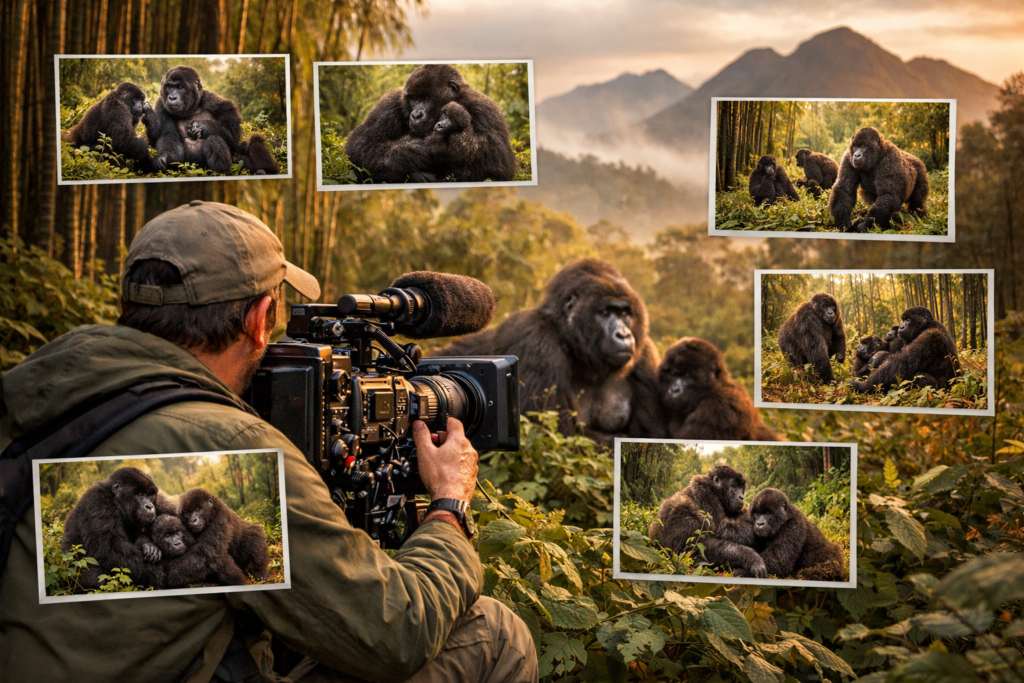
Top Documentary Films Featuring Gorilla Trekking in Rwanda
Professional documentaries provide the most comprehensive view of gorilla trekking in Rwanda. These productions combine expert cinematography with educational content about mountain gorilla conservation and the trekking process.
“Mountain Gorillas: Back from the Brink” (BBC, 2024) offers detailed footage of Rwanda’s gorilla families in Volcanoes National Park. The documentary follows researchers and tourists through actual treks, showing the physical demands of hiking through bamboo forests and volcanic terrain. The film demonstrates proper visitor behavior around gorillas and explains the one-hour viewing limit enforced by park rangers.
National Geographic’s “Gorillas of Rwanda” series features multiple episodes documenting different gorilla families. Each episode shows specific trekking routes, from easier walks to the Sabyinyo group to more challenging climbs reaching the Susa group. The series includes interviews with local guides and conservationists, providing context about Rwanda’s gorilla protection efforts.
“Virunga: The Last Mountain Gorillas” focuses specifically on the Virunga Massif region shared between Rwanda, Uganda, and Democratic Republic of Congo. The film shows how Rwanda’s portion of this ecosystem supports approximately 400 mountain gorillas across 13 habituated families available for tourism.
These documentaries accurately represent the trekking experience without exaggeration. They show both successful gorilla encounters and instances where groups must search longer to locate their assigned gorilla family, reflecting the reality that wildlife viewing cannot be guaranteed.
Travel Vlogs and Personal Accounts of Best Gorilla Trekking Videos in Rwanda
Personal travel videos offer relatable perspectives on gorilla trekking in Rwanda. These vlogs typically show the complete visitor experience, from arriving in Kigali to completing the trek in Volcanoes National Park.
Recent travel vlogs from 2025-2026 provide current information about permit costs, accommodation options, and updated park regulations. Many vloggers document their permit booking process, showing how to secure the required $1,500 permit through the Rwanda Development Board or authorized tour operators.
First-person trek documentation helps viewers understand the physical requirements of different gorilla groups. Videos following treks to the Sabyinyo group typically show shorter hikes suitable for moderate fitness levels, while footage of Susa group treks demonstrates the challenging terrain and higher altitude conditions that require good physical preparation.
Travel vlogs also capture the practical aspects often missing from professional documentaries. They show actual packing lists, demonstrate appropriate clothing for Rwanda’s mountain climate, and document the early morning briefing process at park headquarters. Many include footage of the drive from Musanze town to the park entrance, helping visitors understand logistics and timing.
Photography-focused travel videos demonstrate the camera settings and techniques needed for gorilla photography. These videos show the challenges of shooting in low light conditions under the forest canopy and explain the restrictions on flash photography that protect gorilla vision.
The most valuable personal accounts include honest discussions about the physical demands of trekking. They show the muddy conditions common during Rwanda’s rainy seasons and demonstrate the importance of proper hiking boots and rain gear. Some videos document instances where trekkers needed porter assistance, showing this service as a practical option rather than a luxury.
Educational Content and Preparation Videos
Educational videos about gorilla trekking in Rwanda serve two main purposes: teaching proper wildlife viewing behavior and helping visitors prepare physically and mentally for the trek.
Rwanda Development Board’s official videos provide authoritative information about gorilla viewing regulations. These videos explain the seven-meter distance requirement from gorillas, demonstrate proper behavior during encounters, and show what to do if a gorilla approaches visitors. The content covers health requirements, including the mandatory health screening before each trek.
Conservation-focused educational content explains Rwanda’s gorilla protection success story. Videos from the Dian Fossey Gorilla Fund and Rwanda Wildlife Conservation Association show how tourism revenue directly supports anti-poaching efforts and community development programs. This content helps visitors understand their role in conservation funding.
Physical preparation videos address the fitness requirements for different gorilla groups. Content specifically about Volcanoes National Park shows the elevation changes and terrain types trekkers will encounter. Videos demonstrate appropriate training exercises and explain why cardiovascular fitness matters more than strength for gorilla trekking success.
Health and safety educational content covers the medical requirements for gorilla trekking. Videos explain why visitors with cold symptoms cannot participate in treks and demonstrate the health check process conducted before each trek. Some content addresses altitude considerations for visitors coming from sea level locations.
Cultural preparation videos introduce visitors to Rwandan customs and basic Kinyarwanda phrases useful during treks. Educational content about local communities around Volcanoes National Park helps visitors understand the cultural context of their visit and appropriate behavior in rural areas.
Professional preparation content also addresses equipment needs specific to Rwanda’s climate and terrain. Videos show the difference between gear needed for dry season treks versus rainy season conditions, helping visitors pack appropriately for their travel dates.
Video Quality and Technical Considerations
The technical quality of gorilla trekking videos varies significantly based on equipment and filming conditions. Understanding these factors helps viewers choose content that accurately represents the trekking experience.
Professional documentary footage uses specialized equipment designed for wildlife filming. These productions employ telephoto lenses that maintain the required distance from gorillas while capturing detailed behavior. The resulting footage provides clear views of gorilla interactions and family dynamics that smartphone cameras cannot match.
Smartphone video quality from recent years shows significant improvement in low-light performance, which matters for forest filming. Videos shot with newer smartphones demonstrate that visitors can capture meaningful personal footage, though quality differs substantially from professional equipment.
Audio quality varies dramatically between video types. Professional documentaries include clear narration and natural sound recording that captures gorilla vocalizations and forest ambiance. Personal vlogs often struggle with wind noise and unclear audio due to basic recording equipment and challenging outdoor conditions.
Lighting challenges appear in all gorilla trekking videos due to the dense forest canopy in Volcanoes National Park. Videos filmed during morning treks typically show better lighting conditions than afternoon footage. Content creators who understand these limitations adjust their filming techniques accordingly.
Stabilization technology makes a significant difference in video watchability. Professional footage uses gimbal stabilizers and professional camera supports, while personal videos often show the handheld shakiness that reflects the actual trekking experience but can be difficult to watch.
The most realistic videos combine multiple camera angles and quality levels. Some travel vloggers use both professional cameras and smartphones, showing the difference in results visitors can expect from their own equipment versus professional documentation.
Weather impact on video quality appears clearly in honest documentation. Videos filmed during Rwanda’s rainy seasons show the challenges of keeping equipment dry and the impact of overcast conditions on image quality. This realistic portrayal helps visitors set appropriate expectations for their own filming attempts.
Planning Your Gorilla Trek Based on Video Research
Video research provides valuable information for planning gorilla trekking in Rwanda, but requires careful evaluation to distinguish between marketing content and accurate documentation.
Seasonal differences appear clearly in videos filmed throughout the year. Dry season footage from June through September shows clearer trail conditions and better visibility for filming. Rainy season videos demonstrate the muddy conditions and frequent precipitation that affect trekking difficulty and equipment needs.
Gorilla group selection becomes clearer through video research. Footage of different families shows the varying trek difficulties and group characteristics. Videos of the Hirwa group typically show moderate hiking with good photographic opportunities, while Karisimbi group footage demonstrates longer, more challenging treks to higher elevations.
Accommodation planning benefits from videos that show the range of lodging options near Volcanoes National Park. Content comparing budget guesthouses in Musanze with luxury lodges helps visitors choose appropriate accommodation for their comfort level and budget.
Transportation logistics appear in comprehensive travel videos that document the journey from Kigali to Volcanoes National Park. Videos showing the two-hour drive help visitors plan timing and understand why many choose to stay overnight near the park rather than driving from Kigali on trek day.
Group size considerations become apparent through videos showing different trek group compositions. Footage demonstrates how the maximum eight visitors per gorilla group affects the viewing experience and photographic opportunities.
Porter services appear in many recent videos, showing how local porters assist with carrying equipment and providing stability on difficult terrain. Videos demonstrate that porter services support local employment while making treks more manageable for visitors.
Health preparation requirements become clear through educational videos that explain the medical screening process and fitness requirements. Content addressing altitude considerations helps visitors from sea level locations prepare appropriately.
We help travelers understand these video resources and plan gorilla trekking experiences that match their fitness levels and interests. Our local expertise complements video research with current information about trail conditions, permit availability, and seasonal considerations that affect trek planning.
