
- Mountain gorillas fear sudden movements, loud noises, and direct eye contact from humans during trekking encounters
- Natural predators like leopards pose the greatest wildlife threat to gorillas, particularly young ones
- Human activities including poaching, habitat destruction, and disease transmission represent the most serious long-term threats
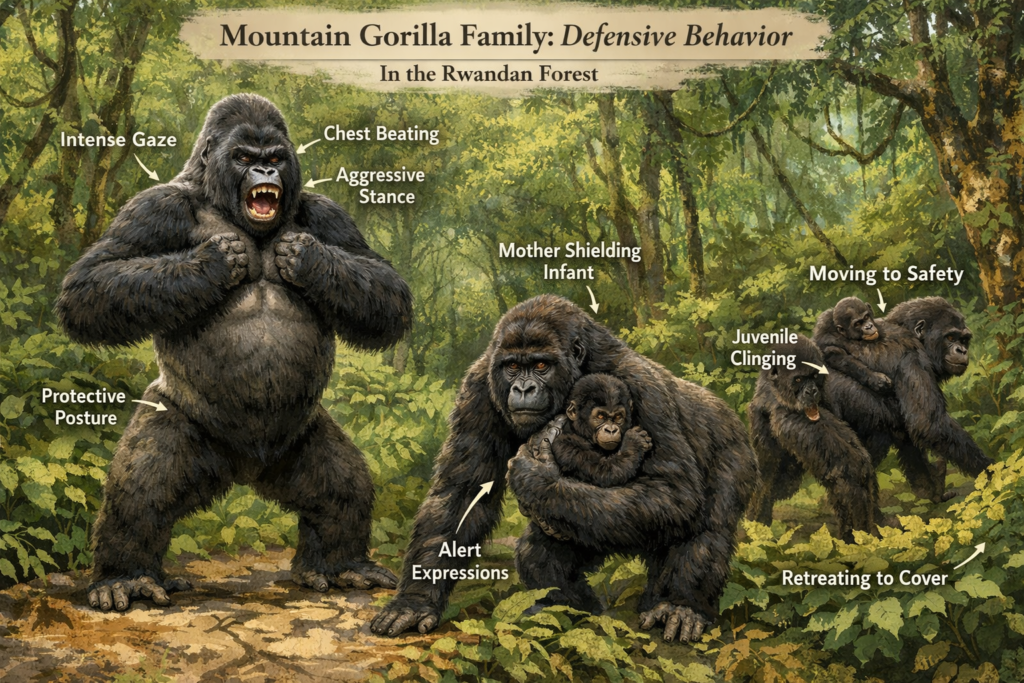
- Gorillas display specific fear responses including chest beating, retreating, and protective group formations
- Understanding gorilla fears helps tourists behave appropriately during gorilla tracking in Rwanda for safer, more respectful encounters
Natural Predators: What Threatens Gorillas in the Wild
Mountain gorillas face several natural threats that trigger their fear responses. Leopards represent the primary predator concern, especially for juvenile gorillas and infants. Adult leopards possess the strength and agility to attack young gorillas who venture too far from their family groups.
Leopard Attacks on Gorillas
Leopards typically target gorillas during nighttime hours when visibility decreases. These big cats use stealth and surprise attacks, often striking from tree branches above gorilla nesting sites. Adult silverbacks can defend against leopard attacks, but mothers with infants remain particularly vulnerable.
Forest elephants also create fear responses in gorilla communities. While elephants rarely attack gorillas directly, their massive size and unpredictable movements cause gorilla families to retreat quickly. Elephants compete for the same food sources and travel routes, leading to territorial tensions.
Venomous Snakes and Other Threats
Several venomous snake species inhabit gorilla territories, including gaboon vipers and forest cobras. Gorillas show clear avoidance behaviors around these reptiles, often changing travel routes to avoid known snake habitats.
Wild buffalo herds can also intimidate gorilla groups. Buffalo travel in large numbers and display aggressive behavior during mating seasons, forcing gorillas to seek alternative feeding areas.
Human-Related Fears: What Are Gorillas Afraid Of During Tourist Encounters
Gorillas display specific fear responses to human presence, making proper tourist behavior critical during gorilla tours in Rwanda. Understanding these fears helps create safer, less stressful encounters for both visitors and gorilla families.
Direct Eye Contact and Aggressive Postures
Gorillas interpret direct eye contact as a challenge or threat. Silverbacks may respond with defensive displays including chest beating, charging motions, or aggressive vocalizations. Tourists must avoid staring directly at gorillas and should look slightly away or down during encounters.
Sudden movements trigger immediate fear responses in gorilla groups. Quick gestures, rapid walking, or unexpected position changes cause gorillas to retreat or display defensive behaviors. Experienced guides during gorilla trekking in Rwanda teach visitors to move slowly and deliberately.
Loud Noises and Flash Photography
Camera flashes and sudden loud sounds create significant stress for gorilla families. These stimuli can scatter entire groups, with mothers grabbing infants and fleeing to dense vegetation. Modern gorilla tracking protocols prohibit flash photography and require visitors to maintain quiet voices.
Large group sizes also intimidate gorillas. More than eight tourists can overwhelm gorilla families, causing them to abandon feeding areas or nesting sites. Rwanda’s permit system limits group sizes specifically to reduce gorilla stress levels.
Disease Transmission Concerns
Gorillas show natural avoidance of sick or diseased individuals, including humans displaying illness symptoms. Their immune systems cannot handle many human diseases, making them particularly sensitive to respiratory infections and other communicable conditions.
Interactive Gorilla Fear Response Guide
Environmental and Territorial Fears
Mountain gorillas show distinct fear responses to environmental changes and territorial intrusions. These behaviors developed over thousands of years as survival mechanisms in challenging forest environments.
Habitat Disruption and Human Encroachment
Deforestation creates significant stress for gorilla communities. The sound of chainsaws or heavy machinery can cause entire families to flee their territories. Gorillas associate these noises with habitat destruction and human encroachment.
Agricultural expansion near protected areas forces gorillas into smaller territories. This compression increases competition between gorilla groups and elevates stress levels throughout communities. Farmers sometimes use noise makers and fires to scare gorillas away from crops, creating additional fear associations.
Climate and Weather Extremes
Heavy rainstorms and severe weather patterns trigger protective behaviors in gorilla families. Adults gather young gorillas close and seek dense canopy cover during storms. Lightning and thunder cause particular distress, with families remaining motionless until weather passes.
Drought conditions create fear around water sources. Gorillas become more territorial and aggressive near remaining water supplies during dry seasons. Competition for limited resources intensifies fear responses between different gorilla groups.
Unfamiliar Scents and Sounds
Gorillas possess highly developed senses of smell and hearing. Unfamiliar human scents, particularly perfumes, soaps, or food odors, can trigger avoidance behaviors. This sensitivity explains why gorilla trekking guidelines prohibit strong fragrances.
Mechanical sounds like helicopters, vehicles, or research equipment create stress responses. Gorillas have learned to associate these sounds with human presence and potential threats. Conservation teams must carefully manage noise levels during monitoring activities.
Disease and Health-Related Fears
Gorillas demonstrate natural avoidance behaviors around illness and disease, both within their own communities and from external sources. These instincts protect gorilla populations from potentially devastating health impacts.
Respiratory Illness Sensitivity
Mountain gorillas share approximately 98% of human DNA, making them susceptible to human respiratory diseases. Gorillas instinctively avoid individuals showing signs of illness, including coughing, sneezing, or labored breathing.
During gorilla tracking in Rwanda, tourists must maintain seven-meter distances partly to prevent disease transmission. Gorillas may retreat further if they detect illness symptoms in human visitors. Guides monitor both tourist health and gorilla behavior to ensure safe interactions.
Parasites and Skin Conditions
Gorillas show avoidance behaviors toward family members displaying skin parasites or infections. This natural quarantine behavior prevents disease spread within gorilla communities. Sick individuals often isolate themselves until recovery.
External parasites like ticks and mites cause discomfort and fear responses. Gorillas spend considerable time grooming to remove parasites, and families may avoid areas with high parasite concentrations.
Social and Behavioral Fear Responses
Gorilla social structures include complex fear and dominance hierarchies. Understanding these behaviors helps explain what are gorillas afraid of within their own communities and how they respond to various threats.
Silverback Dominance and Protection
Silverback males carry the responsibility for family protection, creating specific fear-based behaviors. Silverbacks position themselves between threats and their families, often displaying aggressive postures to deter perceived dangers.
Female gorillas with infants show heightened fear responses to any potential threats. Mothers keep young gorillas close and may carry them during stressful situations. This protective behavior intensifies around unfamiliar humans or sounds.
Territorial Disputes Between Groups
Different gorilla families maintain territorial boundaries, and boundary violations create fear and aggression. Silverbacks use chest beating, vocalizations, and charging displays to warn competing groups away from their territories.
Young male gorillas face particular challenges as they mature and may need to leave their birth families. These transitions create fear and uncertainty as young males navigate social hierarchies and territorial boundaries.
How Understanding Gorilla Fears Improves Tourism Experiences
Knowledge of gorilla fears directly impacts the quality and safety of gorilla trek experiences. Responsible tourism practices account for these fears to create positive encounters for both gorillas and visitors.
Proper Tourist Behavior Guidelines
Successful gorilla encounters require tourists to understand and respect gorilla fear responses. Moving slowly, avoiding direct eye contact, and maintaining quiet voices reduce stress for gorilla families. These behaviors allow for longer, more relaxed observations.
Experienced guides during gorilla tours in Rwanda teach visitors to recognize gorilla stress signals. Early warning signs include increased vocalizations, agitated movement, or silverback displays. Recognizing these signals allows groups to adjust their behavior or retreat if necessary.
Conservation Impact Through Respectful Tourism
Tourism revenue supports gorilla conservation efforts, but only when conducted responsibly. Understanding gorilla fears helps create sustainable tourism practices that protect gorilla welfare while providing economic benefits to local communities.
Educational programs teach tourists about gorilla behavior and conservation challenges. This knowledge creates more engaged, respectful visitors who contribute positively to conservation goals. Informed tourists also become conservation advocates in their home countries.
Long-term Habituation Processes
Gorilla families undergo careful habituation processes before receiving tourist visits. This gradual exposure helps reduce fear responses to human presence while maintaining natural behaviors. The process takes two to three years and requires consistent, respectful human interaction.
Research teams monitor habituated gorilla families for signs of stress or behavioral changes related to tourism activities. This ongoing assessment ensures that tourism practices continue supporting rather than harming gorilla welfare.
