
• Dian Fossey conducted pioneering research on mountain gorillas from 1967 to 1985, establishing the Karisoke Research Center in Rwanda’s Volcanoes National Park
• Her work directly contributed to increasing mountain gorilla populations from approximately 240 individuals in the 1980s to over 1,000 today
• Fossey’s conservation methods, including anti-poaching patrols and community engagement, form the basis of modern gorilla protection strategies
• The Dian Fossey Gorilla Fund continues her work, supporting both research and conservation efforts that benefit today’s gorilla tracking experiences
• Her research established the behavioral foundations that guide current gorilla trekking protocols, ensuring safe interactions between humans and gorillas
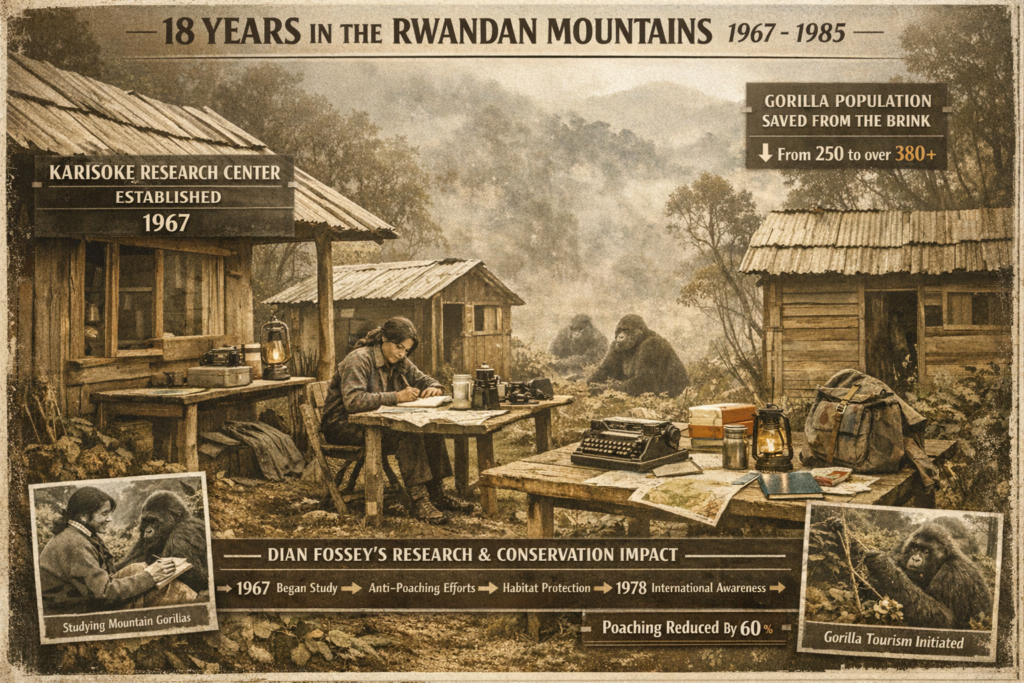
Dian Fossey was born in San Francisco in 1932. She initially worked as an occupational therapist but harbored a deep fascination with Africa and its wildlife. Her life changed dramatically in 1963 when she took a loan to finance a trip to Africa, where she met renowned anthropologist Louis Leakey.
Leakey recognized Fossey’s potential and recruited her to study mountain gorillas in Rwanda. In 1967, she established her research base in the Volcanoes National Park, beginning what would become one of the longest and most detailed studies of wild gorillas ever conducted.
Her early years in Rwanda were challenging. She had to learn local languages, navigate complex political situations, and establish trust with local communities. Most importantly, she had to gain the acceptance of the mountain gorillas themselves.
Dian Fossey’s Revolutionary Research Methods
Fossey’s approach to studying mountain gorillas was groundbreaking. She developed techniques that allowed her to observe gorilla behavior at close range without causing stress or disruption to their natural activities. Her methods included mimicking gorilla vocalizations, adopting submissive postures, and gradually habituating gorilla groups to human presence.
She identified individual gorillas and gave them names, creating detailed family trees and behavioral profiles. This personalized approach helped her track social dynamics, mating patterns, and group hierarchies over extended periods. Her observations revealed that mountain gorillas were gentle, intelligent creatures with complex social structures.
The habituation techniques Fossey developed are still used today. Modern gorilla trekking in Rwanda relies on these same principles to allow tourists safe, close encounters with gorilla families while minimizing stress to the animals.
Her research produced over 2,000 hours of direct gorilla observation data. She documented previously unknown behaviors, including gorilla play, mourning rituals, and sophisticated communication patterns. This work fundamentally changed scientific understanding of great ape intelligence and social behavior.
Conservation Battles and Anti-Poaching Efforts
Fossey quickly realized that research alone would not save the mountain gorillas. Poaching, habitat destruction, and human encroachment threatened their survival. She transformed from scientist to activist, implementing aggressive anti-poaching measures that often put her at odds with local authorities and poachers.
She organized and funded anti-poaching patrols, destroyed poaching equipment, and worked to arrest poachers. Her methods were sometimes controversial, but they were effective. During her tenure, poaching incidents in her research area decreased significantly.
Fossey also fought against cattle grazing in gorilla habitat and opposed tourism development that she believed would harm the gorillas. Her uncompromising stance created conflicts with government officials and conservation organizations who favored different approaches.
Her conservation philosophy emphasized direct protection over tourism-based conservation. However, the sustainable tourism model that emerged after her death has proven successful in funding ongoing protection efforts. Today’s gorilla tours in Rwanda generate revenue that directly supports conservation programs.
The Karisoke Research Center Legacy
The research station Fossey established, named Karisoke after two nearby volcanoes, became the world’s leading center for mountain gorilla research. The center trained local researchers and international scientists, creating a lasting infrastructure for gorilla conservation.
After Fossey’s death in 1985, the Dian Fossey Gorilla Fund took over operations at Karisoke. The organization continues her research while expanding into community-based conservation programs. They work closely with Rwandan authorities to monitor gorilla populations and protect their habitat.
The center’s long-term data collection has been invaluable for understanding gorilla ecology and developing effective conservation strategies. This research directly informs the management protocols used for gorilla tracking in Rwanda today.
Modern visitors to Volcanoes National Park benefit from decades of research conducted at Karisoke. The detailed knowledge of gorilla behavior and group dynamics allows guides to locate gorilla families reliably and predict their movements, making gorilla trekking experiences more successful and educational.
Dian Fossey's Impact on Modern Gorilla Tourism
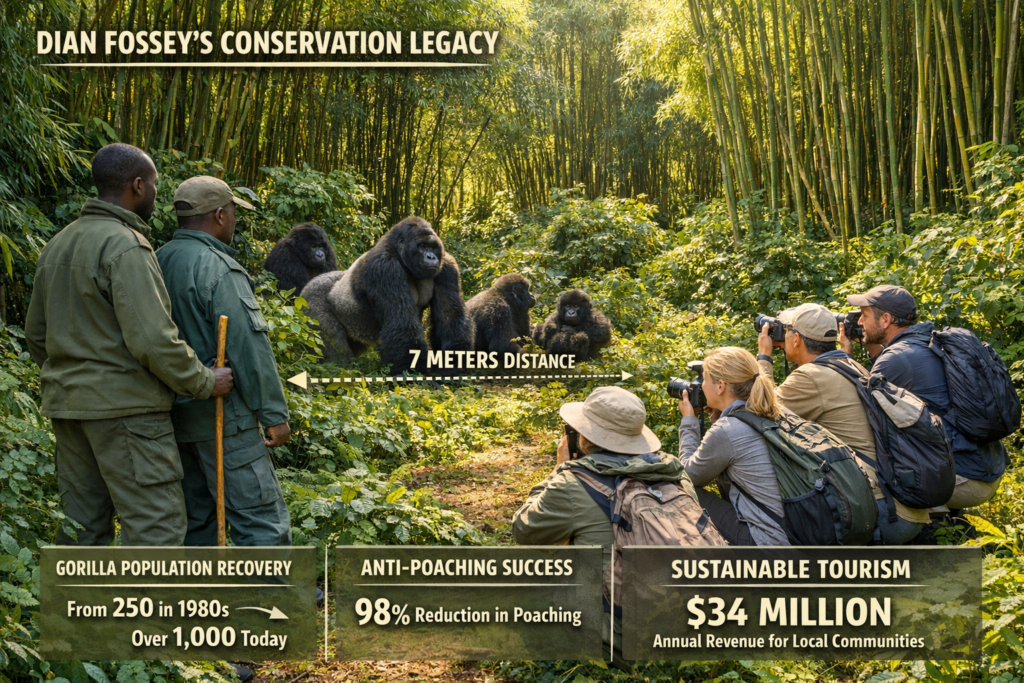
Fossey’s work created the scientific foundation for Rwanda’s gorilla tourism industry. Her habituation techniques made it possible for humans to observe gorillas safely at close range. The behavioral insights she gained help guides interpret gorilla actions and ensure tourist safety during encounters.
The gorilla groups that tourists visit today are descendants of the families Fossey studied. Many current gorilla tracking protocols, including group size limits, minimum distances, and visit duration restrictions, are based on her research findings about gorilla stress responses and social dynamics.
Her emphasis on individual gorilla identification continues today. Each gorilla has a name and known history, creating personal connections that enhance the tourist experience. Guides share stories about specific gorillas’ personalities and relationships, bringing Fossey’s approach to life for visitors.
The revenue generated by gorilla trekking in Rwanda funds ongoing research and conservation efforts that build on Fossey’s work. This sustainable model demonstrates how scientific research can support long-term wildlife protection while providing economic benefits to local communities.
Conservation Success Story
The mountain gorilla population has grown from approximately 240 individuals when Fossey began her work to over 1,000 today. This recovery represents one of conservation’s greatest success stories and validates the protective measures she pioneered.
Rwanda’s mountain gorilla population specifically has increased from about 120 individuals in the 1980s to over 400 in 2026. This growth occurred despite ongoing challenges including habitat pressure and political instability in the region.
The success stems from combining Fossey’s direct protection approach with community engagement and sustainable tourism. Local communities now benefit economically from gorilla conservation through employment in tourism and revenue-sharing programs.
Anti-poaching efforts continue using methods Fossey developed, enhanced with modern technology including GPS tracking and improved communication systems. Rangers patrol gorilla habitat daily, maintaining the protective presence she established.
Planning Your Gorilla Trek in Fossey’s Footsteps
Visitors to Rwanda can experience the direct results of Dian Fossey’s conservation work through organized gorilla trekking experiences. Her research made these encounters possible while ensuring they remain safe and sustainable for both gorillas and tourists.
Gorilla tracking in Rwanda takes place in Volcanoes National Park, the same location where Fossey conducted her groundbreaking research. The park now protects 13 habituated gorilla groups that tourists can visit, with each group limited to eight visitors per day.
The trekking experience follows protocols based on Fossey’s behavioral research. Visitors maintain a seven-meter distance from gorillas, spend a maximum of one hour with each group, and follow specific guidelines for movement and behavior around the animals.
Modern guides receive training based on Fossey’s habituation techniques and behavioral observations. They can interpret gorilla body language, predict group movements, and ensure safe interactions. This expertise makes gorilla trekking experiences both educational and successful.
The Dian Fossey Gorilla Fund continues to operate in the region, conducting ongoing research and conservation work. Visitors can learn about current projects and see how Fossey’s legacy continues to protect mountain gorillas today.
Revenue from gorilla tourism directly funds conservation programs, ranger salaries, and community development projects. This sustainable model demonstrates how Fossey’s scientific work created lasting economic incentives for gorilla protection.
Continuing Research and Conservation
The scientific work Dian Fossey began continues today through multiple organizations and research programs. The Dian Fossey Gorilla Fund maintains the longest-running gorilla research program in the world, building on her original data collection methods.
Current research focuses on gorilla health monitoring, genetic diversity studies, and climate change impacts. Scientists use GPS collars, camera traps, and other modern technologies while maintaining the close observation techniques Fossey pioneered.
The Karisoke Research Center now trains Rwandan scientists and conservationists, creating local expertise for long-term gorilla protection. This capacity building ensures that conservation efforts will continue regardless of international support levels.
Community-based conservation programs engage local populations in gorilla protection through employment opportunities, education programs, and revenue sharing. These initiatives address the human-wildlife conflict issues that Fossey struggled with during her career.
Veterinary programs provide medical care for sick or injured gorillas, using knowledge gained from decades of behavioral observation. Quick intervention has saved numerous gorillas and helped maintain population growth rates.
International partnerships support ongoing conservation work through funding, research collaboration, and policy advocacy. These relationships create a global network dedicated to mountain gorilla survival that extends far beyond Rwanda’s borders.